

How F1 Engineering Made The CV90 The Fastest Tank Off-Road
Many of the modern luxuries we see in our cars today were tested and refined in the theater of racing. From carbon fiber to disc brakes and paddle shifters, the cutting edge of motorsport has developed technology that's trickled down into our daily commute. Racing tech has found other uses, however, as the engineers at BAE have found an entirely different use for track-borne technology.
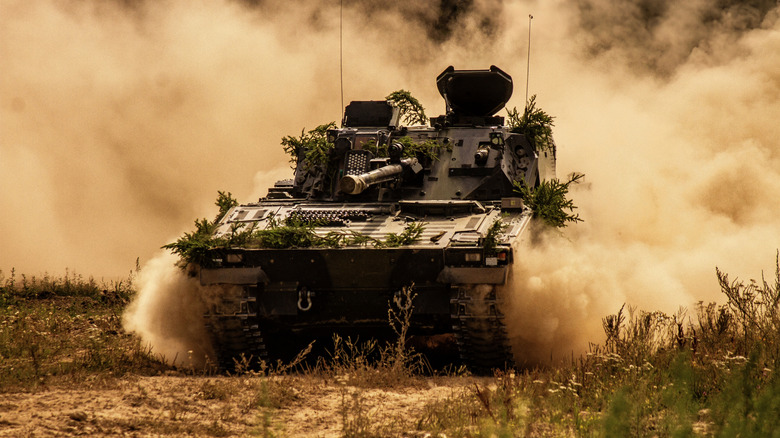
Meet the CV90, a Swedish-built infantry fighting vehicle made with one goal in mind: haul troops into battle with speed and safety. With a 16-liter V8 engine making 1,000 horsepower, the CV90 is capable of carrying its 3 crew members and 8 troops to speeds north of 40 miles per hour. Impressive for a beast weighing in at over 40 U.S. tons, but recent innovations from BAE have helped those speed numbers go even higher.
A major overhaul to the CV90 in 2015 integrated Formula One tech into the tank, incorporating an active dampening system within the suspension. Essentially a scaled-up version of the system used in Williams' championship-winning cars in the early '90s, this active suspension allows tankers to rip the CV90 like Mansell and Prost.
Getting active
Active suspension and the ability to adjust ride height on the fly could bring a plethora of advantages in Formula One. Regardless of cornering or braking, the car could be kept as level as possible, and at a constant ride height... an advantage that made the car seconds faster than something with fixed suspension.
The concept was tried and tested by Lotus and Williams, but it would be Williams Racing who perfected the design and deployment of active suspension. Even in an era where Williams had cutting-edge driver aids like ABS and traction control, active suspension would prove to be one of the biggest improvements for the team when it was introduced in 1992. Over the next two years, the active ride would help the team to 30 pole positions and 20 wins, earning back-to-back constructors' titles.
By 1993, the FIA had to step in to lower the performance gap and reduce development costs across the sport. In a blanket ban on driver aids, active suspension was imposed in 1994.
From F1 to the Frontlines
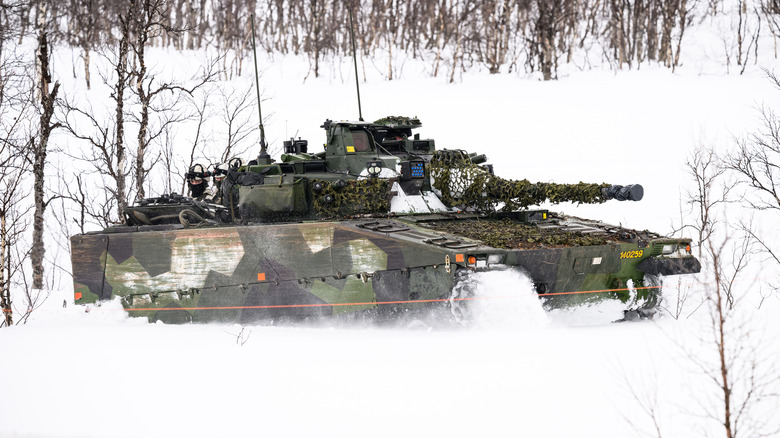
The CV90's system anticipates upcoming terrain and responds by sending hydraulic pressure to different points in the suspension, similar to how it was active suspension performed on the William.
BAE admitted that it was anything but easy to convert a system made for a 1,500-pound racecar for a 38-ton tank, but the advantages have been clear. With a 40% reduction in pitch acceleration, smoother sailing keeps the crew from bouncing around inside like the back of a school bus. It also keeps shots steady and accurate when the tank is on the move, a crucial capability in combat.
BAE also reported an increase in speeds, with the tank becoming 30% to 40%faster at navigating rough terrain, even outrunning main battle tanks. The system also keeps maintenance down, since the system reduced vibrations and shocks, running at full speed has become far easier on the tank's internals.