

Why Did Detroit Diesel Phase Out Its Two Stroke Engine?
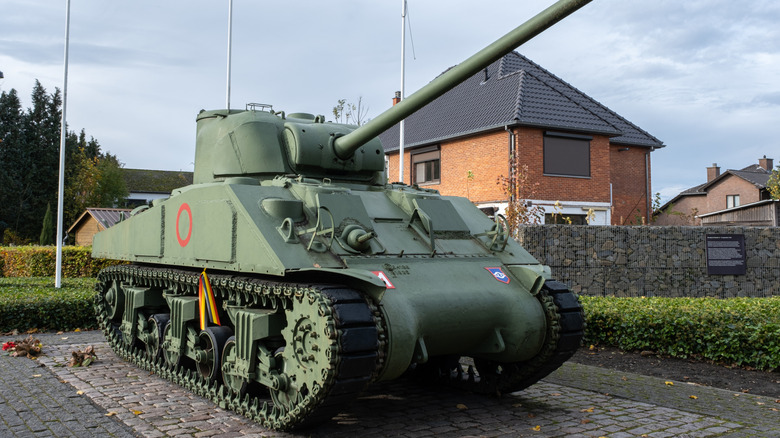
The Detroit Diesel Corporation originally launched in 1938 as a division of General Motors, and its main purpose was to build a two-stroke engine that would combine power and versatility in a small and lightweight package. The result was the Series 71 engine family that would play a significant role for the United States military in World War II, during which it could be found in tanks, generators, and other equipment.
Other impressive two-stroke Detroit Diesels included the Series 53 that was introduced in 1957 as the first motor from the company engineered for on-road use, primarily in heavy-duty trucks. Engines like these were in such high demand that Detroit Diesel kept them in production right up through the 1990s. That's when the company began phasing out two-stroke engines entirely, shifting all of its efforts to four-stroke mills.
As with many things in the auto industry, the change was essentially about fuel efficiency. More modern four-stroke engines are better able to implement strategies for saving fuel and reducing emissions because of their four separate combustion cycles. Detroit Diesel announced its new direction in 1998 as part of a complete business overhaul under then-chairman Roger Penske. As Penske said in a 1998 press release shared by DieselNet, the shift was a "natural response to the constantly changing marketplace."
What's the difference between two- and four-stroke engines?
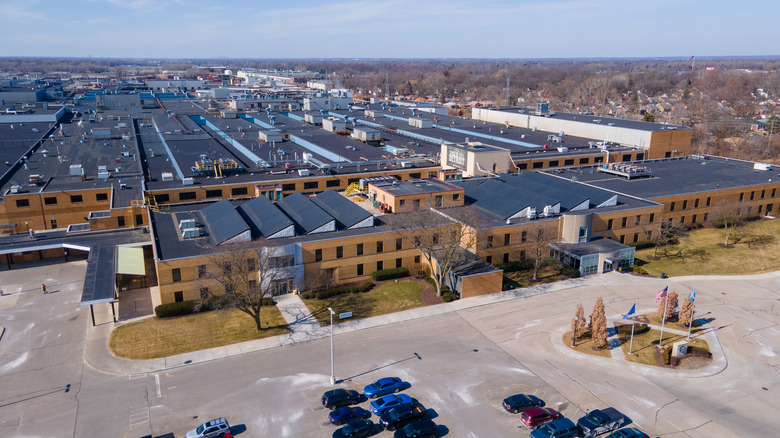
With a two-stroke engine, the piston first moves upward in the cylinder, reducing pressure below to initiate the intake process while at the same time squeezing the fuel/air mixture above to cause compression. The spark plug then fires — or, in the case of a diesel, the mixture combusts from pressure — pushing the piston down to simultaneously transform combustion into movement and to get rid of the exhaust gases.
A four-stroke engine separates the intake/compression and power/exhaust strokes into their own individual events. The piston moves down to draw in the fuel and air, moves up to compress it, moves down to make power after the fuel/air mixture ignites, and moves up again to squeeze out the exhaust gases.
The key difference for fuel economy is that while a two-stroke engine requires fuel for every other stroke, the four-cycle engine only needs it for one stroke out of every four. So it simply requires less fuel – although that no longer matters now that fuel efficiency standards are apparently dead. For emissions, the issue is that two-stroke engines get their lubrication from mixing oil with the fuel, which means oil is going into the combustion chamber and either being burned along with the fuel or being released straight into the environment before combustion.
Are two-stroke engines still used today?
Two stroke engines do have their advantages, though, so they're still popular in certain applications where boosting fuel economy and reducing emissions aren't priorities. For one thing, two-stroke engines are easier and less expensive to build since they don't have as many complex parts as four-stroke motors. Another benefit to having fewer parts is that there are fewer parts to break, making well-built two-stroke motors generally more durable.
Two-cycle engines can also produce more power than comparable four-cycle counterparts, albeit for the same reason they're less efficient. Their ability to make power during every complete turn of the crankshaft means they drink more fuel, but it also gives them two power strokes during the same time a four-cycle engine gets one. The extra, quicker power pulses do contribute to the extra noise of two-stroke engines, however.
Keeping those factors in mind, two-stroke engines can still be found today in motorcycles along with boats, snowmobiles, chainsaws, and other power tools.
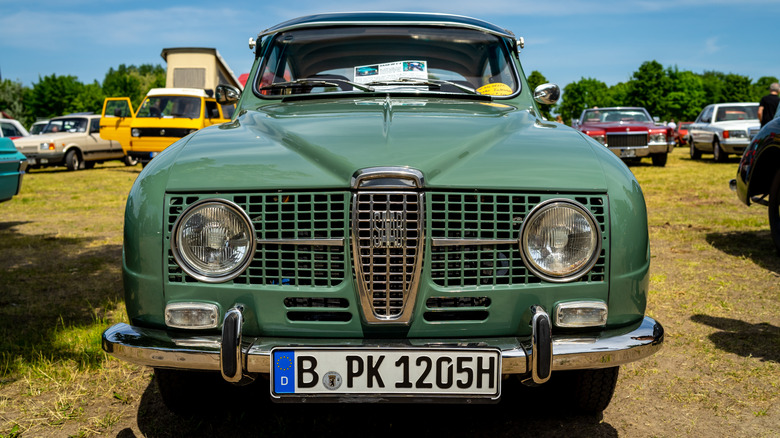
It's also worth pointing out that two-stroke engines had a long and successful run in mass-market cars, especially in the early years of motoring. In fact, eastern Bloc automakers like Trabant were still using them up until 1991. For Western gearheads, the final mainstream car with a two-stroke engine was the 1967 Saab 96. Of course, given the drawbacks of two-stroke engines, that's a Saab story that's probably not worth crying over.