

When The Oil Light Turns On, How Long Is It Safe To Keep Driving?
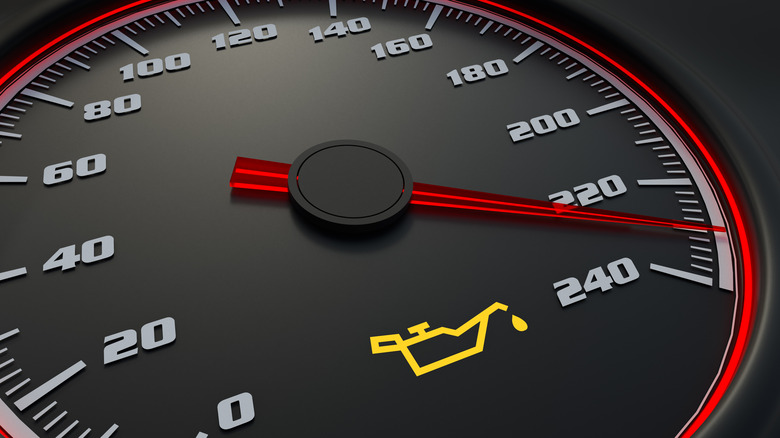
Playing second fiddle to the dreaded check-engine light is the oil light, one of the many dashboard warning lights that you shouldn't ignore when it illuminates while driving. Some cars have multiple oil lights: an amber light to indicate low oil levels, a red light to warn about low oil pressure, and an oil change indicator to remind you of an impending oil change. However, most vehicles have a single red oil warning light that illuminates whenever the electronic control unit detects low oil levels or a drop in oil pressure.
Regardless of the situation, an illuminated oil light requires immediate action. When this happens, you should stop driving, pull over safely, and turn the engine off, especially if your car only has a single oil warning light. There's no way to tell what triggered the oil light. It could indicate a low oil level, a sensor fault, or a severe lack of oil pressure, all of which are terrible for your motor.
Whatever the cause, driving with an illuminated oil light may exacerbate the issue, potentially leading to expensive or irreversible engine damage. It's better to err on the side of caution since the oil inside your engine is what keeps it from exploding into a colossal, expensive mess. Not enough oil or low oil pressure means the engine is literally starving for lubrication, and you don't want that if you love your car.
Things to check when the oil light turns on
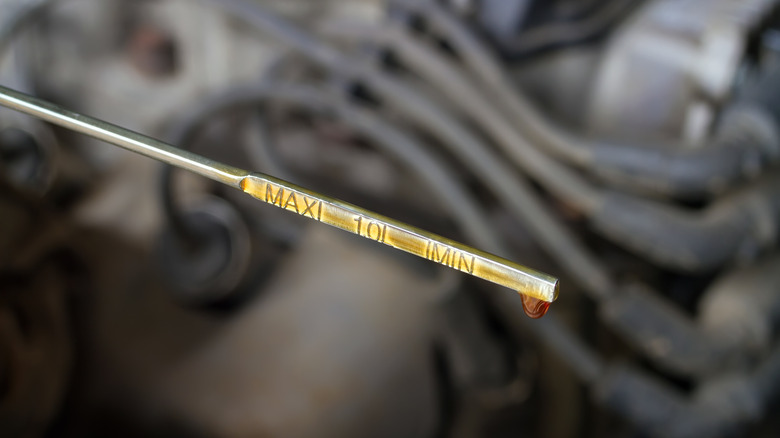
The oil warning light can indicate low oil, a faulty oil pump, or a malfunctioning oil pressure sensor. After stopping the car and turning off the engine, raise the hood and pull out the engine oil dipstick (if so equipped) to check the oil level. If the level is low, adding more oil may resolve the issue and deactivate the oil warning light, provided your engine doesn't have severe oil leaks or other problems. If that's the case, you may continue driving after adding oil, but keep your eyes peeled for the oil light in case it comes back on
However, if the oil level is adequate and the oil light remains on, you may be dealing with a more severe problem, most likely a faulty oil pump or a malfunctioning oil sensor. If that's the case, it's better to call for help or a tow to drop your car off for servicing at the nearest garage or dealership.
Replacing a bad oil pump will most likely cost $350 to $1,500 (including parts and labor), depending on the vehicle and engine size. The symptoms of a bad oil pump include unusual noises under the hood and a possibly overheating engine. Meanwhile, replacing an oil pressure switch will run you $200 to $250 — a small price to pay compared to the potential cost of replacing an entire engine if you ignore the oil warning light.