

U.S. Coast Guard Capsizes Boat, Detains Canadian Who Insists He Was In Canadian Waters
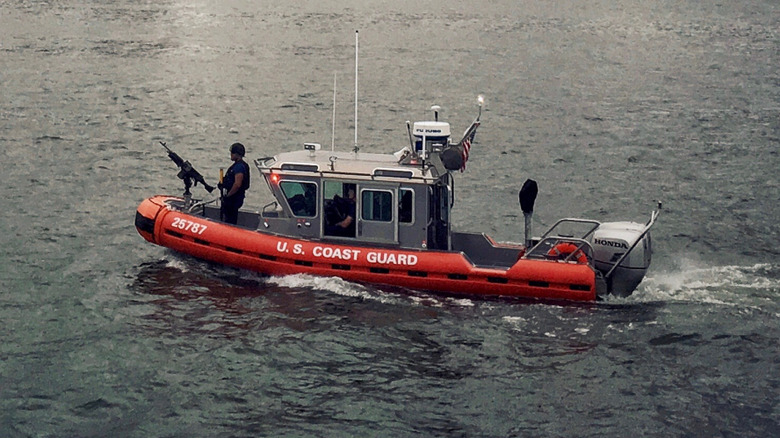
A fisherman detained by U.S. federal agents insisted he was fishing in Canadian waters on Lake Champlain, but the U.S. Coast Guard claimed that he crossed into U.S. waters. In a totally proportional response, the Coast Guard capsized his borrowed boat and detained him in soaking wet clothes for almost two hours, reports CTV News.
Lake Champlain straddles the borders of New York, Vermont, and Quebec. Edouard Lallemand believed he was fishing near Venise-en-Québec, at the northern tip of the lake in Canadian waters. A U.S. Coast Guard boat stopped him, and the officers on board insisted that he had illegally crossed the border into American waters. Lallemand said he's been fishing Lake Champlain for decades and knew he was in Canadian waters and at least 10 miles from the border, he told WCAX. Lallemand told CTV News he was polite enough in speaking to them, but insisted that they could not cross the border and arrest him.
At this point, Lallemand started the engine, told the Coast Guard he would rather speak to them by the shore, and moved that way. The Coast Guard boat pursued him and tried to push him into U.S. waters, capsizing the boat and sending him into the water in the process. Lallemand said he almost drown in the altercation. The Coast Guard then pulled him out, handcuffed him, and turned him over to Customs and Border Protection, who jailed him for almost two hours in wet clothes and a dirty blanket.
What really happened?
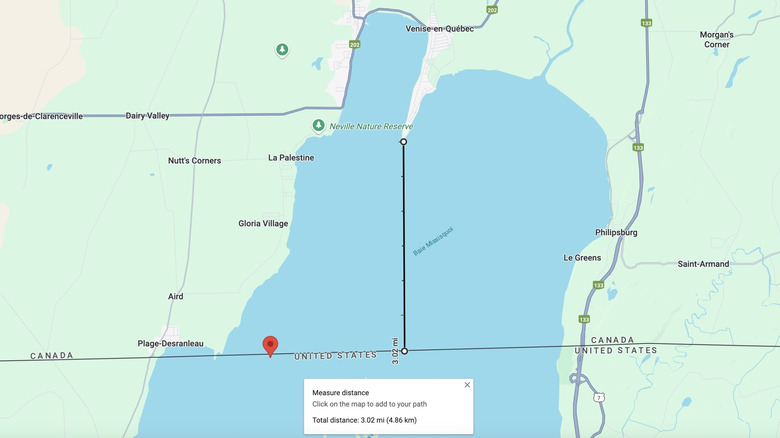
According to the Coast Guard's statement to CTV News, Lallemand was "in U.S. Customs waters" at the time he was detained. The Coast Guard says he ignored orders to stop for boarding purposes, then suddenly turned and rammed the 29-foot RB-S II with his small fishing boat, causing it to capsize. This occurred at coordinates 65 yards south of the U.S. border, claims the Coast Guard.
Google Maps confirms that the Coast Guard's claimed coordinates are 65 yards south of the border, which totally justifies the use of excessive force, I guess. It also confirms that the border is three miles south of the southern tip of the Venise-en-Québec peninsula. It's not like there is a marked line across the middle of the lake, but that still leaves Canadians a large area to enjoy without U.S. Coast Guard interference.
Who are you going to believe, the man who has been fishing these waters for decades and knows them like the back of his hand? Or a government known for gross overreach, excessively aggressive border defense, detaining and rejecting a tourist because of a meme on his phone, and disappearing a man who crossed the border by accident? And which seems more likely; a man trying to retreat to the shore's relative safety when faced with oppressors from a foreign government, or the Coast Guard's claim that he deliberately rammed them with his small borrowed boat? It's hard to know for sure.