

How Much Weight Can The Toyota 4Runner Tow (And Is The Hybrid Best)?
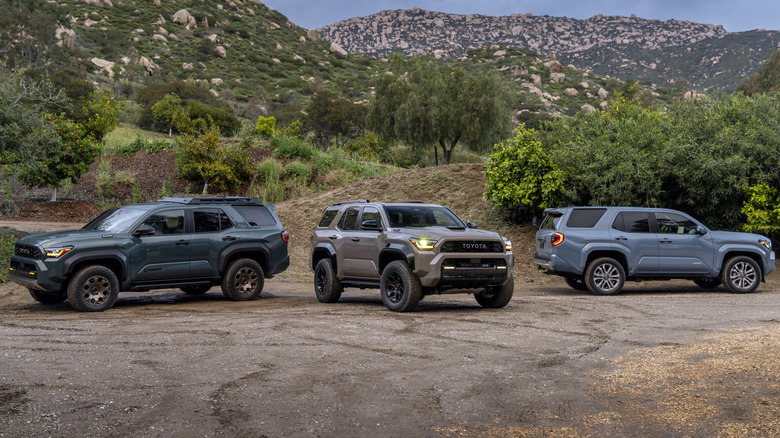
The genuinely new 2025 Toyota 4Runner is a major upgrade from the long-lived previous generation, and it delivers more of just about everything. At its best, the new model is longer, wider, taller, more powerful, more efficient, more capable, and available with more features than the past edition — and a lot of people would say the 2025 4Runner is better looking, too.
But our goal today is to get a bit more granular by focusing on the 4Runner's maximum tow rating of 6,000 pounds, well within the limits for small campers or trailers with a couple of ATVs on board. It's a higher rating than for the midsize rivals like the ... oh, wait a minute. The 4Runner actually doesn't have any direct rivals, since it's the only one in its class to use body-on-frame construction.
The Ford Bronco and Jeep Wrangler are both a bit smaller and much more focused on offroad performance right from the start, and rides like the Ford Expedition, Chevrolet Tahoe, Dodge Durango, and Toyota's own Sequoia are all full-sizers. There's the Toyota Land Cruiser, but that's really a more premium option. The point being, it's thanks in part to that body-on-frame engineering that the 4Runner is rated to out-pull similarly sized unibody SUVs such as the Ford Explorer, Honda Passport, Hyundai Santa Fe, Kia Sorento, and Subaru Outback.
How much can the Toyota 4Runner Hybrid Tow?
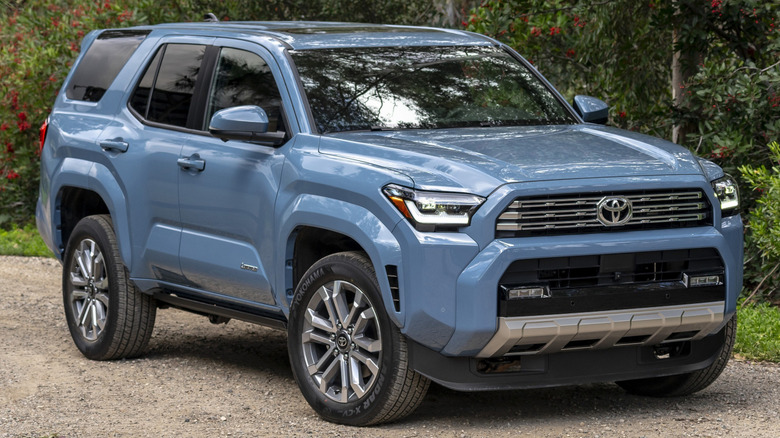
Another important factor in how much weight a vehicle can tow is how much muscle it has. Yet it's not always a matter of pure numbers. Consider the differences between the standard 4Runner engine and Toyota's ever-more-common i-Force Max hybrid system.
The former is a turbocharged 2.4-liter 4-cylinder engine that makes 278 horsepower and 317 pound-feet of torque. The hybrid system adds an electric motor and 288-volt nickel-metal hydride battery for a significant boost in output. 4Runner trims with that powertrain can enjoy 326 horsepower and 465 pound-feet of torque, representing increases of 17% and 46%. Its effect on the 4Runner's towing capacity?
Well, the 6,000-pound maximum tow rating mentioned above is for the non-hybrid 4Runners, including the SR5 base model in both rear- and front-wheel drive — which also boast standard hitch receivers, wiring harnesses, and connectors. The more powerful i-Force Max hybrid system gets those, too, but is only rated to tow up to 5,800 pounds. Chalk that up mostly to the added weight of the hybrid components, as hybrid trims can weigh 1,000 pounds more than regular 4Runners.
How much can older Toyota 4Runners tow?
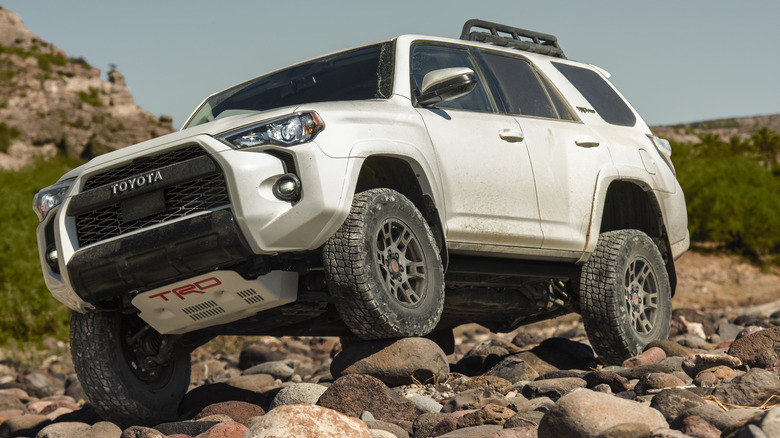
The redesigned 2025 Toyota 4Runner marks the beginning of the vehicle's sixth generation and comes some 40 years after the first SUV to wear the name. That SUV, the 1984 Toyota 4Runner, was a rough-and-ready machine built on the same bones as a truck rugged enough to surpass a million miles, the famed Toyota HiLux. The first 4Runner leveraged its rugged origins for a maximum tow rating of 3,500 pounds following midcycle upgrades in 1986. More changes came for the second-gen 4Runner, but adjustments to its tow rating weren't among them.
The third-generation 4Runner, introduced in 1996, dropped the HiLux frame for a setup of its own, and that, plus a new V6, upped the vehicle top towing mark to 5,000 pounds. A V8 made its way under the hood of the 2003 4Runner to celebrate the fourth generation, pushing pulling potential up to 7,300 pounds in rear-wheel-drive configuration.
In 2009, Toyota launched the fifth-generation 4Runner that was aimed at a more road-friendly crowd with significant improvements in comfort and refinement — and a reduction in maximum towing ability to 5,000 pounds. Just remember, before towing with any 4Runners — or any vehicle for that matter — be sure to read the owner's manual for specific pulling guidelines.