

Shoes Stay On: TSA Is Considering Dumping Flying's Most Annoying Rule
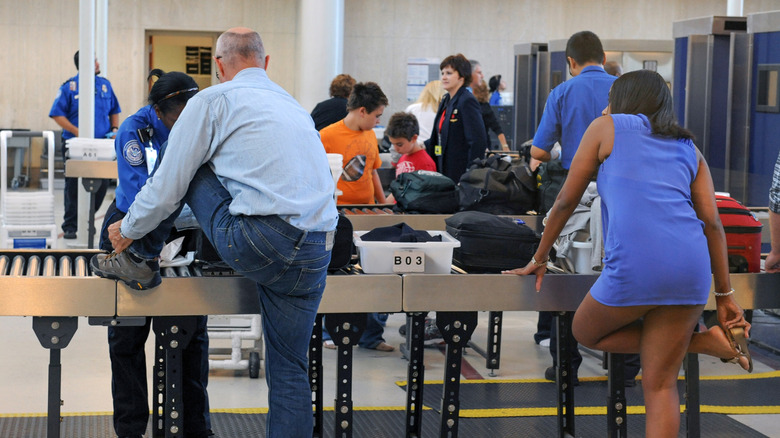
The awkward shuffle of taking off your shoes to put them through an X-ray scanner at airport security may be finally over. The Transportation Security Administration has been quietly letting airport passengers keep their shoes on while going through security checkpoints at several airports over the past few days. The requirement was first established in 2006 after would-be terrorist Richard Colvin Reid tried to detonate plastic explosives hidden in his shoe on a transatlantic flight in December 2001. The agency's move will likely impact the its Pre-Check program, which already offers passengers the perk of keeping their shoes on, along with a dedicated security line for a fee.
The policy shift was revealed by former TSA officer Caleb Harmon-Marshall in his newsletter Gate Access after he became aware of internal memos about the soft launch. The agency itself has yet to confirm the requirement's abolition, but Harmon-Marshall believes that the TSA's decision is intended to save the agency from extinction. Senators Mike Lee and Tommy Tuberville introduced a bill in March to abolish the TSA. The Republican lawmakers are pushing to have private companies provide security at airports across the country. Harmon-Marshall told the New York Times:
"They should feel relieved knowing that technology has advanced so significantly that TSA officers can detect threats while wearing shoes. In the old days, this wasn't the case."
TSA PreCheck's day could be numbered
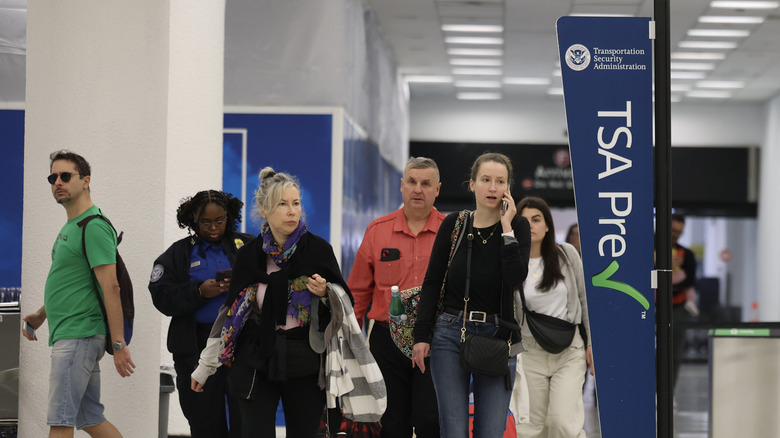
It should be noted that passengers without REAL ID-compliant identification will still be required to take off their shoes. The shoe removal policy's end was long overdue, with the technology implemented by the TSA. Old metal detectors have been replaced with precise yet intrusive full-body scanners. The agency even began rolling out facial recognition technology two years ago. The TSA stated that its goal is to make the checkpoint process as efficient as possible for passengers. However, the biometric information makes it far easier to screen for potential threats and potentially compromise your privacy.
While it's somewhat commendable that the TSA is fighting to prevent private companies from taking over the frontline of airport security and having direct access to your personal information, the agency hasn't been a shining beacon of the American ideal. The agency has created a separate paid class of travelers. The PreCheck program generated $745.6 million in revenue over a five-year period ending in 2021. It's an impressive sum, but PreCheck is designed to be revenue-neutral with the fees covering applicant vetting and the technology used in its dedicated lanes. If REAL ID provides a similar level of background scrutiny, then PreCheck becomes a pointless added cost for the agency and merely serves as a not-so-FastPass for airport security.