

Mud Terrain Vs. All-Terrain Tires: What's The Difference?
If you want to conquer some trails, then you may be thinking of getting an SUV or a pickup truck designed specifically for off-road 4x4 experiences. No matter what model you select, you may also be wondering if you should get all terrain tires (A/T) or mud tires. The two may share some similar characteristics, but they're certainly not the same. In fact, many different types of tires can handle off-road conditions, but some are much more suited to challenging environments.
Let's say you have a Jeep SUV such as a Wrangler or a Grand Cherokee. Most of these models come with a Selec-Terrain Traction Management System that can handle driving in mud, asphalt, gravel, snow, and sand. These models can often climb rocks and even tread through water. However, simply switching to the correct mode doesn't guarantee top performance — these are the kind of off-road conditions that lead many drivers to wonder whether they should be using all terrain or mud tires.
While both kinds of tires offer improved traction and handling when going off-road, their versatility in different situations can be an important factor to take into consideration. All terrain offer you enough capability to go off-road comfortably, but mud tires are in a class of their own — let's take a look at how the two designs differ.
Key differences between mud terrian and all terrain tires
Depending on the type of off-road performance you want, you'll likely be looking at more than just all terrain or mud tires. For instance, there are highway-terrain tires, which are made for driving on asphalt and highways. They can still handle a little off-road action, though, thanks to a tread pattern that's a little deeper than tires found on most passenger cars. Meanwhile, rugged-terrain tires are made with thicker rubber that can handle a beating while rock climbing or climbing steep inclines.
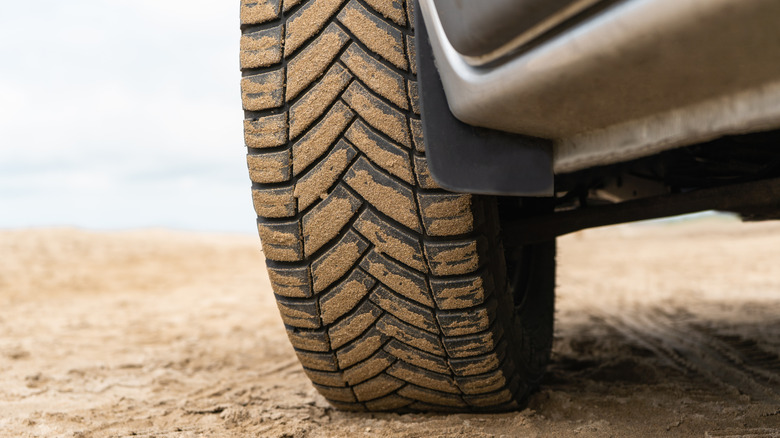
All terrain tires are somewhere in between those two. They can tackle the asphalt but still have enough grip to offer capable driving in snow or rain thanks to their deeper tread patterns. This makes all terrain tires a great choice for drivers who could go off-road at a moment's notice. For improved performance, drivers can get aggressive all terrain tires that come with a wraparound tread. This adds more thickness to the sidewall for added traction and protection.
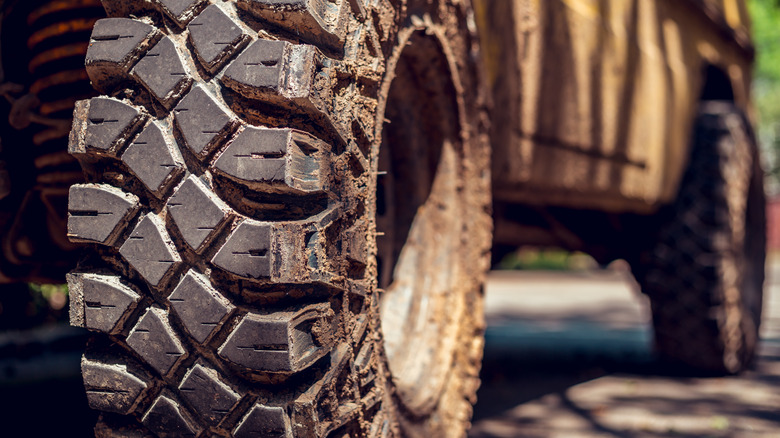
Mud tires are a completely different animal, as they purpose-built for handling mud. As such, these tires are not meant for normal driving on pavement. Instead, mud tires are manufactured with specialized rubber that can handle about any type of off-road terrain. The tread blocks on mud tires are large and deep, making them more effective at expelling mud. Mud tires are stronger overall, and also come equipped with lugs that provide additional grip. They're made to handle all the unseen dangers that could be hiding in the mud.
So there you have it — mud tires are the more specialized of the two options, but are ideal if you know you are going to end up tackling some tough terrain. If you need to be able to move between an off-road environment and regular driving, however, all terrain tires might be a better choice.