

What The 'L' On Your Gear Shifter Actually Does
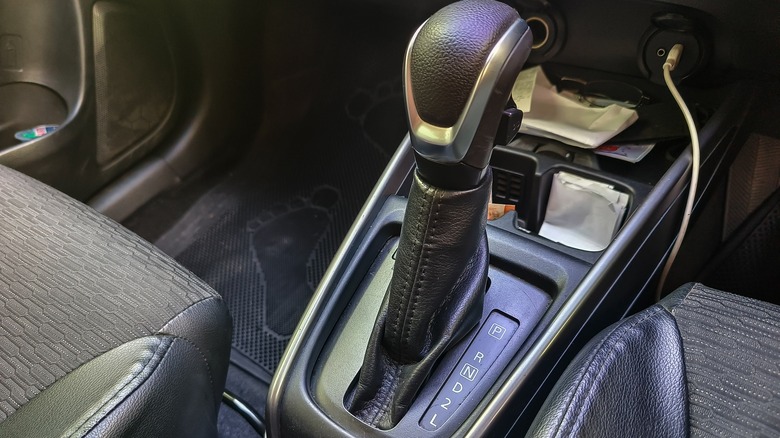
Both manual and automatic transmissions have undergone important changes over the years. In the past, cars with a manual transmission were generally able to achieve better fuel economy. That's changed. You can still improve your MPG by being mindful of how you shift the gears, but today an automatic transmission is often the winner in terms of fuel economy.
Many automatic transmissions also include an L gear, and it might not be immediately apparent what that option does. You might think the L stands for load, which is close but not quite right. Often referred to as the low gear, the L mode actually restricts the vehicle from shifting to the higher gears, and usually stays within the first and sometimes the second gear.
Many drivers with an automatic transmission need not worry about switching between gears manually. All they need to deal with are P for park, R for reverse, N for neutral, and D for drive — so when should you worry about shifting into L?
What's with the 'L' on my automatic transmission?
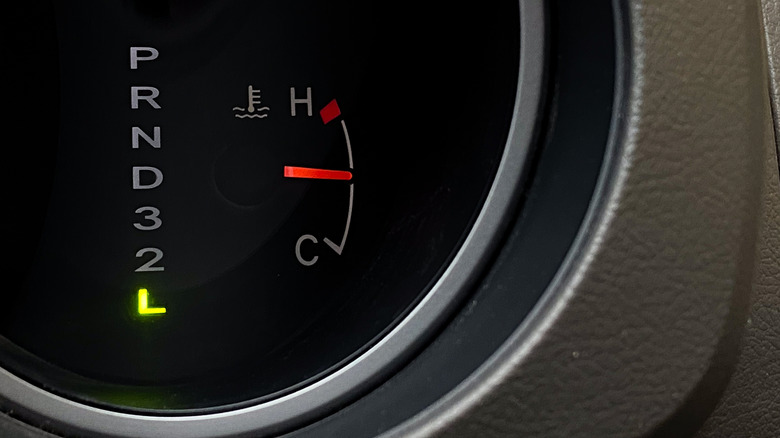
To the untrained eye, an automatic transmission might feel seamless, but the system can include as many as 10 gears. Keeping your gears in the lower range lets the engine spin faster, which can help build up speed and create more torque.
This means that the L range can be beneficial when towing an especially heavy load, such as a trailer or an RV. After all, the engine will deliver more torque to pull the extra load in L. Using L can also help with driving up hills and controlling speed on steep descents.
In addition, torque gives your vehicle more control over acceleration. For drivers who need to maintain a low speed and have higher precision when navigating tight spaces or urban environments, low-speed maneuvering is a helpful skill to have. This also means that the L gear can help you maneuver in sand, snow, and other unusual road conditions, like going off-road or mudding.
Just don't forget that driving in L will lower your fuel economy and can lead to transmission wear. In the right situation, however, it can help you operate your car or truck with better efficiency and safety.