

2026 Land Rover Defender Octa Would Be Better With A Worse Engine
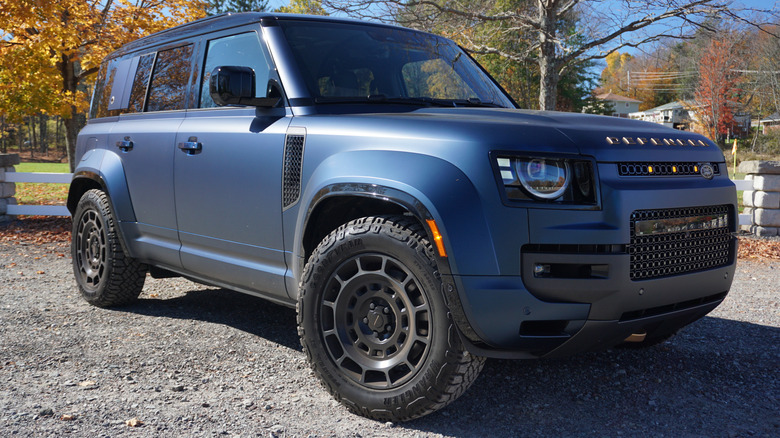
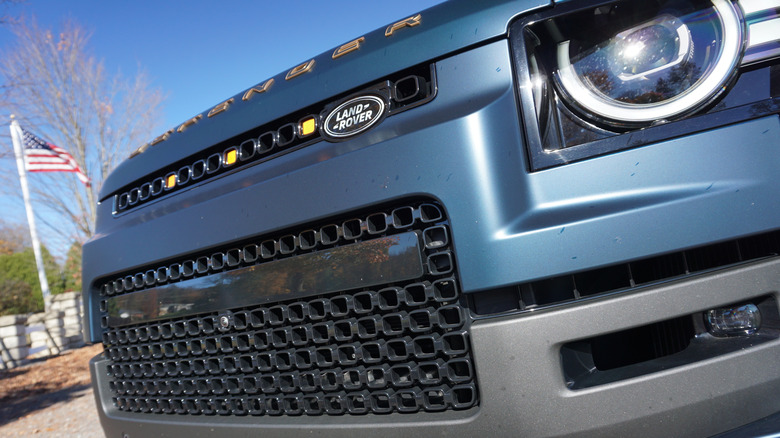
The Land Rover Defender has been on sale for more than half a decade now, and it has remained mostly unchanged since its introduction. Except for in 2024 when the British automaker brought out the hardcore Defender Octa, a desert-destroying high-speed off-roader based on the four-door 110 model with an absolute thumper of a V8 under the hood. When the Octa and its BMW-derived V8 hit the scene, we knew that time was likely up for the regular Defender 110 V8's supercharged 5.0-liter AJ V8, and even though it took a few years, Land Rover officially killed the motor over the summer.
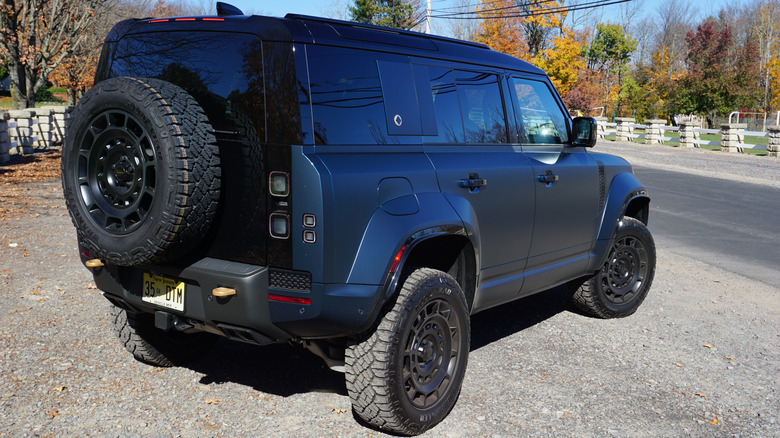
In just about every way, the Octa is a better vehicle than the old 110 V8. It has tougher looks, a beefier suspension, bigger tires and, crucially that new V8 under the hood. The BMW twin-turbo engine is more powerful and more efficient than the old supercharged Jaguar AJ133S, but like the rest of the Octa, it's severely lacking in the charm factor when compared to what came before it.
Full Disclosure: Land Rover was kind enough to lend me this 2026 Defender Octa with a full tank of gas to do with as I pleased for a week.
The ultimate driving machine
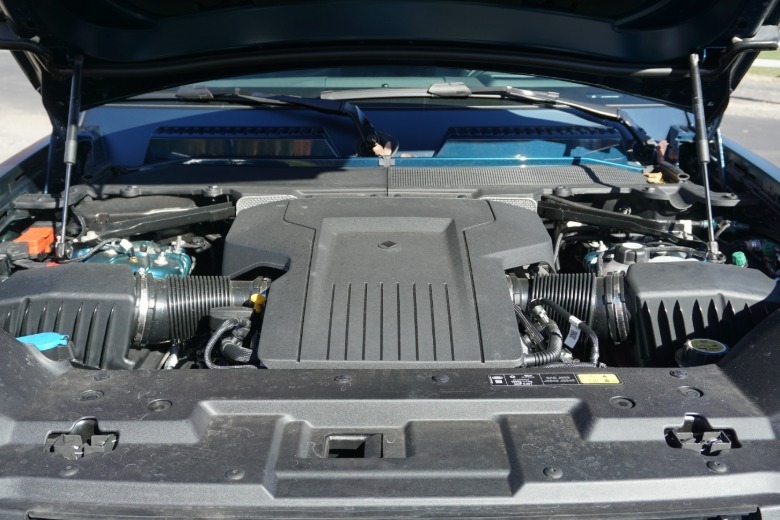
The AJ V8 can trace its roots back to the mid-1990s, so clearly someone at Land Rover decided it was time for a switchup. Just as Land Rover did with the L460 Range Rover, the automaker ditched its own motor for a BMW-sourced one, in this case the twin-turbocharged 4.0-liter S68 V8. By no means is the S68 a bad engine. Hell, it's a lot more powerful than the old one, with 626 horsepower and 590 pound-feet of torque on tap besting the old Defender V8 by 108 hp and 129 lb-ft. That's enough to drop the Octa's 0-to-60-mph to 3.7 seconds according to Car and Driver's testing, an improvement of almost a full second. Here's the thing, though — none of that is really all that important in a car like the Defender Octa.
 Andy Kalmowitz/Jalopnik
When I drove the 110 V8 back in 2023, I lauded its raucous supercharged V8, and said that every time I stepped on the accelerator, I was met with the sound of V8 thunder puncturing my eardrums. I compared the noise it produces while driving around town to that of a cigarette boat idling in a marina. You get the picture. It sounds awesome.
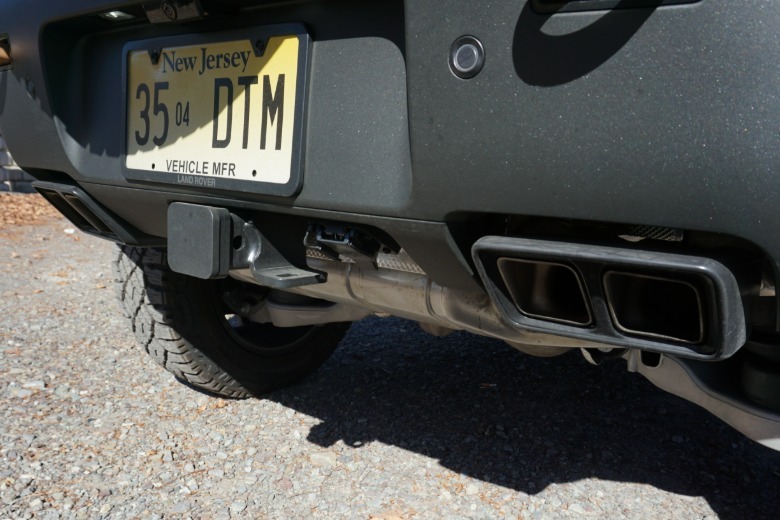
Unfortunately, the same can't be said of the S68 under the hood of the Octa. It sounds the way it does in all modern BMWs, which is a bit, well, clinical. It's certainly a better way of providing motivational power to this 5,975-pound beast, but the theatrics are all but gone. A lot of that, of course, has to do with the pair of turbochargers. They mute pretty much any noise coming out of this thing, leaving nothing but a semi-hollow bellow coming out of the quad exhaust pipes. It's a shame, too, because the Octa's chief competitor, the Mercedes-AMG G63 that also has a twin-turbocharged 4.0-liter V8, sounds absolutely phenomenal. (Thank you, side pipes.)
A lump
There's also the issue of power delivery. I know that in an off-road-focused SUV, the driver wants all the power and torque to be down low for better rock crawling or whatever, but please bear in mind that 99% of the folks who buy these cars are afraid to drive down a dirt road, so that's completely pointless. There was a joy in wringing the absolute hell out of that supercharged 5.0-liter V8, since its horsepower peak was all the way up at 6,500 rpm, just 250 rpm short of redline. Sure, torque peaked at 2,500 rpm, but with just 461 lb-ft on tap, you'd still need to really push the tachometer to get going. Meanwhile, the Octa's massive amount of torque means that the peak comes on at just 1,800 rpm. That leads to a far lazier driving style, and lazy just isn't fun, folks. We all know that.
 Andy Kalmowitz/Jalopnik
I'm a fan of progress, don't get me wrong. I think we should be moving toward a more environmentally friendly and fuel-efficient future, but if we're going to replace a forced-induction V8 with a forced-induction V8, I think it's okay to complain a little bit if the engine isn't as fun to use. From a pure fuel economy standpoint, there aren't many gains to be had either. Obviously, it's not a one-to-one comparison, as the Octa has a whole bunch of other crap bolted to it, like 2.7 inches worth of fender flares and bigger tires. It's also taller and weighs nearly 330 pounds more than the old 110 V8, so the improvements are meager, to say the least. At 15 mpg city, 19 mpg highway and 17 mpg combined, the Defender Octa only gets 1 mpg better in the city and combined cycles over the 110 V8, and highway fuel economy stays in lock-step with the old car. To be fair, none of that really matters to the folks buying this car anyway, as my tester's asking price came in at a slightly eye-watering $177,595, including destination.
Any Defender with a V8 under the hood is a silly car that deserves a silly engine, and the S68 is not a silly engine, especially when it comes to the noises it makes and how it delivers power. While a Defender Octa with a 30-year-old AJ V8 under the hood would undoubtedly be a worse overall vehicle than the one Land Rover actually produced, I can't help but think it would put a bigger smile on my face, and that's what cars like these are actually all about.