

7 Naturally Aspirated 4-Cylinder Engines That Pump Out V6 And Even V8 Power
Naturally aspirated combustion engines. Aren't they just exquisite? Nothing sends a tingle down your spine like a V12 at full tilt, and one could argue that the only thing that works harder than a free-breathing V8 is Dwight Schrute. V6s, meanwhile, are just about as versatile as inventions come, powering everything from the glorious Alfa Romeo 155 DTM to the humble Honda Odyssey.
Then there's the four-cylinder engine. It is by far the most successful of the bunch, and though it isn't quite as exotic or exciting as its peers, it can pack an almighty punch under the right hood. That is precisely what we want to celebrate in this article: the rowdiest, most powerful little naturally aspirated four-bangers ever created. We've got road cars, race cars, and even a reborn 1970s legend making appearances, and some of these would be more than capable of scaring a V6 or two (which would make, er, a V12). Saddle up — the first one's a corker.
BAC Mono R
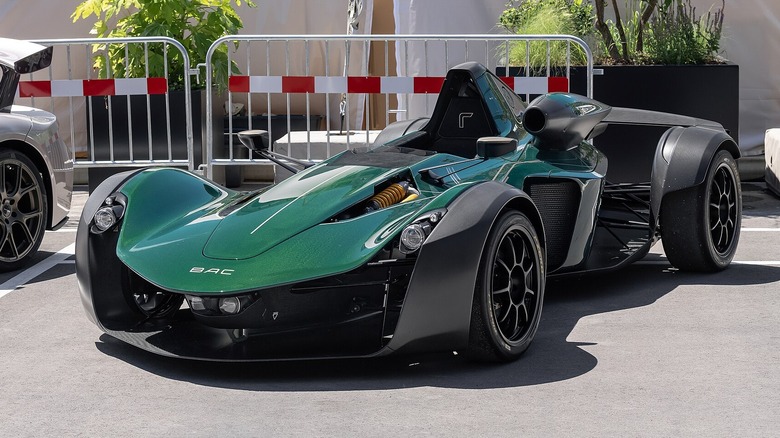
Take 1,224 pounds, spread almost perfectly between the axles, and add a 343-hp, 2.5-liter naturally aspirated four-cylinder. Sounds like quite the recipe, doesn't it? The Mono R delivers precisely the sort of statistical hit squad you'd imagine: 0 to 62 mph in 2.5 seconds and a top speed of 170 mph. Oh, and that engine also spins to a wicked 8,800 rpm – and since the only gearbox option is a six-speed sequential, you can really max those revs out before upshifting.
More numbers, did you say? Sure. The Mono R develops 137 hp per liter, which trumps even the Porsche 918 Spyder hypercar. It also delivers a power-to-weight ratio of 618 hp per metric ton, superior even to the unhinged Lamborghini Sesto Elemento. All this helped BAC set a new production-car lap record at the Red Bull Ring in Austria, beating the previous leader, the Ferrari LaFerrari, by almost 6 seconds.
Honda S2000 AP1
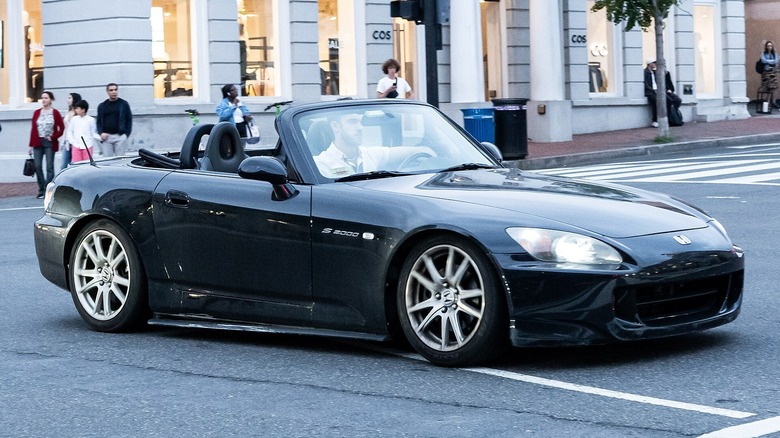
Widely considered to be one of the finest two-seat driver's cars ever made, the Honda S2000 is nothing short of a mechanical masterpiece. Its engine is a screamer: two liters, four cylinders, and a bit of VTEC wizardry sprinkled on top, culminating in a 9,000-rpm redline. The F22C1 engine in the S2000 may have been unique to the U.S., but it wasn't the cream of the crop.
That accolade goes to the original F20C, which produced 247 hp (as opposed to 237 hp). Small margins, sure, but the F20C's specific output of 123 hp per liter remained a record for naturally aspirated production engines for about a decade. It was eventually dethroned by the stunning Ferrari 458 Italia, and in truth, there's nothing to be upset about there. Here's a fun fact for you: at its redline, the S2000's engine had a mean piston speed of 4,960 feet per minute (25.2 meters per second), which was even more than what in-period Formula 1 engines could manage.
BMW M3 E30
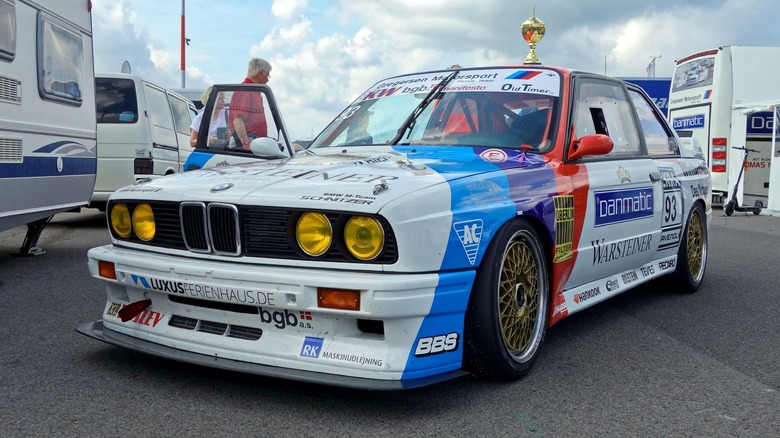
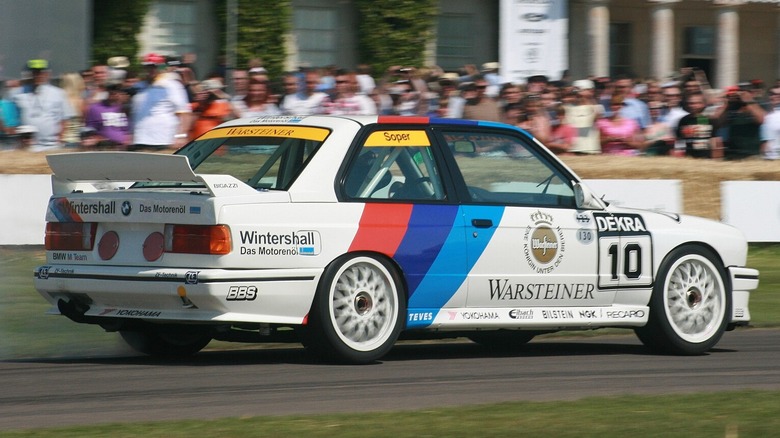
These days, the E30 M3 is riding high as a cult icon whose design speaks to almost everybody it passes, but back in the late 1980s and early 1990s, it had absolutely no problem getting those perfectly symmetrical kidney grilles dirty.
In its first two seasons in touring car racing, the E30 M3 won titles in England, France, and Germany, and even became a world champion. In fact, during its five-year racing career in Group A, the E30 M3 is estimated to have won more than 1,400 races worldwide. That averages out to one race win every 31 hours.
At the heart of its success was the S14 four-cylinder, and it's an engineering marvel. While the road cars topped out at 238 hp, the most potent racing versions reached 360 hp. It was famed for its durability too, which is why it conquered the Nürburgring 24 Hours four years in a row.
Ford Escort Mk1 RS by Boreham Motorworks
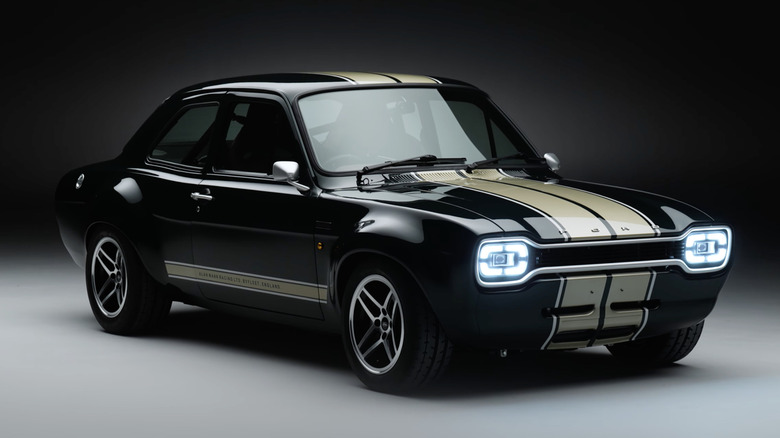
Now here's a ground-up revival project that's easy to get behind. Built by a small British firm called Boreham Motorworks under license from Ford, it is effectively a first-generation Ford Escort RS that weighs under 2,000 pounds, is rear-wheel drive, uses a five-speed dogleg transmission, and doesn't try too hard to reinvent the original car's design. The RS's engine is called the TEN-K, and that should give you a clue as to what makes it so darn special.
Yes, you guessed it: the TEN-K screams to 10,000 rpm. Boreham Motorworks has somehow also managed to squeeze 325 hp from its tiny 2.1-liter displacement without using a turbocharger — a remarkable feat when you consider that the engine weighs just 187 pounds. For some perspective, the 1.0-liter four-cylinder that BMW put in its maniacal S 1000 RR superbike weighed just under 132 pounds when it launched. All things considered — weight, power, redline, and so on — the TEN-K simply has to be one of the finest engineering feats of recent times.
Alfa Romeo 1750 GT Am
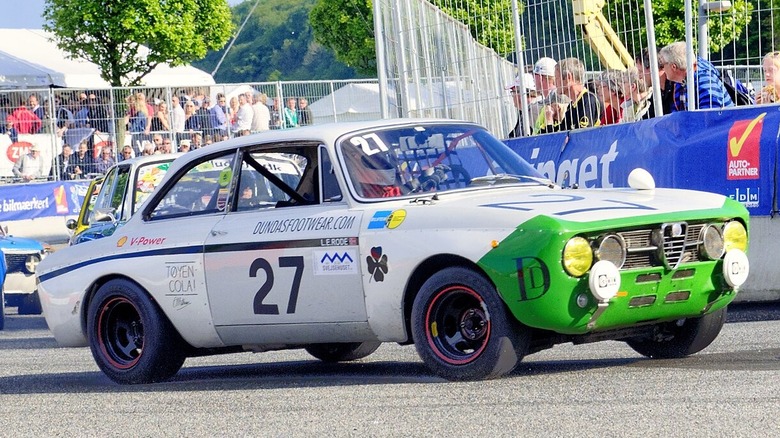
The 1750 GT Am was an evolution of Alfa's touring-car recipe of the late 1960s, and what a sumptuous dish this turned out to be. Its angry little 2.0-liter unit may have produced only 210 hp and topped out at 143 mph, but the GT Am weighed just 2,072 pounds – about the same as the average daily yield on the Schrute Beet Farm. Precise acceleration times are unknown, but we'd wager the GT Am would be a good match for some of the best hot hatches of all time.
It stormed to the 1970 European Touring Car Championship, bagging wins at Monza, the Nürburgring, and Zandvoort en route. Its successor, the 2000 GT Am, kept the same displacement, though it gained a noticeable power bump to 240 hp. Alfa won the manufacturers' title in 1971 by topping the podium at tracks like Paul Ricard and Spa-Francorchamps. This car is yet another demonstration of how devastatingly effective four little cylinders can be.
Honda Civic FD2 Mugen RR
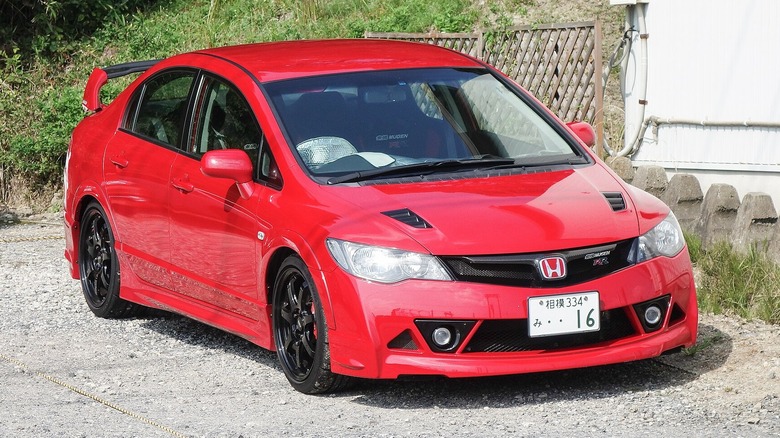
The Honda Civic is a deeply impressive thing. In fact, the 2025 hybrid's estimated 48 mpg makes it the platonic ideal of economical cars. What we really love, though, is how easily the Civic nameplate can turn into a hooligan. Take the FD2 Mugen RR, for instance: it uses the same K20A four-cylinder as a standard FD2 Type R, but gets upgraded camshafts, a larger air intake, and stiffer valve springs, among other changes.
The result is a 240-ish-horsepower, front-wheel-drive grip monster that gets to 62 mph in under 6 seconds. That searing pace helped it record a 1:00.6 lap around Japan's Tsukuba Circuit, which is mighty impressive. Just 300 examples of this limited edition were ever produced, though, and all for the Japanese market. The Mugen RR is also close to entering classic-car territory now (it was released back in 2007), so getting your hands on this four-cylinder maniac may prove... difficult.
Porsche 968 Club Sport
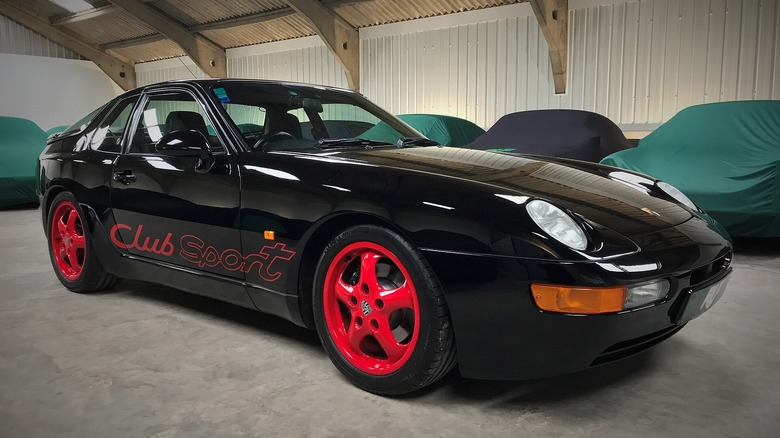
When it was launched back in 1993, the Porsche 968 CS had the biggest four-cylinder road-car engine in production at 3.0 liters. Just think about that for a second: a 3.0-liter four-cylinder engine. That's the same size as the straight-six in the BMW M3 G80, and even the flat-plane-crank eight-cylinder in the Ariel Atom V8. The engine was dubbed the M44/43, and the upshot of all that chubbiness is 236 hp, 0 to 62 mph in 6.3 seconds, and a top speed of 160 mph.
Beyond just the raw numbers, this engine featured several technological breakthroughs for Porsche. The main one was VarioCam technology, which optimized torque at low-to-mid engine speeds while heightening the power delivery further up the rev range. Porsche even says the legendary Walter Röhrl, a two-time WRC champion, called the 968 CS the marque's best-handling car at the time. Still think naturally aspirated four-cylinder engines are just small and puny?