

Analysts Say Japan And Korea Will Eat The Big Three's Lunches
Happy Thursday! It's October 1, 2026, and this is The Morning Shift — your daily roundup of the top automotive headlines from around the world, in one place. This is where you'll find the most important stories that are shaping the way Americans drive and get around.
In this morning's edition, we're looking at the Big Three's chances against Japanese and Korean offerings, as well as Europe's slow return to Tesla. We'll also look at VinFast's U.S. plans, and how European automakers want to grab American dollars.
If you'd like a recap of the latest auto news sent to your inbox each weekday, you can sign up for Jalopnik's free Morning Shift newsletter here.
1st Gear: GM, Ford, and Stellantis are set to lose out to more efficient Japanese and Korean competiton
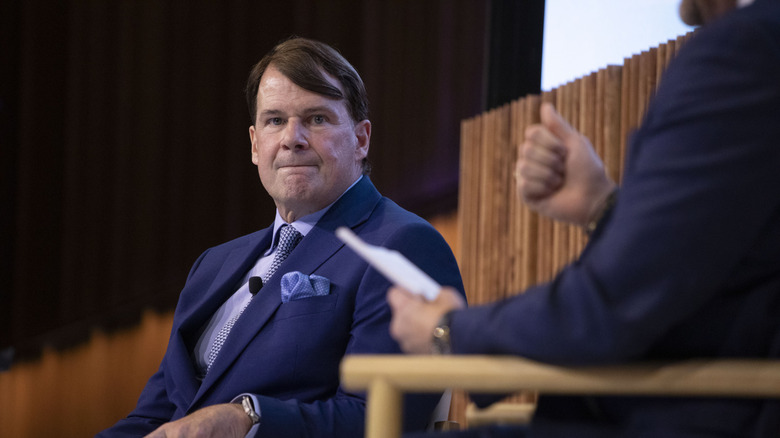
The Big Three are very concerned about Chinese competition — so concerned, in fact, that they're asking for legislation to ban Chinese cars from hitting U.S. shores. Unfortunately for Detroit, though, the current competition doesn't seem to be coming from China. It's coming from Japan and Korea, countries that actually build the hybrids our domestic automakers have largely eschewed. From Reuters:
The Detroit Three are expected to lose ground to Asian rivals when they report third-quarter US sales this week, according to experts, as soaring gasoline prices due to the Iran war push buyers towards hybrids and more fuel-efficient models.
General Motors, Ford Motor and Stellantis could see their combined market share dip to around 36% in the third quarter, while hybrid-heavy Asian brands including Toyota and Honda are expected to account for more than half of new vehicle sales in the period, industry research firm Cox Automotive said.
Hybrids have emerged as a top choice as consumers look to avoid high gasoline prices, which hit a national average of $4.43 a gallon in September, according to AAA, compared with $3.20 a year earlier.
Maybe the issue isn't China. Maybe the issue is that American cars simply aren't competitive in the ways they need to be right now. I recently had two very similar press loaners back to back, cars asking similar money in the same segment, but one was Japanese and the other American. One surprised me with how much you got for the money, and the other was the worst vehicle I have ever driven for this job. No points for guessing which was which.
2nd Gear: Europeans are slowly crawling back to Tesla
As gas prices rise ever higher thanks to our extremely foolhardy war on Iran, buyers are flocking to more fuel-efficient vehicles. This has been a boon to Tesla, which had been flagging internationally in no small part because of its controversial CEO — it seems buyers are ignoring that in favor of easing the pressure on their own wallets. From Reuters:
Registrations of new Tesla cars rose across several European markets in September, extending a rebound in the US electric vehicle maker's regional sales.
Tesla registrations, a proxy for sales, rose 61.9% in France, 2.2% in Norway and 38.4% in Sweden from a year ago, data released by French car body PFA, Norway's data compiler OFV and Mobility Sweden showed on Thursday.
The gains add to signs of a broader Tesla recovery in Europe after two years of declining sales.
According to the European Automobile Manufacturers' Association, Tesla registrations across the European Union, Britain and the European Free Trade Association rose 43.3% between January and August, outpacing the broader battery-electric vehicle market, which grew 38.8% over the same period.
It's going to be interesting to watch whether these numbers change at all now that Elon Musk has been appointed to the Pentagon's "Project Meridian" to study the future of warfare. With the CEO of Tesla now having an active hand in the United States' warmongering, will car buyers keep that in mind when they make their purchase decisions? Or, will Musk's inevitable recommendations of things like "Cybertruck technicals" stymie U.S. war efforts so much as to make him an inadvertent hero of the anti-war movement?
3rd Gear: VinFast is still trying this in the U.S.
Remember VinFast, that Vietnamese carmaker that built a truly shoddy crossover and tried to cover it up with the world's creepiest press trip? Well, it's still around in the U.S., and the company is saying that it's not going anywhere. From Automotive News:
Vietnamese automaker VinFast is reviving its U.S. sales push with a flurry of moves, including a certified pre-owned vehicle program, a freshened VF 8 crossover and three new franchised dealerships to bolster a dwindling retail footprint.
"This is more than an expansion of our network," Brian Finnerty, CEO of VinFast North America, said in a Sept. 17 news release. "It is a long-term commitment by VinFast to the U.S. market as we enter our next chapter of growth."
But the electric vehicle maker faces headwinds amid sliding sales, a limited lineup and a lawsuit by North Carolina to claw back a factory site. The state alleges VinFast missed construction deadlines as the automaker seeks an extension.
There comes a point where it's no longer profitable to run a U.S. wing of your company, but VinFast is long past that. The next point will be one where it's financially untenable to keep bashing your head against the wall of the U.S. market, and that point only depends on how much money the company is willing to throw at the problem. Or how much it can without going under.
4th Gear: European automakers are targeting U.S. buyers with big crossovers
As the U.S. auto market shrinks, thanks to buyers having less and less money to spend, automakers are shifting their priorities to the segments that have so far proven immune to failure: Big, high-dollar SUVs purchased by wealthy parents. Now Germany wants in on that segment, and every automaker is doing its best to nose in. From the Wall Street Journal:
BMW, Audi and other European carmakers are trying to revive their sales with a new generation of supersized luxury SUVs in America.
BMW is looking to make a supersized sport-utility vehicle specifically for the U.S., it told investors in Munich this week. Volvo Cars has said it would introduce a larger SUV in the U.S. as part of a major portfolio revamp. And Audi recently launched the Q9, its first full-size SUV, on the roof of a New York hotel.
"Americans love big SUVs. So why don't we listen to that?" Volvo Cars Chief Executive Håkan Samuelsson said in an interview.
Bigger crossovers and SUVs cost more money. Cars that cost more money require buyers that have more money. As the U.S. wealth disparity grows ever greater, those big-car buyers are quickly becoming the only people that have any chance of buying a new car — thus, this focus on the segment. It's economics all the way down.
Reverse: Someday I'll go there
The idea of falling asleep on a portaledge 2,000 feet up El Cap terrifies me, which means I have to do it. That's a life goal.
The Fuel Up
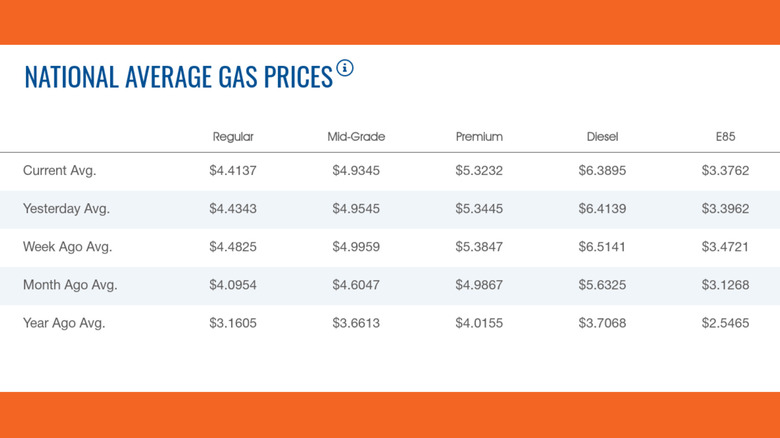
Oil supplies aren't set to recover for a good long while, but prices are dropping. Surely we won't see a reversal of this pattern any time soon.
On The Radio: The Front Bottoms - 'Help'
It's beautiful out, but summer is ending on a melancholy note. Listen to The Front Bottoms about it.