

2026 Yamaha R7 Is A Scalpel For All Your Hammering Needs
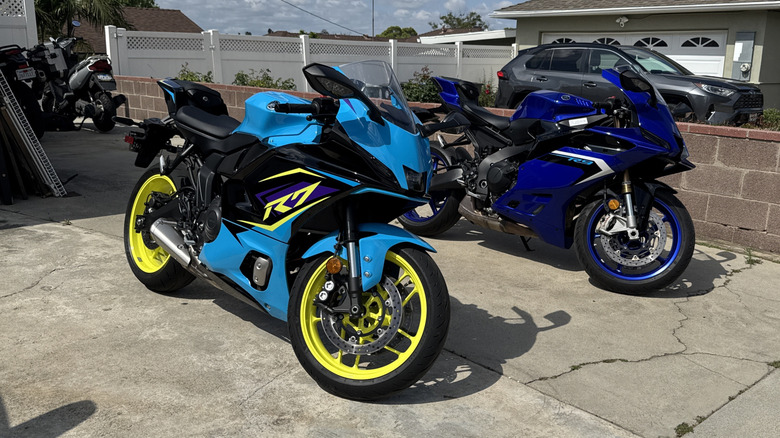
The Yamaha R7 is the company's best-selling bike in the United States, and it's emblematic of a broader shift in motorcycling: Middleweight four-cylinders are being replaced by twins, with the R6es and GSX-R600s of yore slowly being replaced on city streets by these 270-degree parallel twins. So why does the hottest bike in the hottest segment of motorcycling feel like it doesn't want to be on the streets at all?
To find out, I spent a weeklong vacation in Los Angeles atop a brand new R7. I tore through canyon roads on it, split (splote?) through massive California highways, visited friends and filming locations and Neptune's Net. I put the bike through every daily-riding task I could imagine. After those seven days, I could only come to one conclusion: The R7 doesn't feel at home on the road because it's simply too good for the use case.
Full disclosure: Yamaha loaned me an R7 with a full tank of fuel to use during a week spent in Los Angeles. I bought my own plane ticket and lodging, but Yamaha's press representative did show me which canyons were the good ones. That's almost worth more.
How we got here
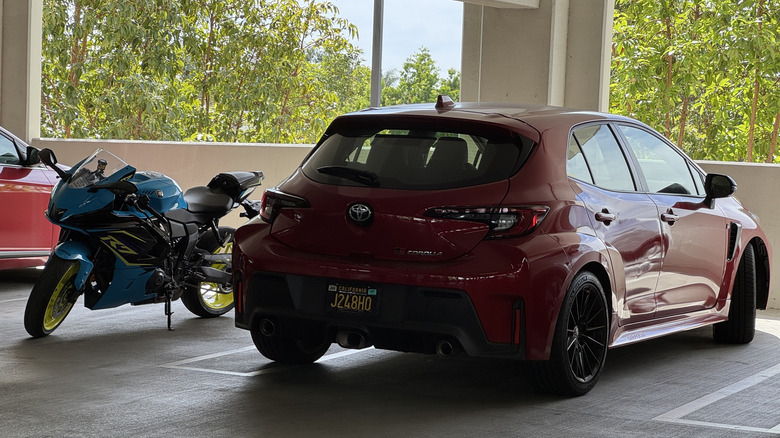
The R7 is emblematic of a shift within the motorcycling world, but the parallel twin era didn't start here. Kawasaki has offered a P-twin Ninja since 1987, but European emissions regulations have recently been pushing manufacturers to shrink their cylinder counts, forcing more manufacturers to join in. The R7's CP2 engine arguably kicked off the modern era of 270-degree middleweight twins, though even that mill debuted in the FZ-07 long before the R7's release (and the FZ-07 arguably just followed in the footsteps of the V-twin-powered Suzuki SV650).
With the death of the R6, Yamaha made a statement: The R7, the parallel twin, is the future of middleweight sportbikes. Honda seems on board, with its U.S.-market CBR600RR languishing while other markets receive an updated bike. Even Suzuki has jumped on the train — you can still get a GSX-R600, sure, but the company moves more of its new GSX-8R.
Why 270-degree twins?
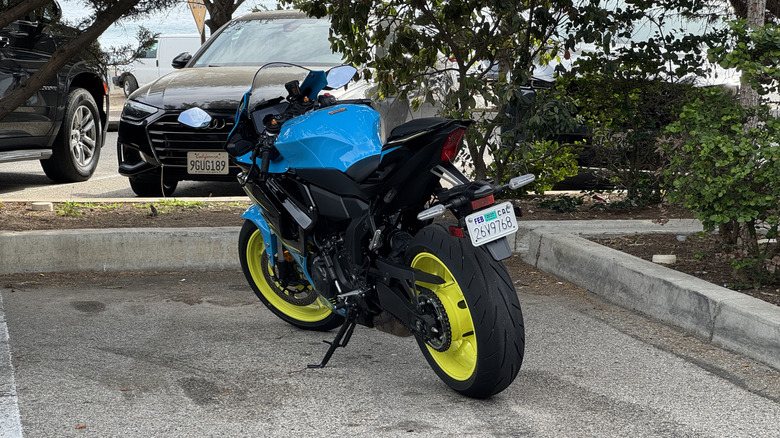
If you've been wondering why I keep mentioning three-quarters of a circle over and over again, never fear. The 270-degree number in the R7's engine refers to its crank offset, the degrees of engine rotation between the first and second cylinders' top dead center. The 270-degree layout has given manufacturers a new feel in the same old parallel twin packaging, allowing them to make something that feels more like a torque-rich V-twin than a Triumph's methodical 180-degree ticking, or a Rotax BMW's odd, thumper-like 260-degree layout.
Having ridden all three (and owned two), I can confirm that 270-degree twins just feel better than 180- and 360-degree jobs. My own GSX-8R was a joy to take into traffic, because the rich low-end torque made it breeze easily through stop-and-go highways, yet the top-end power wasn't such a downgrade from a four-cylinder as to feel like a real compromise.
The R7's 689cc CP2 engine may be largely to thank for the current 270-degree era of motorcycling, but it's grown a bit long in the tooth. It still has the combination of usable power and low-end torque that made it noteworthy — 74 horsepower and 50 pound-feet in the R7, according to Yamaha — but it's lacking in refinement compared to Suzuki's 776cc mill from the GSX-8 twins. It still scooted through low speed traffic like nobody's business, lane splitting through Los Angeles like it was born to do just that, but there was more vibration through the seat and the bars along the way.
For the 2026 R7, Yamaha did give the engine some niceties. Those come in the form of electronics, with a six-axis inertial measurement unit that's paired with a ride-by-wire throttle — a combination that enables lean-sensitive traction control, slide control, ABS, wheelie control, and good ol' fashioned ride modes. There's also a new generation of up-down quickshifter, which does its best to match the smoothness of Suzuki's fancy new patented balancer.
Not exactly a tourer, but a canyon beauty
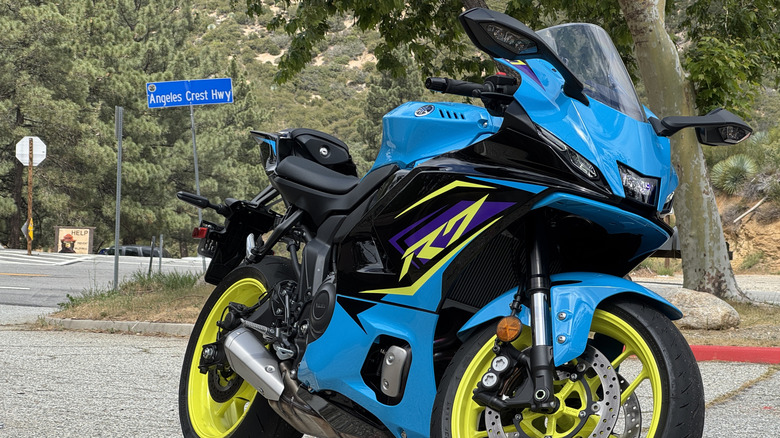
But while my old GSX-8R was milder than its four-cylinder 600 sibling, with its more streetable engine matched to less-committed ergonomics, the R7 takes a different path. It was almost punishing to ride, with a rider triangle less comfortable than even the Kawasaki ZX-4RR (though with a more comfortable seat). The weight of your upper body will rest on your wrists, you will get tired on long highway hauls, and your back and butt will be sore after a long ride day — or multiple short trips.
The R7 does not compromise its race-ready ergonomics for approachability. It is not meant to be comfortable for passengers or even for long-legged riders, and it certainly doesn't make accommodations for luggage. It's unforgiving over pot holes and road bumps, and I found myself leaving the bike in neutral at every red light so I could stretch my upper body.
When I got the R7 out of the city, though, it really shone. Those ergonomics that were so uncomfortable in traffic made the bike dance in corners, responding to merely weighting the pegs as if I'd thrown the whole bike to one side or the other. I've never ridden a more responsive chassis, and I doubt I'm likely to any time soon. The word "telepathic" is overused to describe motorcycle handling, but the R7 truly did respond at nearly the speed of thought.
The torque curve that made the R7 split so easily through traffic was helpful on an empty canyon road, too. Wondering which gear to pick for a corner on a road you've never ridden before? Just throw it in third — it may not be perfect, but it's very unlikely to be wrong. Such flat torque delivery made the bike incredibly forgiving compared to its four-cylinder counterparts, with the only caveat being less top-end power. You probably shouldn't be using all 120 horses of an R6 on the street anyway.
Would I buy one?
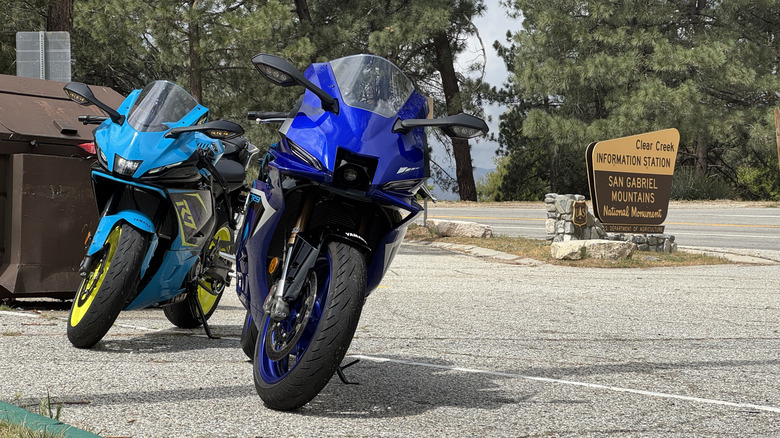
Absolutely, unquestionably, almost. If the CP2 mill had just a touch more character, I'd probably have an R7 parked outside my apartment right now — after all, I already owned Suzuki's competitor. But after so many years of 270-degree twins, so many years of the CP2, it's just tough to justify dropping $9,400 on yet another middleweight twin sportbike. Especially with such aggressive ergonomics, I just want something that feels a bit more unique for that money. The R7 is beautiful, delicious overkill, but it lacks a bit of spirit.
The worst thing about the R7, really, can be found elsewhere in Yamaha's own lineup: For the cost of a new R7, you could get yourself a used R9 and have all the character of the CP3's three-cylinder mill. To save a few bucks, used R7s are all over Facebook Marketplace — the CP2's lack of spirit feels a bit better when you grab one used for $7,000 instead of dropping nearly $10,000 at a dealer.