

Trump Administration Warns Ford Against Making Deals With Chinese Companies
Happy Wednesday! It's September 9, 2026, and this is The Morning Shift — your daily roundup of the top automotive headlines from around the world, in one place. This is where you'll find the most important stories that are shaping the way Americans drive and get around.
In this morning's edition, we're looking at the Department of Transportation's strongly worded letter to Ford over its suppliers, and Germany's refusal to let Volkswagen stop being Volkswagen. We'll also look at China pushing foreign companies to pay suppliers faster, and Kansas Republicans pushing back on anti-Bombardier animus.
If you'd like a recap of the latest auto news sent to your inbox each weekday, you can sign up for Jalopnik's free Morning Shift newsletter here.
1st Gear: Sean Duffy wrote Ford a letter demanding it stop working with companies based in China
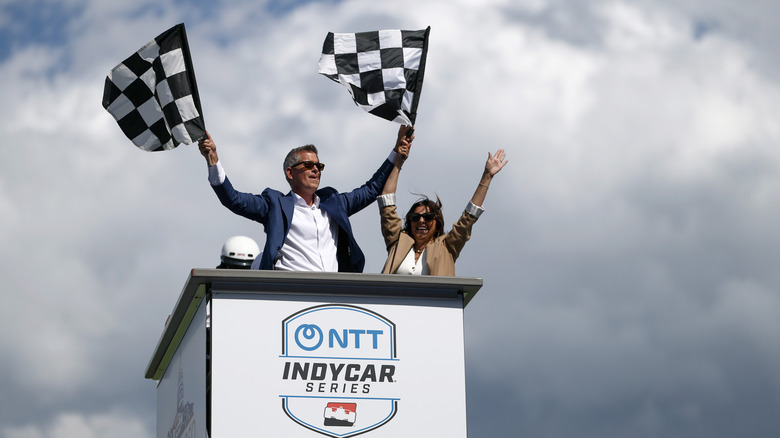
The Trump administration is big on U.S. isolationism, demanding that all our products — and their subassemblies, and their components, and their raw materials — come from, be built on, and be sold on U.S. soil. This is tricky for automakers like Ford, which rely on outside suppliers for components like batteries, many of which are based in China. From the Wall Street Journal:
Transportation Secretary Sean Duffy sharply criticized Ford Motor's business with Chinese automotive firms, saying the company's "reliance on technologies of foreign adversaries" isn't sustainable for America.
"While DOT recognizes the intense competitive pressures of the global market, the company's recent strategic decisions paint a troubling picture of a foundational American brand actively intertwining its future with Chinese state-backed enterprises," Duffy said in a letter to Ford Chief Executive Jim Farley that was made public Tuesday.
Duffy also called the manufacturing of Lincoln vehicles in China for the U.S. market "unacceptable."
It's all but impossible to build a car entirely from raw materials to a functioning vehicle in the U.S., using only U.S. workers and components, the way the Trump administration wants. Calling out U.S. automakers for using cost-effective suppliers is only going to hurt price competitiveness long-term.
2nd Gear: German state government won't let Volkswagen stop making Volkswagens
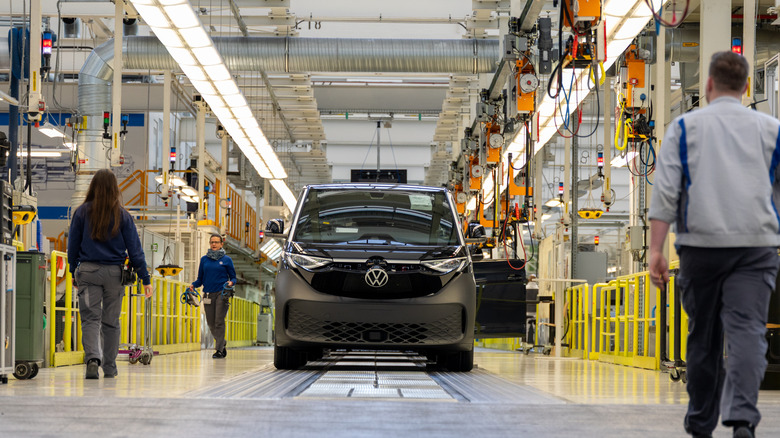
Volkswagen CEO Oliver Blume has been pulling out all the stops to make the company more profitable. This has already included attempts to sell a factory to Israeli arms manufacturers, and now there's a new idea on the block: Getting rid of the whole pesky "Volkswagen" part of the company. Fortunately, the government of the German state of Lower Saxony isn't into this idea. From Automotive News:
Volkswagen Group faces opposition to spinning off three key businesses including its namesake brand, highlighting the limits confronting CEO Oliver Blume as he tries to reshape Europe's biggest automaker.
Lower Saxony Premier Olaf Lies signaled Sept. 9 that the state would block any attempt by VW to separating those divisions. "A spinoff of the core Volkswagen Passenger Cars, Volkswagen Commercial Vehicles and Components businesses was not approved — and would not have been possible with me and the state either," Lies told the state parliament.
Lower Saxony owns 20 percent of VW's voting rights and has two supervisory-board seats, giving it an effective blocking minority over major decisions requiring more than 80 percent shareholder approval.
Back when I was in college radio, our business director had an idea: If we just sold all this pesky radio equipment and used the proceeds to buy a dairy farm, we'd be way more profitable. That's what this idea from Oliver Blume sounds like: What if Volkswagen got rid of the whole "Volkswagen" albatross around its neck, and became a company purely made of spreadsheets? Honestly, it sounds like the average MBA's dream.
3rd Gear: China wants automakers to pay for parts in a timely manner
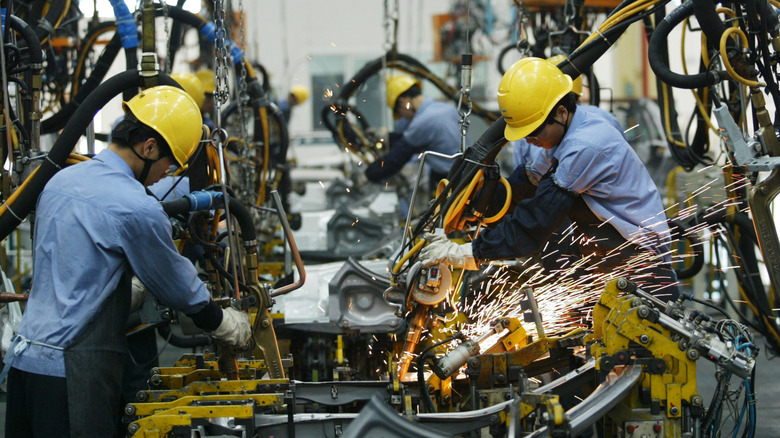
Speaking of Chinese suppliers, those companies aren't loving how long it takes for their payment to get in once they ship components. Now the Chinese government is stepping in, demanding that automakers pick up the pace on making payments. From Bloomberg:
China has tightened requirements for carmakers to pay suppliers faster, encouraging settlement in as little as 30 days to protect the broader auto industry from the effects of a long-running price war.
The country's Ministry of Industry and Information Technology also ordered carmakers to prioritize "cash" payments — such as instant bank or wire transfers — rather than bank notes or promissory notes, which just push settlement terms out further.
The moves, posted by the ministry on Monday, come as Beijing has been trying for the past year to contain the fallout from excessive discounting that has eroded profitability across the industry. Despite regulators ordering in 2025 that payment terms be shortened to 60 days, the likes of Li Auto Inc. and Zhejiang Leapmotor Technology Co. took as long as 184 days in the latest half-year to settle bills, according to data compiled by Bloomberg.
Business-to-business transactions usually aren't completed the way we're all used to, where you pay someone for a thing (say, a bacon egg and cheese sandwich) at the time it's delivered. Instead, businesses usually shift money into "Accounts Payable," where it languishes (earning interest, of course) until the very last second a contract demands the company pay up. That's often 30 days, but it seems some automakers have stretched that even further in China.
4th Gear: Kansas Republicans push back against Trump's threats of a Bombardier ban
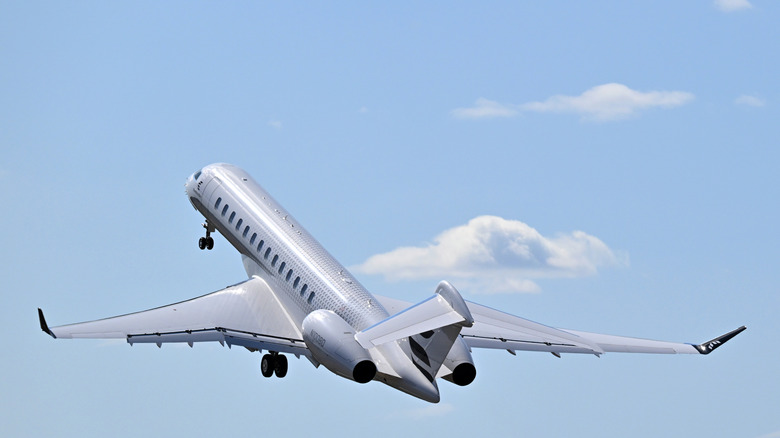
Kansas, a Republican stronghold, is pushing back against the Trump administration. Why? Because Trump's trade war with Canada has come for Bombardier, a Canadian company that employs Kansans. From Reuters:
MONTREAL/WASHINGTON Sept 8 (Reuters) – U.S. President Donald Trump's threat to ban Bombardier jets from the United States began to backfire on Tuesday after Republicans in Kansas, where Bombardier employs around 1,500, vowed to protect those jobs ahead of a key November election.
Fears over Bombardier losing access to a market which accounts for about half of the company's sales led some Republican lawmakers to reach out to the White House, as their Democratic rivals jumped on the issue in the largely red state.
Roger Marshall, a Republican U.S. senator for Kansas who is running for re-election, said he would fight to save Bombardier jobs in his state. "I've already taken that concern inside the Oval Office," he said. Bombardier has 3,500 jobs in the U.S., more than 40% of which are in Wichita, Kansas.
Kansas loves Trump, as my cousins in the area know well. But the state doesn't always love the fallout of the Trump administration's policies, and this is a perfect example. Banning an entire foreign company is an easy thing to say in a trade war — not actually an easy thing to implement, since no one knows exactly how the Trump administration could logistically do this — but it's tougher to look through Bombardier's entire supply chain and ensure U.S. workers aren't affected.
Reverse: Attica! Attica!
From Attica to Anna Delvey, you never know what you're going to get in an upstate prison.
The Fuel Up
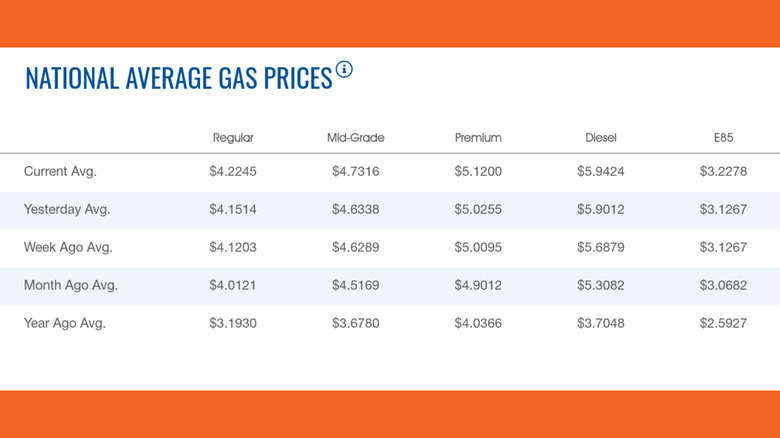
Woof. Seven cents in a single day is a bonkers jump for regular, and mid-grade and premium both beat that with 10-cent increases. I guess diesel already had its big spike, but things could still get worse.
On The Radio: Alt-J - Tessellate
I whacked my head pretty good while rock climbing yesterday, so this morning's music vibes are nice and chill.