

This Well-Preserved German Military Motorcycle Was One Of Many Relics Buried In WWII Waste Pit Uncovered By A Drying Danube
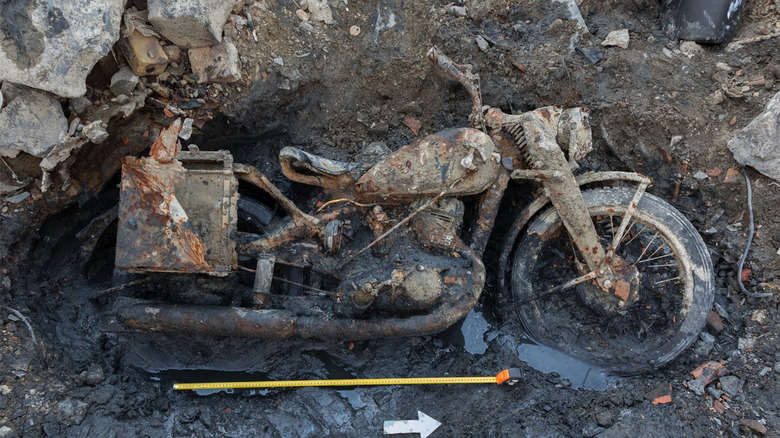
It's been well over 80 years since the final days of World War II and yet we're still uncovering newfound relics from its wartime trenches. Global warming has been ever-so helpful in our efforts, as dropping water levels–like in the Danube most recently–has revealed wartime materials and machines like this German war courier bike in early August. Luckily, the motorcycle's watery Hungarian grave was able to preserve it and many other items discovered around it, but mysteries as to how it got there and why remain unanswered, at least for now.
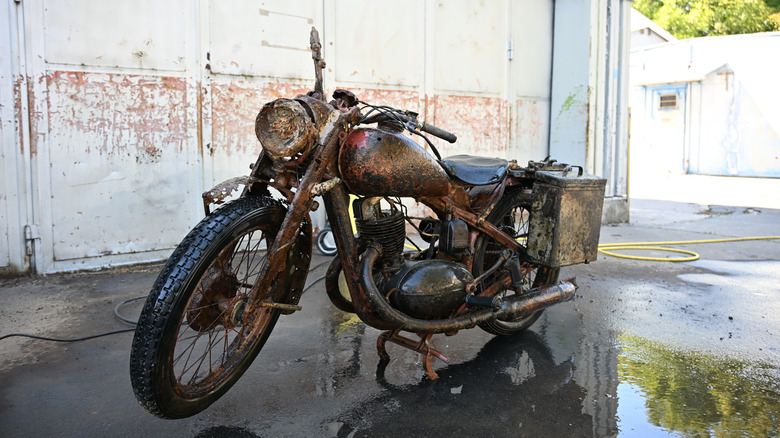
As shared by the Hungarian Military Institute and its Museum of Military History, it was confirmed that the unearthed wartime bike found in Budapest, is indeed a German DKW NZ 350-1 motorcycle. DKW, or "Das Kleine Wunder" which meant "the little wonder," according to Historic Vehicles, was a major producer of motorcycles leading into the second World War for Germany. The company actually became a part of the Auto Union group, which also housed Audi, back in the Great Depression.
Going into World War II, the German Wehrmacht were not super interested in utilizing DKW's two-stroke bikes. But motorcycles had become significant tools for military strategy and movement, much like how beneficial Harley-Davidson and Indian were to the U.S. front. In need of something similar, DKW built the NZ 350 featuring a 346cc two-stroke engine with a top speed of 62 mph, which became essential for the German forces.
What lay beneath
As the Danube levels dropped, people walking along the river in Batthyány Square quay had spotted a fork of a motorcycle sticking from the rocks. The Institute and Museum were called in to determine what it was and try to extricate it from the surrounding sediment and rubble. There it was confirmed the bike was a German DKW NZ 350-1, which would have been used during the war. Around it also lay several mines, hand grenades. and artillery shell remnants which required special military assistance for proper handling and disposal.
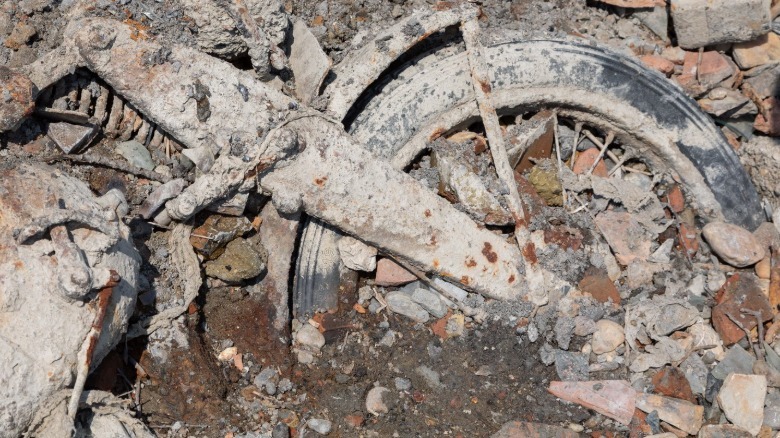 Volksbund – Istavan Hajdu / Simone Schmid
Removing it was tricky due to the surrounding old ammunition, as well as the fact that the bike had taken on a considerable amount of mud and water over the last eight decades, and weighed in at a solid 440 pounds. Also found around it were two sets of human remains, which have been yet to be identified, according to Volksbund Deutsche Kriegsgräberfüsorge e.V. (German War Graves Commission).
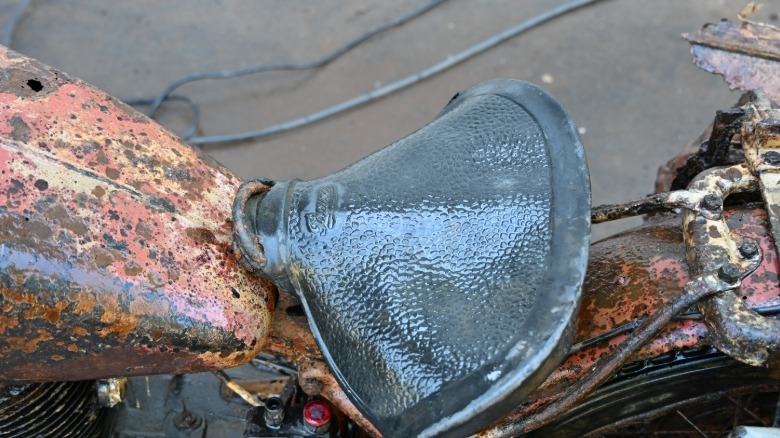 Volksbund – Istavan Hajdu / Simone Schmid
It is unclear whether the remains belong to say the rider and a passenger for the bike, or if they were wartime casualties thrown into a wartime rubble or waste pit, which was common after battle or leaving an occupied area. Two dog tags recovered near the area belonged to a Wehrmacht soldier and a Waffen-SS member, but whether the two are connected is also unknown.
The bike has since been cleaned up and remains a relatively well-preserved piece of WWII history. The story of how it met its fate in the Danube, and its two companions buried with it may be even more intriguing once all of the missing pieces are put together.