

Fear Traps Buyers In Boring Grayscale Cars That They Park In Front Of Boring Grayscale Houses
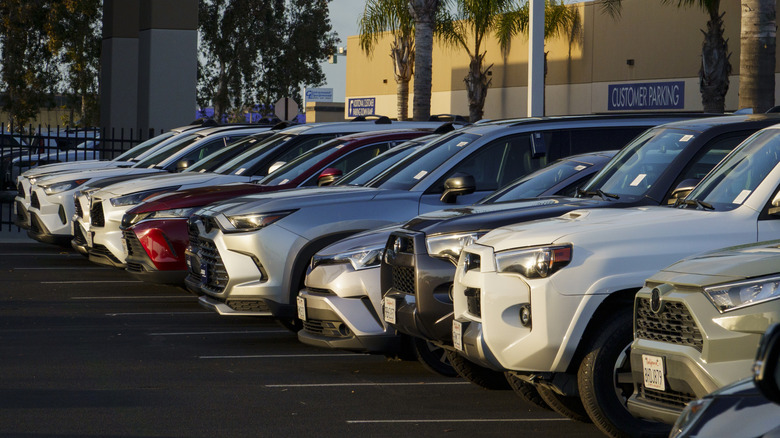
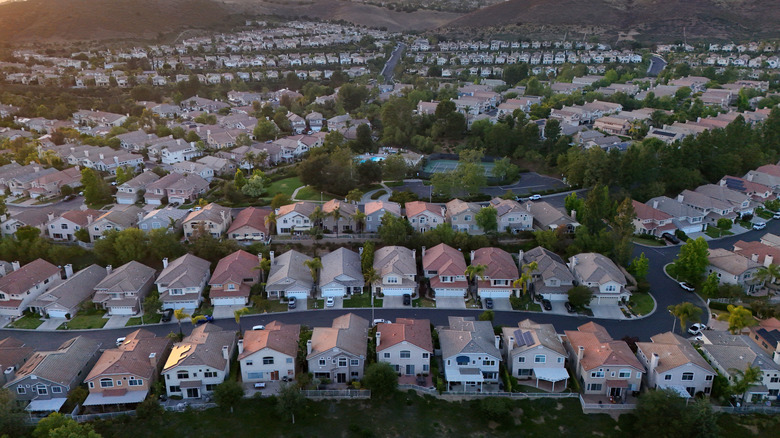
As depressing as it is to look at the limited color options on automakers' websites, at least you can usually find a good color or two. Visit any random dealer lot, though, and good luck finding more than a handful of cars that aren't white, black, silver, or gray. Sadly, it isn't simply a problem with cars. Anyone who's bought a house or toured apartments can tell you housing in the U.S. is just as sad. According to a new article in the Atlantic, our largely color-free existence isn't going anywhere anytime soon, either. Not when so many buyers are driven by fear.
Black, white, gray, and silver have long been popular paint choices for cars. After all, who doesn't remember Henry Ford famously initially refusing to sell the Model T in any color other than black? But there's no denying how much less colorful cars have gotten in recent decades. As the Atlantic put it:
The share of new cars in grayscale colors rose from 60 percent in 2004 to 80 percent in 2023. Production of purple cars dropped 93 percent over that period, gold by 97 percent. "I don't know how many different variants of silver and gray there could possibly be, but I think BMW and Mercedes have discovered it," Karl Brauer, the analyst behind the report, told me.
Of course, if you're willing to pay for the privilege, you can order a BMW 3 Series in a real color instead of the no-charge black or white, but even a basic 330i with red paint gets expensive fast. In the builder, Vegas Red Metallic only costs $650, but it requires adding both the M Sport and Convenience Packages, pushing the price up $4,300. The same goes for Portimao Blue Metallic, but if you want Mineral White Metallic, the blue-ish gray Arctic Race Blue Metallic, Skyscraper Gray Metallic, or Black Sapphire Metallic, BMW doesn't require adding any additional packages.
We're scared of color
You could lay part of the blame for the limited availability of colorful cars on the Clean Air Act of 1970 and the Toxic Substances Control Act of 1976, since banning a few toxic substances made colorful car paint more expensive. Then again, it's not like colors disappeared as soon as the oil embargo hit. Paint tech hasn't sat stagnant for 50 years, and those of us who are old enough to remember the 1990s saw plenty of colorful cars on the road. For a lot of buyers, though, new cars are expensive, and worries about resale value appear to be pushing them away from anything that feels like a risk.
As the Atlantic points out, a 2024 iSeeCars study found that cars painted yellow, orange, and green held their values better than grayscale cars, but the belief that colorful cars depreciate faster still persists. That same misplaced fear also appears to be driving housing trends, where a Better Homes and Gardens analysis from 2025 found that 84% of listing agents recommended eliminating any color from your home before selling even though a Zillow study from the same year found that olive green and navy blue paint on the walls actually increased sale prices.
As Stephen Westland, a color science professor at the University of Leeds, told the Atlantic, most people these days are "scared of using color" despite the fact that "the use of color can make you feel happier, psychologically." There's plenty of evidence to support both of Westland's claims, too. A metastudy published last year that looked into 132 peer-reviewed color studies found that gray was associated with "fatigue, boredom, or sadness."
The average person may have a hard time picking paint colors, but it isn't easy for professionals, either. When the Atlantic spoke with graphic designer Alana Cowan, she said saturated colors felt too risky, and it was already overwhelming enough trying to decide which shade of white paint she should go with. Sure, she could pick colors she liked for herself, but, "What if I hate it? What if I get tired of it? What if the next buyer doesn't like it and that's the reason they don't buy the house?"
HOAs and Reagan
One underrated factor that's pushing buyers toward a sad, depressing grayscale life, however, is our old friend the homeowners' association. The vast majority of new home builds are subject to HOA rules, and if there's one thing HOAs love, it's enforcing sameness. The contrast in styles and colors that you see in cities like Savannah hasn't just gone out of style in newer neighborhoods. It's been banned by HOAs that hate individuality and have homeowners convinced that any change or slight difference will tank their property values.
If you know much about the history of HOAs, the fact that they're afraid of color shouldn't be much of a surprise. They were created to keep post-WWII neighborhoods white-only, and their obsession with mandating uniformity hasn't changed much since those practices were outlawed, at least on paper. Over time, "mandated earth-tone palettes for home facades, and even restricted the colors of street-visible features such as mailboxes, roofs, and curtains. Instead of resenting these limits, buyers came to see greige paint as securing their investment."
As HOAs pushed homeowners to embrace their vision of mandatory sameness, buyers also began purchasing fewer colorful cars. But is it just HOAs, or were HOAs part of a larger trend? Determining causation is difficult, but it's also impossible to read that colorful cars peaked in the late 1970s without considering the massive economic changes from the Reagan era. In addition to cutting taxes on the wealthy and gutting worker, safety, and environmental protections, Republican policies also led to stagnant wages, even as corporate profits soared.
Business owners were thrilled, of course, but what's good for the C-suite is usually terrible for everyone else. Even those who benefit from the current K-shaped economy live in a world of near-constant layoffs, few meaningful raises or promotions, and general instability. So it's no wonder that buyers are afraid to take risks with property values and vehicle depreciation. That also means that, unless we see some major structural changes to the economy, we're probably stuck mostly seeing sad, depressing grayscale cars parked in front of sad, depressing grayscale homes. Thanks, Reagan.