

GM Is Keeping Its China Partnership For 20 More Years
Happy Wednesday! It's August 5, 2026, and this is The Morning Shift — your daily roundup of the top automotive headlines from around the world, in one place. This is where you'll find the most important stories that are shaping the way Americans drive and get around.
In this morning's edition, we're looking at GM's ties to China, and the United States' plans to stay China-free for batteries. We'll also look at Honda's profit growth, and Subaru's profit shrinkage.
The Morning Shift now has its own newsletter! For a roundup of automotive news in your inbox every morning, sign up here!
1st Gear: GM keeps ties with SAIC for two more decades
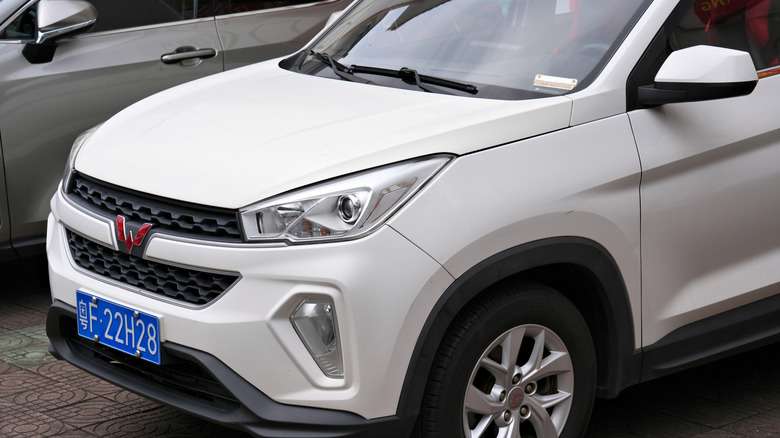
The United States is doing its best to cut all economic ties with China, but U.S. automakers aren't following the same playbook. General Motors just extended its deal with Chinese automaker SAIC for another 20 years, with the intent to export models built by the collaboration globally. From the Wall Street Journal:
General Motors and China's SAIC Motor will extend their joint venture for 20 years, cementing the U.S. automaker's commitment to the Chinese market.
The renewal extends the partnership to 2047 and puts the joint venture in a position to boost its technological transformation and increase growth opportunities, Detroit-based GM said Tuesday.
The Shanghai-headquartered joint venture, SAIC-GM, was founded in 1997 and has manufactured and delivered more than 20 million vehicles. It plans to launch at least 30 new-energy vehicles—a category that includes EVs and hybrids—by 2030 and deploy tech solutions developed in China for the Chinese market.
It will also sharpen its focus on the Buick and Cadillac brands in China.
John Roth, GM senior vice president and GM China's president, said the deal reflects confidence in the joint venture's long-term growth potential.
"We are committed to strong performance in the China market, and we see meaningful opportunities to compete in select international markets: the Middle East, Africa, South America, Mexico and Asia-Pacific," he added. The Buick Electra E7 is set to be SAIC-GM's first premium new-energy vehicle model to go overseas in October.
Now must be a very interesting time to go entering into international trade agreements, especially as the United States cracks down on any connection to China. We'll see how it goes for GM's software side.
2nd Gear: The U.S. is hoarding busted lithium batteries
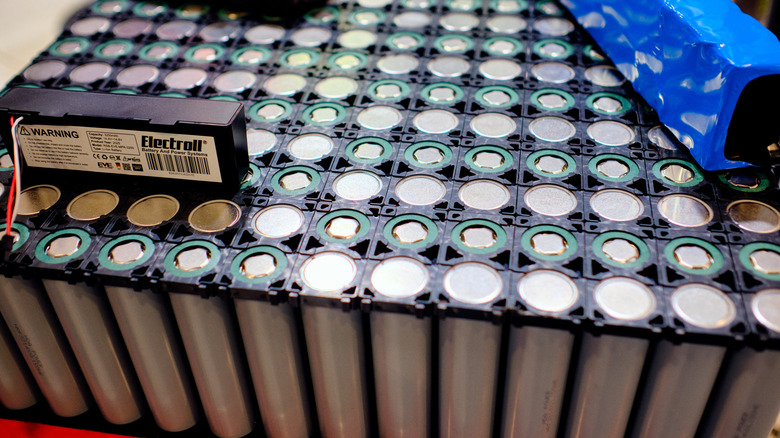
Lithium batteries are the future of just about everything, including cars. Much of that lithium ends up in what's called "black mass," shredded up bits of disused batteries — ready to be reclaimed. Now, the U.S. wants to ensure it's doing the reclaiming. From Bloomberg:
The US will ban exports of tungsten scrap and recycled battery materials from later this month, less than a week after President Donald Trump handed authorities power to keep potentially critical materials inside the country.
Suppliers of tungsten waste and black mass — shredded metals from recycled lithium-ion batteries — will be required to sell domestically, although they can apply for exemptions, according to a rule published on the Federal Register. The restriction will remain in place for one year.
Trump signed a measure last week that allows officials to restrict exports of industrial waste containing critical minerals and materials, or CMMs. That's part of a push to use the Cold War-era Defense Production Act to shore up supplies and reduce dependence on China.
"The President stated that the inadequate supply of CMMs poses an increasing risk to our national defense and security, and it is imperative that the United States take immediate action to secure the supply of recoverable CMMs," the Department of Commerce said in the statement on the register.
Tungsten is a tough metal used in everything from military armor and ammunition to precision tools in car plants, and is among the cluster of metals subject to Chinese export controls. Black mass is a growing alternative source of lithium, cobalt, nickel and other materials.
We love recycling! We live on a planet of finite resources, we're going to have to start reusing our stuff.
3rd Gear: Honda made some money, says it's all uphill from here
Honda's profits ticked up last quarter, and the company has revised all its annual estimates to show even higher growth. The difference in the estimates isn't actually due to any business practices, though — it's because of exchange rates. From Reuters:
TOKYO, Aug 5 (Reuters) – Honda Motor raised its full-year forecasts on Wednesday and posted its first quarterly profit rise in six quarters, boosted by a weaker yen and the absence of U.S. tariff-related costs that weighed on earnings a year earlier.
Japan's second-biggest automaker lifted its full-year operating profit forecast by 30% to 650 billion yen ($4.1 billion) from 500 billion yen, citing a revised exchange-rate assumption. It also raised its net profit and revenue outlooks.
Operating profit more than doubled to 530.8 billion yen in the April to June quarter from 244.2 billion yen a year earlier, well above the 302.1 billion yen median estimate in an LSEG poll of nine analysts.
Honda assumed the yen will trade at an average rate of 155 per dollar this fiscal year, compared to 145 expected previously.
It's kind of funny that businesses can get a boost from just recalculating exchange rates, but it would also be absurd to hold them to any other standard.
4th Gear: While Subaru spent big on EV incentives and lost profits for it
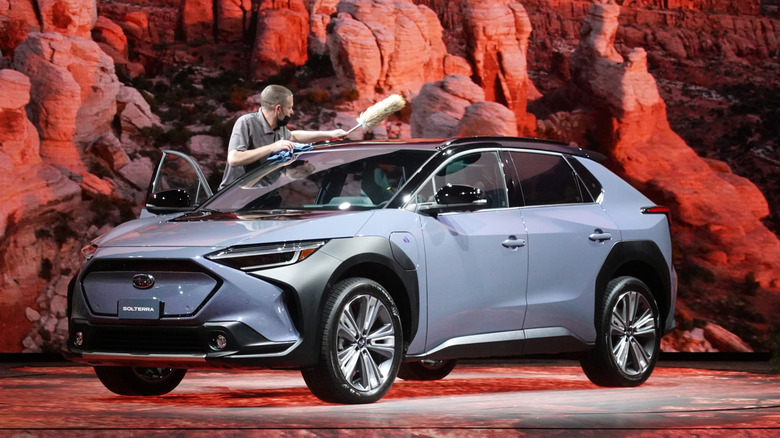
Subaru spent the beginning of 2026 introducing new EVs, and now it seems to be regretting that decision. The company is paying through the nose to promote the new cars, including putting cash on the hood. From Automotive News:
TOKYO — Steep incentives on electric vehicles are dogging Subaru, as spiffs for the Solterra, Uncharted and Trailseeker EVs aggravated a nearly 50 percent tumble in quarterly operating profit.
Subaru said Aug. 5 that incentive spending chopped ¥24.9 billion ($153.8 million) from global earnings in April-June, accounting for the bulk of the Japanese carmaker's collapse in profits.
Such heavy spending marks a departure for the traditionally disciplined brand. It underscores the challenges automakers face selling EVs following last year's repeal of federal tax credits that buoyed demand. Subaru warned in May that it was taking a $362 million charge and delaying production of its independently developed electric vehicle in Japan amid slowing EV demand.
Spending is evidence of challenges of selling electric vehiclesSubaru's U.S. marketing expenses increased 40 percent to $2,698 per vehicle on average in the quarter, according to industry data from Motor Intelligence. Incentives on cars, including the BRZ, Outback and Legacy, increased 27 percent. Average truck spending climbed 49 percent.
Subaru introduced two EVs in the U.S. in the period, adding the Uncharted and Trailseeker to the Solterra, on sale since 2022. Average spending on those increased to $9,155 for the Uncharted, $8,982 on the Trailseeker and $9,650 for the Solterra, according to Motor Intelligence.
When I drove the Solterra at its launch, I found it to be a perfectly suitable vehicle — except that its range wasn't nearly worth the price. It makes sense that Subaru is throwing cash on the hoods of also-ran EVs, but it's not exactly sustainable.
Reverse: The path to Top Gun
How many other media have parodied the sliding-around-in-underwear shot?
The Fuel Up
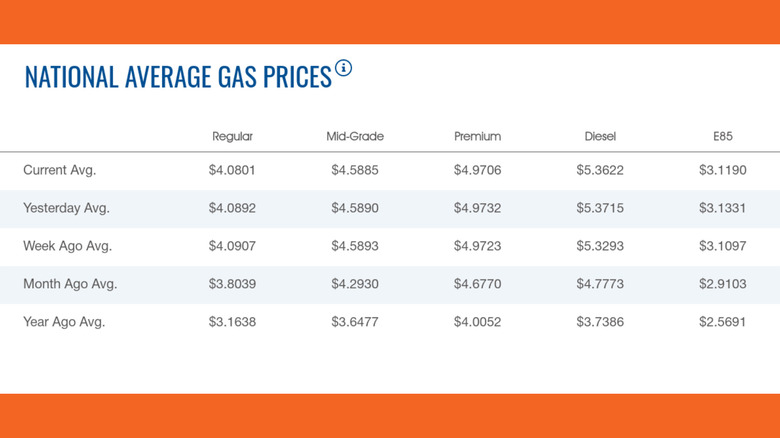
Does anyone else want off this roller coaster?
On The Radio: Underscores - 'Bozo bozo bozo'
Welcome to the party, thank you very much.