

The Smart Crossblade Isn't Good, But It Is Amazing
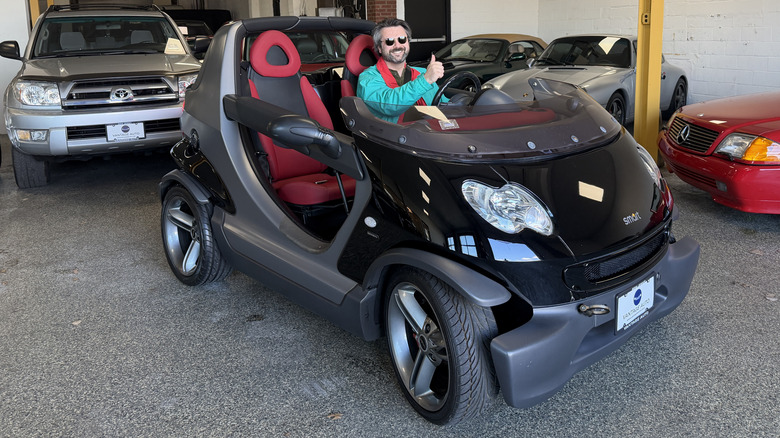
Ferraris and Lamborghinis might be sought after, but they're not exactly rare. Neither are Porsches, or Lotuses, or McLarens or Ford GTs. Do you know what is really rare, though? The Smart Crossblade. Mercedes-Benz had the wherewithal to build just 2,000 of these bizarre little roadster things for the entire world between 2002 and 2003, and there's really no way to know how many have made it over to the U.S., as it was never officially sold here. If I had to guess, there are fewer than a dozen. So, when I saw there was one sitting at Vantage Auto, a dealership just 15 miles outside Manhattan (and less than a mile away from the house I grew up in), I knew what I had to do. I had to call these people up and ask them very nicely if I could get behind the wheel of their very rare little car.
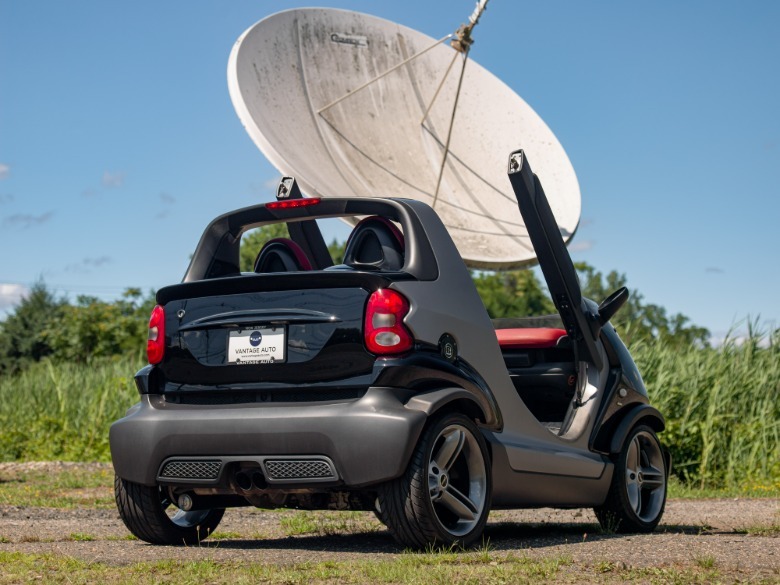
To my surprise, they told me to come on down, and what I found was a car that was, in all honesty, awful. The Crossblade is not really a car. In many ways, it's the spiritual successor to the Benz Patent-Motorwagen. It's basic, open-air driving. While it might look cool and sporty (for a Smart Car), it's a pretty damn miserable thing to operate, and I got the feeling the entire time I was sitting inside the rubberized interior of car number 1722 that it would rather fling me out of the seat than keep me snuggly tucked inside of it. I mean, the only thing that would keep my special head out of harm's way was the Smart's Tridion Cell, now acting as a roll bar.
 Vantage Auto
Still, I couldn't help but be charmed by the little thing, ruddy engine and all. Would I add it to my theoretical car collection? No. I've got a brain and enjoy having four limbs. But as a curiosity from 23 years ago? It's fantastic. I mean, just look at it. Mercedes basically took a concept car from the Geneva Motor Show and put it on sale. Even if it's a bad concept car, you can't not love that sort of follow-through.
Quick Shoutout: Vantage Auto let me come down to their showroom in Moonachie, New Jersey, to check out a handful of the weird and wonderful cars in their inventory. This isn't a paid advertisement or partnership of any sort, but its Founder & CEO, Andrew Glaser, took time out of his very busy day to let me futz with their cars, so we thank him greatly.
Drive to survive
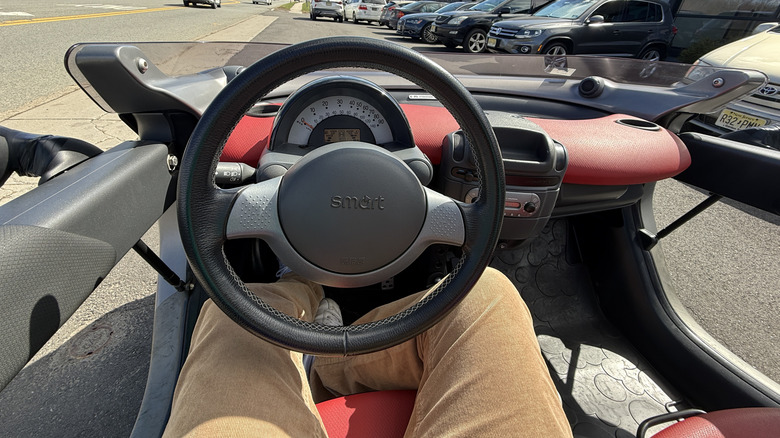
Thanks to the fact that there's no useful windshield (it's got a small one that's the perfect height for sending wind directly into your face), no roof, no rear windows and no real doors to speak of, the closest thing I can compare the sensation of driving a Crossblade to is riding on a large, yet slow motorcycle. The elements are going to punish you and your passenger for daring to ride around in something as goofy as the Crossblade. This became incredibly apparent as my eyes started watering and my nose started running on the particularly cold spring day in northern New Jersey I was driving the Crossblade.
 Vantage Auto
Its scissor "doors," if you can even call them that, do little more than give you a place to rest your elbow when driving along. At the very least, if it rains, Smart had the brilliant idea of fitting the Crossblade with water-resistant red seats, and its instruments were sealed in a bit better to prevent elemental intrusion. It even still had HVAC controls, but they didn't do a lick of good, and it's not like the crappy early-2000s tuner-only stereo would be legible over the extreme wind noise and thrashy little 599-cc Mercedes-Benz M160 Suprex inline-3 engine. With the help of Brabus tuning, it put out a whopping 70 horsepower, and despite the fact that it was tasked with moving just 1,600 pounds, the 0-to-60-mph time was still well over 10 seconds.
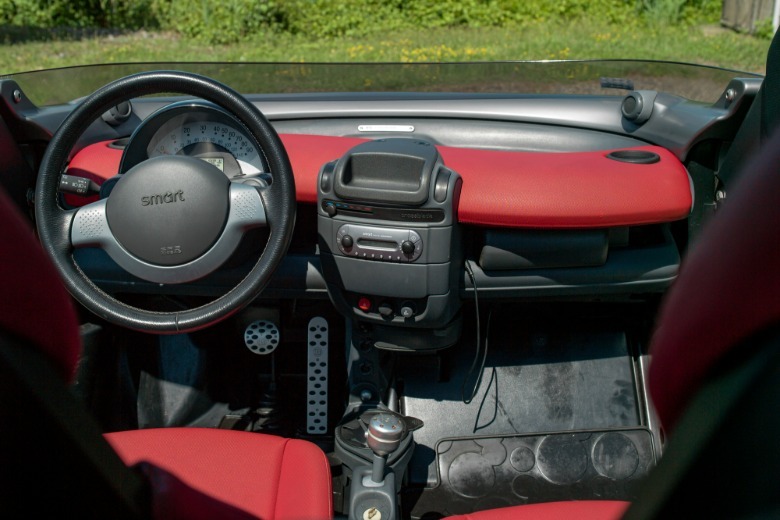 Vantage Auto
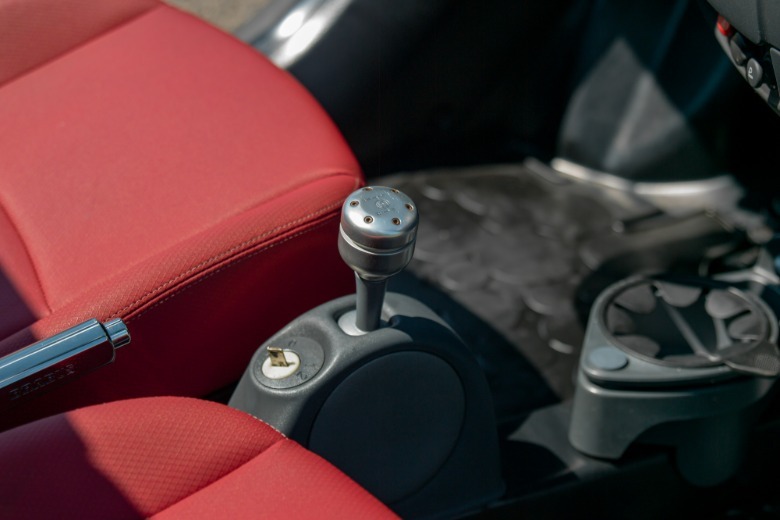
I've got a feeling that a lot of that sluggishness comes from the dogassbullshitawful 6-speed automated-manual transmission all Smart Cars of the day were fitted with. What a pile of crap. It truly kills any chance this thing has to be even slightly fun, but there's a magic to that as well, I suppose. It doesn't seem that my particular example had any actual issues, either, as it had less than 9,000 miles on the clock — these Smart transmissions are just like this. Remember the first time you tried to drive a manual? That's what this is like, but it's every single time. The clutch would slip, and the revs would rise, but I wouldn't go anywhere. I'm not sure how Smart People live like this. I'm really not. Even once the thing is going, every shift is met with the same sort of herky-jerky motion that can only be replicated by your buddy who can "Definitely drive stick. Trust."
What's it all for?
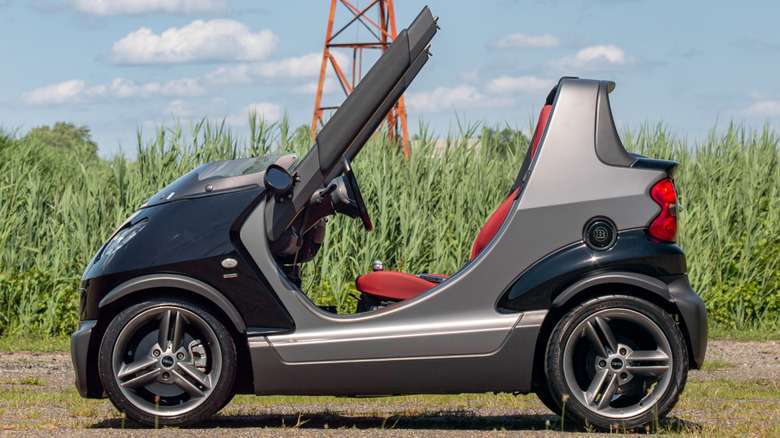
These days, I'm really not sure what the purpose of a Smart Crossblade is. Hell, I'm not even sure what the point was 25 years ago — especially since prices started at €21,000. That works out to over $45,000 in today's money, which is roughly what the 2003 example I drove is listed for now. I guess it's a good way to absolutely dominate your local cars and coffee or one-up all the other old folks using golf carts in your retirement community.
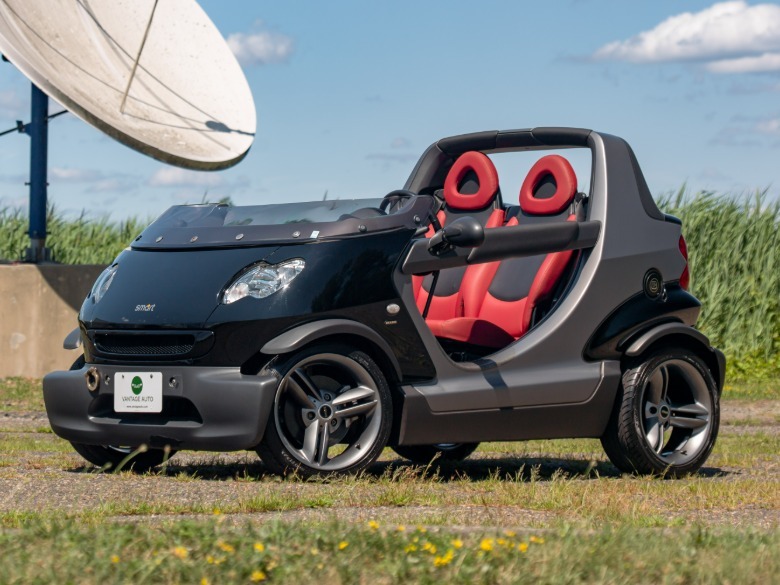 Vantage Auto
At the end of the day, the person this car is really for is the ultimate quirked-up extrovert. I didn't spend a huge amount of time driving the Smart Crossblade. I didn't want to. It's a "get the gist" type of car, but even during my abbreviated drive, the amount of thumbs up and waves I got from people on the street and other drivers was more than anything I've seen in even the flashiest supercar. People love the Crossblade because it brings with it a whimsy that can only be found when designers are free to do whatever they want, regulations and safety be damned.
There's no good reason for the Smart Crossblade to exist whatsoever, and that's why I'm so glad it does.