

3 Things To Consider When You're Shipping A Car In The US
Sometimes life circumstances prompt a big move out of state and across the country. Relocating can be challenging and involve some unfortunate misadventures, like the time when a guy forced a U-Haul moving truck into a parking garage and became tangled in the fire suppression system on the ceiling. There's also your personal vehicle to consider, as it's not always practical to drive it to your new address. There are other times when transporting a car might be necessary, too, such as finding a good deal on a perfect used model — but the seller is located thousands of miles from your home. In either case, you'll want to look into specialized shippers like Nexus Auto Transport.
In terms of cost, there are a variety of factors that affect pricing, most importantly distance. However, according to uShip, the charge for shorter trips is often between $250 and $1,000, with greater distances priced from $500 to over $2,000. But there are some questions to consider before you move forward. What method of transport do you want? What type of insurance coverage does the shipping company offer? And what methods will you use for pickup and drop off?
Open or enclosed shipping?
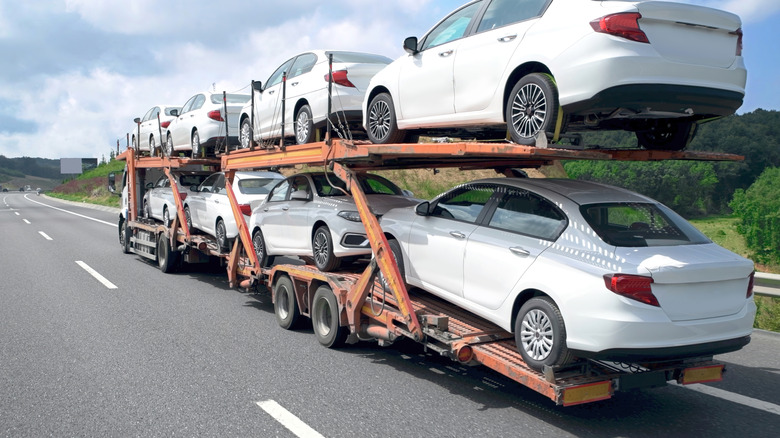
One of the most common options for transporting vehicles is by truck with an open trailer. The first semi truck was invented 122 years ago to transport the earliest American cars, and that hasn't changed today. You've likely seen big rigs pulling several cars secured to a two-level trailer hauling around seven or 10 vehicles. This is a great option if you're looking for more economical pricing. However, it does place your vehicle in a position where it could be subjected to adverse weather or other debris lining the highways.
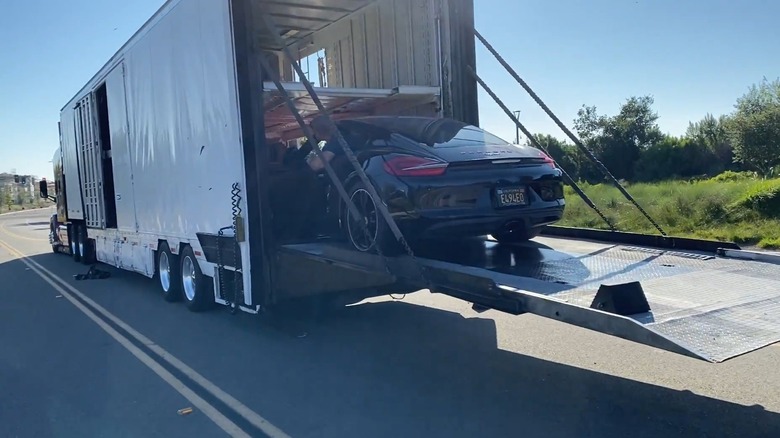
Another option is to have the car parked inside a container or trailer. This ensures your ride is completely protected during transport, which could be important, especially if the car is a classic collectors model. The downside to this method comes from factors like available space and vehicle dimensions, and the journey can end up becoming considerably more expensive. You could be looking at a markup between 30% and 60% compared to open shipping options.
Basic liability and supplemental insurance plans

While the U.S. government requires companies transporting vehicles to carry liability coverage, there may be disreputable outfits operating without it. That's why it's crucial to research these companies beforehand by examining reviews and verifying their credibility before handing over the keys to your car. In fact, you can request the carrier for proof of insurance in the form of written documents to be sure.
Next, you'll need to consider whether you want to opt for additional coverage to protect your vehicle beyond basic liability. For example, if the semi toting your car encounters an extreme weather event as it approaches your destination, liability wouldn't cover any damages incurred. Additionally, if someone were to vandalize or break into your car during the trip, you'd also be out of luck without purchasing additional protections. The cost of this extra insurance can vary depending on what is and isn't covered. You should read the fine print carefully to make certain the deductible, coverage limits, and overall terms are acceptable.
Terminal-to-terminal or door-to-door?

Before shipping your car, you'll need to decide whether you'll go to a storage location to drop off and pick up your vehicle or arrange for home pickup and delivery. With terminal-to-terminal, you'll be responsible for getting your car to the shipper and picking it up. A terminal is a facility used by carriers where semis load or unload their cargo. While these terminals can be found all over the U.S., their location may require you to drive across town, as they are often found far from city centers.
Door-to-door is a much more convenient method, but it's also often more expensive. Bringing the car to your doorstep could tack on an extra couple hundred dollars to the cost. That being said, beyond convenience, door-to-door service also typically reduces the number of times your car is loaded and unloaded off a semi-trailer. This could lower the chance of potential damage being incurred during the transport process.
However, there are some other disadvantages beyond cost. For one, not every address is accessible to a large transport truck. If the driver is unable to safely navigate your street, other arrangements will need to be made. Scheduling is also more complex, as you'll need to be home at a specific date and time to accept the vehicle.