

What're The Differences Between A Mechanical And Electronic Differential?
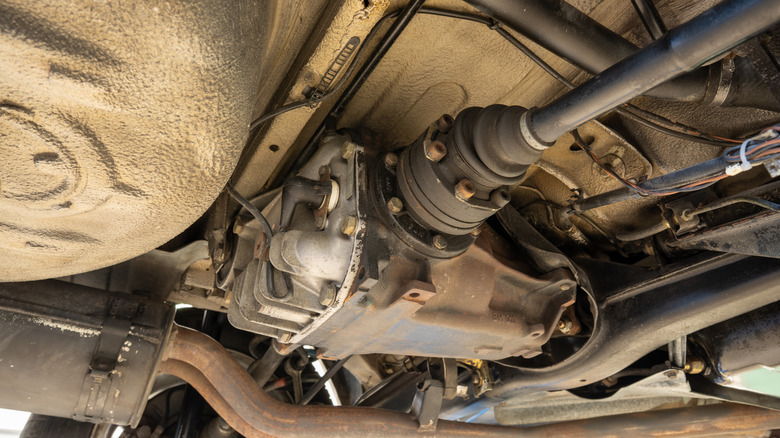
Let's start off by understanding how a simple "open" differential works. The sequence of power distribution to the wheels starts from the pinion gear, which sends torque from the driveshaft to something called the ring gear. Within the differential housing, you'll notice that the ring gear is connected to the spider gear(s), which spin the respective side gears, in turn transmitting power to the rear wheels. This arrangement allows the wheels to rotate at different speeds, making it easier for the car to execute a turn.
Over and above that "basic" differential, there are several versions of diff, including locking and limited-slip differentials, which can manage the delivery of power to the wheels. And some have electronics in there to alter their behavior.
As you may know, a limited-slip differential, or LSD, is more complex than an open differential. On top of the basic differential stuff, LSDs have several friction discs and steel plates, i.e. clutch packs, within the housing to manage wheel speed. But while a purely mechanical LSD relies on gear geometry and friction, an electronic limited-slip differential (eLSD) has the clutch engagement controlled externally via actuators and software.
As the name suggests, locking differentials can be mechanically "locked" to ensure even power delivery to both wheels. That can be controlled either manually or automatically, based on traction available. But with electronics in there, as you'll find in a heavy-duty Chevy Silverado ZR2, an electronically-controlled solenoid/motor couples the locking gears, removing the differential's ability to independently manage wheel speed. These differentials are sometimes known as "e-lockers".
Electronic differentials are superior, but not always
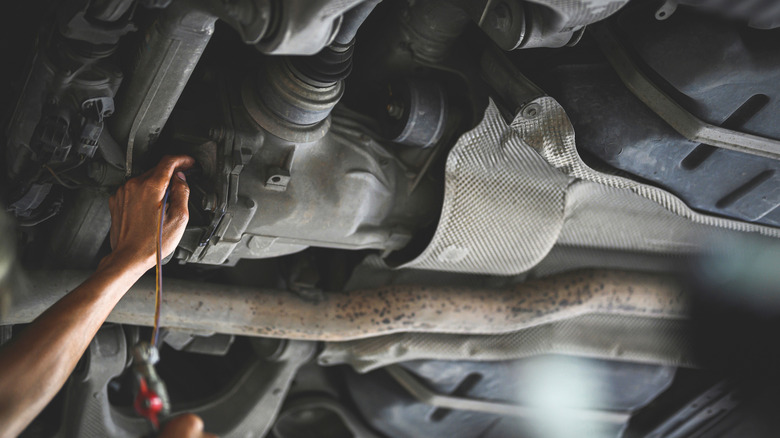
Both mechanical and electronic systems have plenty of pros and cons. For example, the mechanical differential's simplicity makes it a more cost-effective and reliable choice than electronically-controlled systems. A fairly basic differential setup is typically more predictable, especially in extreme off-road conditions. That said, mechanical lockers (also called automatic lockers) are known for their sporadic and inconsistent engagement at times, which might not be helpful.
Also, it's worth pointing out that diagnosing and repairing a simple mechanical differential is far less complicated than with an e-diff. Since the latter comes with several sensors and control modules, troubleshooting won't be easy, and chances are you might run into calibration issues if you try to wing it.
However, there are advantages to using an electronic system. Take the case of an eLSD. The system is much faster at reacting and adjusting itself to the external conditions. Even though it has notable failure points, the differential unlocks added precision and enhanced control.
For instance, the 992 Porsche 911 GT3 RS gets a trick electronic rear differential with different settings for coast and acceleration lockup. Without going too far into the weeds, the e-diff allows you to tailor the sports car's oversteer and understeer characteristics to better suit your driving style or the track itself. Not all tracks — or roads, for that matter — are made equal; some have trickier corners and undulations than others.
Mind you, that's some next-level platinum-grade hardware from a six-figure sports car. For mere mortals, the reaction time of an eLSD versus a regular mechanical LSD won't be all that noticeable, at least on dry tarmac.