

5 Unfortunate Mistakes New Motorcycle Riders Make
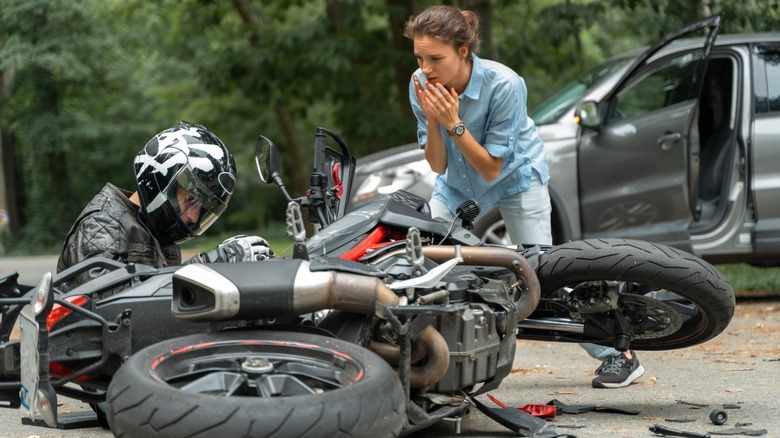
Riding a motorcycle is inherently dangerous, even for experienced riders. There's something sketchy about straddling a steel beast and hurtling down the freeway mostly unprotected in the midst of large cars, vans, SUVs, and semi-trucks. In 2023, over 15% of traffic fatalities in the United States were motorcycle riders, even though motorcycles made up only 3% of registered vehicles. NHTSA found in that same year that your chances of getting killed in an accident were 28 times higher if you were riding a motorcycle than if you were driving a passenger vehicle.
It's even worse for new motorcycle riders. According to a 1990 study of driving records from motorcyclists in Pennsylvania, crash rates for inexperienced riders ranged between two to four times higher than those of experienced riders. Some of that can be attributed to age (the newer riders that crashed a lot in the Pennsylvania data were mostly under the age of 22), but newer riders tend to make several mistakes that experienced riders don't. For example, many new riders start riding with bikes that are too powerful or too heavy for them. New riders often forget that drivers of cars don't see motorcyclists. New riders sometimes visually fixate too much on hazards. They don't wear helmets, despite of all the data showing that helmets save lives. And many don't bother to get any safety training before riding.
Mistakes are made in every hobby and pursuit, from computer programming to needlepoint. When it comes to riding motorcycles, though, beginner mistakes can be fatal. Hopefully, fewer of these mistakes will be made with practice and experience, and many can be avoided with a little education.
Forget looking cool, just wear the gear
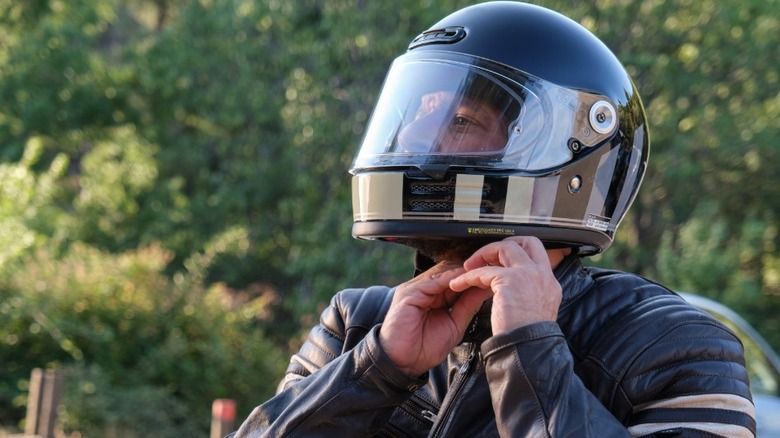
Yes, a helmet will mess up your hair. Yes, it might be heavy, hot, and uncomfortable. And yes, it will keep out a bit of noise from the outside world. But wear your helmet anyway. According to the National Safety Council, helmets are 37% effective at preventing death during a motorcycle accident for riders (41% for passengers). And according to the CDC, wearing a helmet cuts down the risk of head injury by 69%.
Some new riders believe that a helmet cuts down peripheral vision and keeps you from hearing important sounds — sounds you might need to react to on the bike. Most modern helmets are made with wraparound visors that enable you to see side to side without any issues. The noises that are filtered out are mostly inconsequential ones, like wind noise. You should still be able to hear sirens, horns, and screeching brakes. And when it comes to helmets, those small potential benefits don't outweigh the risks.
In 2021, in states that don't require riders to wear helmets, 55% of riders who died in accidents weren't wearing helmets. In states that have laws that require helmets, that rate was just 9%. The importance of wearing a helmet can't be overstated. It's not just your helmet you should be wearing either. Wear a leather or textile jacket designed for riding — one equipped with armor if possible. Don't forget your gloves, motorcycle pants, or boots either (there are lots of great motorcycle boots that can be worn off the bike too). The right clothes can keep you from getting seriously torn up by the pavement.
You gotta walk before you run - start with a smaller bike
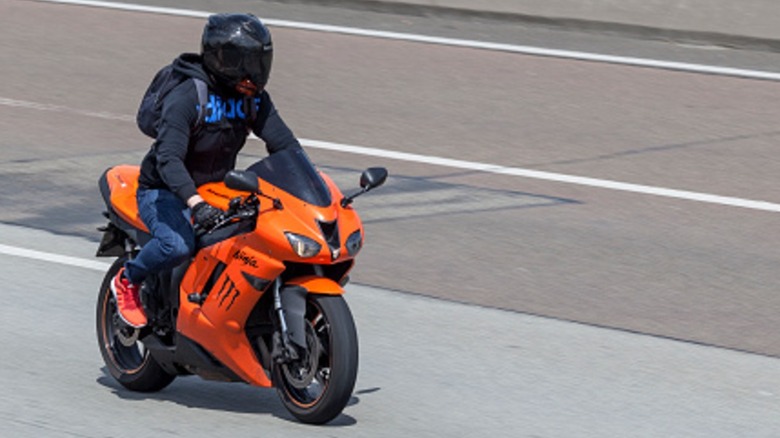
Sure, a Kawasaki Ninja H2 looks amazing, and you would probably look amazing on it, but it offers insane amounts of power and speed, which could be too much to handle. The Ninja H2's supercharger impeller can ramp up to 130,000 rpm, and the bike itself can go over 180 mph, but there are almost zero public roads (short of the Autobahn) where that sort of speed is legal or responsible.
Bikes with that sort of speed are commonly known as superbikes, or "super sport" bikes, as the IIHS calls them. According to the Insurance Institute for Highway Safety, death rates on superbikes were 4 times as high as death rates on other kinds of motorcycles. The IIHS defines super sport bikes as "consumer versions of the motorcycles used by factory racing teams and use racing specifications as benchmarks in design." We don't mean to come down on superbikes, but the effortless speed they produce can be much more dangerous than merely average motorcycles These superbikes, while often appealing, offer way too much power for beginners. We recommend starting with a bike that is much less expensive and powerful, and much more manageable — even if you don't think it looks as cool.
Weight is another factor. That 820-pound hog in the Harley-Davidson dealership looks pretty cool, but heavier bikes are harder to maneuver, especially around tight corners. They are especially cumbersome at low speeds, and can be harder to keep upright if you don't properly feather the clutch or apply the right amount of throttle. If you start riding with a bike that is light enough for you to maneuver with confidence, then you can have those skills when you work your way up to the heavier bikes.
Stop assuming other drivers see you or are even looking
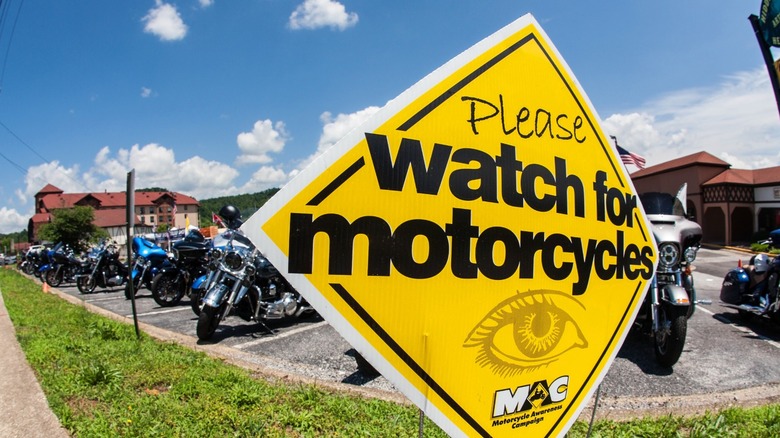
Drivers should be observant. They should be looking for motorcycles. They should be checking their blind spots. They should see you. But basing your decisions on what other drivers should be doing is putting your life in someone else's hands. In one Australian study, 65% of drivers tested missed seeing a motorcycle in a photo, compared to just 31% of those same test-takers missing a car in the same location. Assume that drivers can't see you, and ride accordingly. It's not fair, but you're the one who will get seriously hurt or worse in a collision with a driver who didn't see you.
With that assumption, there are also several things you can do to make yourself more visible. Bright-colored clothing and a high-visibility helmet is a good start. Make sure to run with your headlights on all the time, whether it's dark or not. Turn on your running lights if you have them. If you don't have them, think about getting some aftermarket daytime running lights on your motorcycle. Your lane position is important, too. The right third of the lane puts you right in a lot of drivers' blind spots. Not only that, but it can be more slippery than the rest of the lane because of oil residue. The left position in a lane will make you much more visible to other vehicles and less likely to ride over debris. Use your motorcycle's horn liberally, even if it's just to make drivers around you more aware of your presence. It might annoy other motorists from time to time, but that's better than general invisibility.
Focus on where you need to go, not the pothole
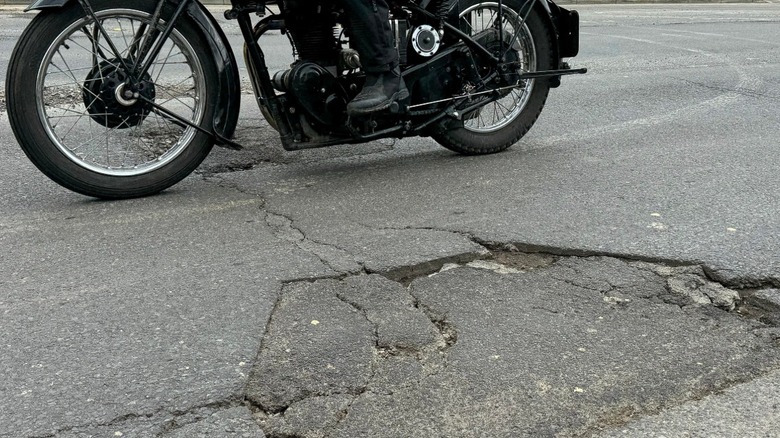
Target fixation is a common mistake for new riders. It happens when we stare at an object or place in the road that we're trying to avoid. If there's a big pothole, an oil slick, or some debris that fell off of a truck, you're likely to look at it, but look too long and you'll head straight for it. This is because you use your whole body to turn the bike. And typically, where your eyes are focused, your head will follow. Keeping your head pointed at a hazard will then subtly turn your body and eventually, your bike, towards the hazard. Experienced riders will tell you to focus on the route around the hazard.
It's also important to avoid your field of vision being too narrow. While riding, you do want to focus on where you want to go, but without shutting out your surroundings. Even when you're riding in a straight line, it's a good idea to regularly check to check your mirrors and look on both sides of your motorcycle. Keeping your eyes moving will help you see obstacles like potholes, spot the other vehicles around you, and reduce fatigue.
A strong strategy is to visualize a panoramic 360-degree image of what is going on around you so you'll have pre-determined escape routes if something happens. If you know there's a car hanging out on your left, and a pothole appears in front of you, you can use that knowledge to swerve right around the pothole, instead of left and into the car. A strong sense of situational awareness on your motorcycle can be the difference between life and death.
Learn from the experts
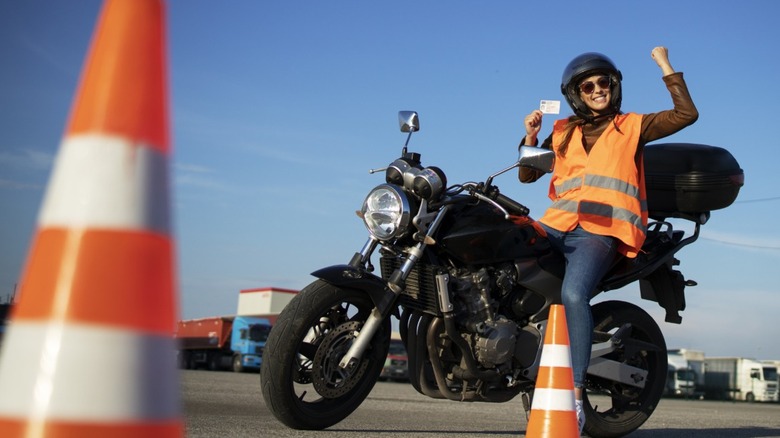
Maybe you're the kind of person who likes to teach yourself new skills. With resources like YouTube, you can teach yourself all sorts of skills like coding, drawing, or speaking a second language. You might be inclined to take the same approach towards learning to ride a motorcycle, but resist that temptation.
In 1981, the National Highway Traffic Safety Administration released a report by Professor Harry Hurt, called The Hurt Report. This report studied motorcycle accidents over several years and has been pretty influential in the world of motorcycle safety. Among other things, it found that 92% of riders in motorcycle crashes were self-taught. Motorcycle rider error was the "precipitating factor" in two-thirds of the single-rider accidents that were studied.
These aren't the only mistakes new riders make. Lots of new riders take on passengers or challenging roads and conditions long before they are ready. Many new riders depend too much on either the front or rear brake. Some slow down so much when making turns, resulting in a loss of balance and an eventual tip-over. Neglecting important maintenance is another beginner error that could leave new riders stranded. So, what's a new rider to do? We recommend taking a rider safety course like the one offered by Harley-Davidson or the by the Motorcycle Safety Foundation. Mistakes can't be avoided entirely, but education can go a long way, and there are real benefits to establishing good habits early.