

'Sober DUI' Arrests 4x Higher Than Previously Reported, Tennessee Bureau Of Investgation Admits
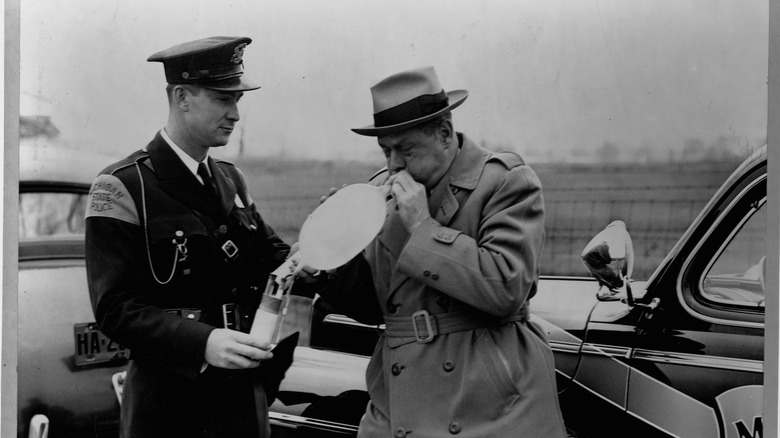
We've known for a while that Tennessee had issues with officers arresting people for driving under the influence who were later able to prove their blood-alcohol content wasn't above the legal limit. Tennessee certainly isn't the only state with this problem, considering the American Civil Liberties Union recently sued the Honolulu Police Department over the exact same thing, but, as Fox 17 Nashville report, new data shows the so-called "sober DUI" arrest rate in Tennessee is actually four times higher than previously reported.
According to data released by the Tennessee Bureau of Investigation, since 2017, cops in the state have arrested 2,547 people for DUIs who didn't have a BAC over the legal limit or test positive for drugs. Which is a lot more than the 609 arrests that had been reported previously. You'd think it would be pretty hard to miss nearly 2,000 wrongful arrests, but a spokesperson for the TBI really wants you to know it was just an oversight, telling Fox 17:
As you may recall, we provided the data at the request of a lawmaker, generating the best numbers we had at the time. We mentioned that our systems didn't really track things in the manner requested and we had to create something new. After the statute passed requiring a report on those totals, our lab staff got to work. In doing so, however, they realized we had not caught some instances in the numbers we previously sent you before.
The TBI also wanted to make it clear that just because officers couldn't prove someone had alcohol or drugs in their system, that doesn't mean we shouldn't trust them, saying:
while some media reports on this topic have stated that results with no alcohol/intoxicants detected mean a driver was 'sober,' that may not inherently be the case. There are various substances that may impair a driver, but for one reason or another, may not be detected through our screening. While alcohol screening and impairment can be considered relatively straightforward, drug toxicology can be incredibly more complex.
Local news gets a win
That information also may have never been released if Fox 17 hadn't launched its own investigation into the issue several years ago, where it found that many of those charged with "sober DUIs" were older and more likely to have issues with field sobriety tests. That investigation also found that "the majority of law enforcement agencies in Middle Tennessee no longer use breathalyzers. So even though many of these people are seen on police body camera video asking for a breathalyzer test, they were denied."
At the time, the TBI claimed they preferred blood tests because breathalyzers only test for alcohol, and the results aren't admissible in court. The fact that it can take months to get the results of those blood tests, however, didn't appear to be a concern. Ultimately, though, that Fox 17 investigation led to the passage of a new state law that required authorities to provide more information on how many people are charged with sober DUIs and which departments arrested them.
That law also had another important advocate in LaBreesha Batey, a NASA engineer who nearly lost her career when she was arrested for DUI and later convicted, even though she claims to have never consumed alcohol in her life, and the test results didn't show any drugs or alcohol in her system. In addition to filing a lawsuit, Batey lobbied lawmakers hard, urging them to support the bill that later passed unanimously.
"It's still hard to relive that experience," Batey told Fox 17. "My reputation — they put a mug shot out there on me. That alone is threatening my job and my career."
One of the bill's sponsors, Sen. Raumesh Akbari, also spoke with Fox 17, saying, "I think the list just confirmed that this is a real problem in Tennessee." She also has questions for law enforcement, asking, "Is this a training issue? Is this a procedural issue? Is it specific to a certain county or a certain law enforcement agency?" Going forward, Akbari plans to work with authorities to craft legislation to cut down on the number of sober DUIs, but figuring out how to do it correctly could take time.
"You don't want people to experience the nightmare of a false arrest and all the financial, psychological, and emotional issues that go along with it," she told Fox 17. "And we also don't want people who are truly intoxicated driving on the roads and potentially injuring themselves or others, or killing others."