

A Tire Is Not A Cake, Michelin's New Sustainable Tire Will Provide A New Challenge To The 2026 IMSA GTP Field
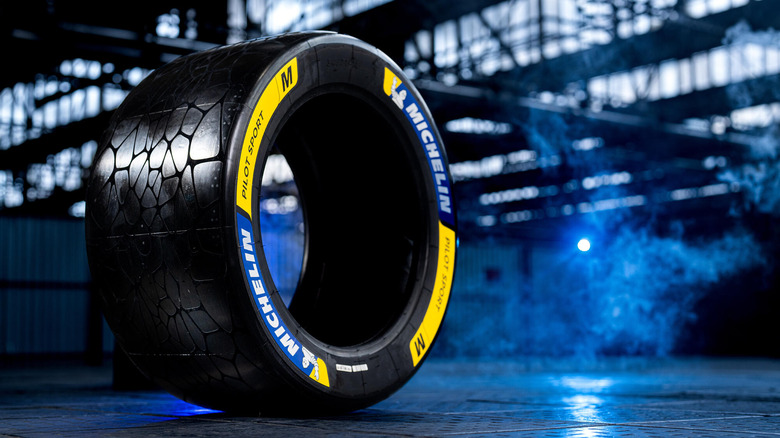
When the tires are the only points of contact between a race car and the pavement, teams value consistency and stability from their supplier. Michelin and IMSA announced a ten-year extension of their existing partnership at Petit Le Mans in October. The French tire manufacturer will remain the exclusive tire supplier of the IMSA WeatherTech Sportscar Championship through 2035. However, there will be a significant change next season. Michelin will be introducing the new Pilot Sport Endurance, a sustainable tire for the GTP class, next year.
Full disclosure: Michelin flew me to Atlanta and paid for my hotel so I could attend Petit Le Mans and get a behind-the-scenes peek at its IMSA operations
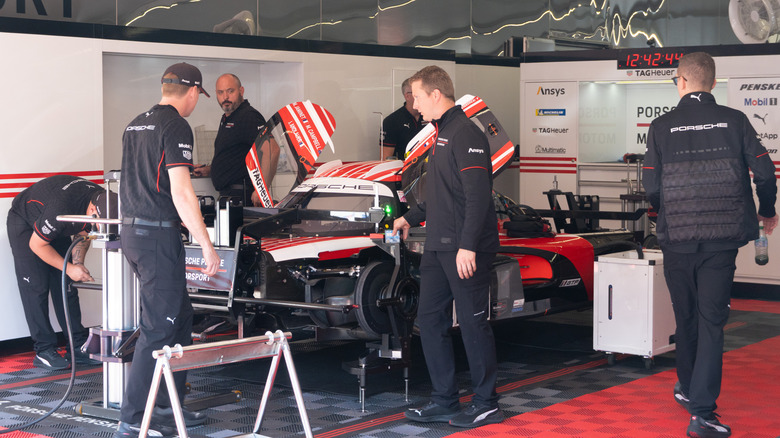
The partnership isn't dropping off a few thousand tires before every race weekend. It's a committed effort in which Michelin deploys a platoon of personnel to prepare and distribute tires to every team across three IMSA-sanctioned racing series. The tiremaker has its own computer-laden pit box as if we were one of the teams entering a car. Each manufacturer competing in GTP has a dedicated Michelin engineer to analyze data and give feedback. It's a factory-to-finish-line operation that everyone in the garage area acknowledges and praises. While reminiscing on a visit to Michelin's factory in Clermont-Ferrand, France, IMSA President John Doonan said:
"I had the vision of a cake pan in my mom's kitchen. You threw in a little sugar, a little vanilla, some salt, and you shoved it in the oven. And out popped a cake. I had that in my mind of how the tires came off the manufacturing line. Boy, was I blown away. I sent a note to all the factory workers after my visit, thanking them for what they do."
Orange peels and sunflower oil are used to make the new GTP tire
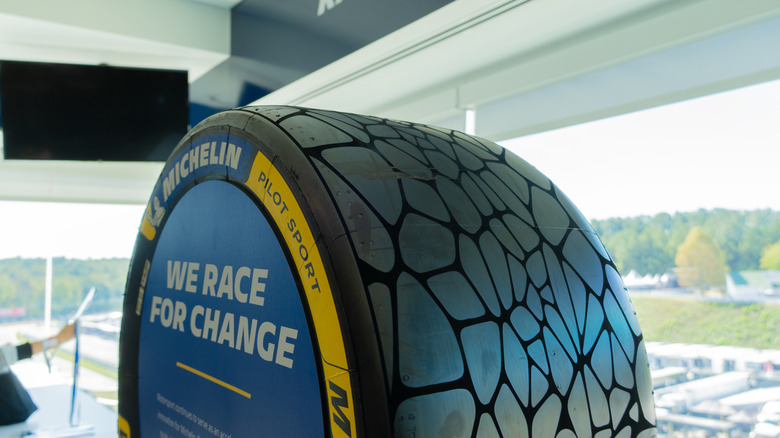
Sustainable tires aren't edible or come covered in frosting. The recipe for a next-generation Pilot Sport Endurance tire is far more complicated as well. Philippe Tramond, Michelin Motorsport's technical director, politely corrected Doohan, "So, a tire is not a cake, but it's good to see the comparison. At least there are a lot of components." The tiremaker aimed to use as many sustainable alternatives as possible, while improving warm-up times and consistency on track. It wasn't as straightforward as it sounds. The tire was initially slated for a 2025 debut, but the introduction was delayed until January 2026 to allow for more development.
The end result was a racing tire made from 50% recycled or renewable material. The eclectic ingredient list starts with natural rubber, the only solution obvious to a layperson. Orange peels were used to create the resin needed for construction. The tire's oil was derived from sunflower seeds. Don't worry, the oil is a waste byproduct and not food-grade. While it seems the engineers were scrounging around the back of the fridge, I can promise you that wasn't the case. The production process also includes carbon black from end-of-life tires and recycled steel. Ideally, Michelin wants the ability to produce these tires indefinitely.
GTP teams are eager for whatever challenge Michelin has in store
It should be business as usual for the IMSA GTP teams next season if everyone goes to plan. The 2026 Pilot Sport Endurance tire is the same dimensions as the previous tire, with only a marginal weight increase of less than a pound. And before you ask, the "Vision" web-like tread pattern doesn't impact performance. It's only decorative and will wear away in a handful of laps. The number of tires that IMSA will allocate to each car per race remains unchanged. However, Michelin hopes to reduce the number of tires used by up to 30% for the 2027 season, depending on the performance next season.
Michelin has been developing the 2026 tires in collaboration with the teams, making adjustments based on their feedback. A potential reduction in tire allocation would mean that the teams would have to run more laps on a single set of tires. It's a challenge that the GTP teams are eager to tackle should it arise in 2027. Urs Kuratle, Porsche's LMDh director, told Jalopnik, "It's all about sustainability at the end of the day. If it's more sustainable to double or even triple-stint, we are more than happy to, as it is the same for all the competitors." He also doubts that the fans in grandstands or watching from home would even notice a difference.
Similar to car manufacturers, Michelin hopes that the technology developed in endurance racing finds its way into production tires. The tiremaker's aspirations go even further. The company has set a goal of producing only tires made from 100% renewable or recyclable materials by 2050. Michelin is currently at 31% with a target of reaching 40% by 2030. There's a long road ahead, but racing is going to get to that destination first.