

Why Do Carbon Ceramic Brakes Perform Worse In Cold Weather?
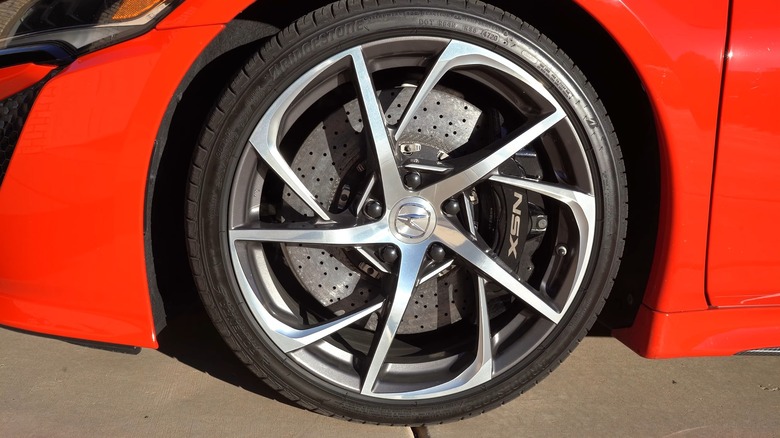
A car's weight has a profound impact on its performance capabilities. It can often be downplayed to highlight horsepower, but those trying to squeeze more from their vehicles often seek ways to lighten curb weight, which reduces the load on the engine. Carbon ceramic brake systems don't tip the scales anywhere near what the typical iron components manage; often, they're around 40% lighter. While you can find them on exotics like Ferraris, they're also present in some sedans like the 2025 Cadillac CT5-V Blackwing, which added retuned dampers and carbon ceramic brakes in a new handling package.
However, there is one aspect of these carbon ceramic brakes that has some drivers concerned. For instance, a Rennlist forum post kicked off discussions when one poster from Canada was worried about how well these carbon ceramic brakes would perform during the north's brutal winters. Other posters replied that, in their experience, it was a non-issue, but there are still some things you might want to be aware of.
Carbon ceramic brakes simply need a bit more time to warm up in frigid temperatures than their weightier iron counterparts. There are a few things a driver might notice before these brakes reach optimal thermals on a cold day, such as abnormal noises and a feeling of rougher contact between the pads and carbon ceramic disc. Thankfully, if the above is experienced, it's temporary, with normal operation returning once things begin to heat up. Cold weather might not be a significant concern for everyone, but carbon ceramic brakes do have other downsides worth exploring.
Pricey and more vulnerable than alternatives
Considering carbon ceramic brakes are only typically seen on some premium sedans or high-performance sports cars, it might not be shocking to learn they're expensive. Manufacturing these requires weeks of time, as well as the use of costly equipment specially designed for the job. In the case of that robust Cadillac mentioned earlier, the carbon ceramic brakes are optional in the CT5-V Blackwing, which starts you at around $100,000. You then need to opt for the Precision Package, which adds an additional $18,000 onto the sticker price.
The BMW M5 — since 2018 — also offers optional carbon ceramic brakes. The automaker will gladly let you have them for an additional $8,500 on top of its $128,700 MSRP. Considering BMW says M5's massive weight is "The Best We Can Do," shedding some of its hefty 5,390-pound curb weight is something to consider. It's also worth noting that, while the initial investment is quite steep, carbon ceramic brakes typically last much longer than alternatives (assuming you're not using them for extensive and aggressive track sessions).
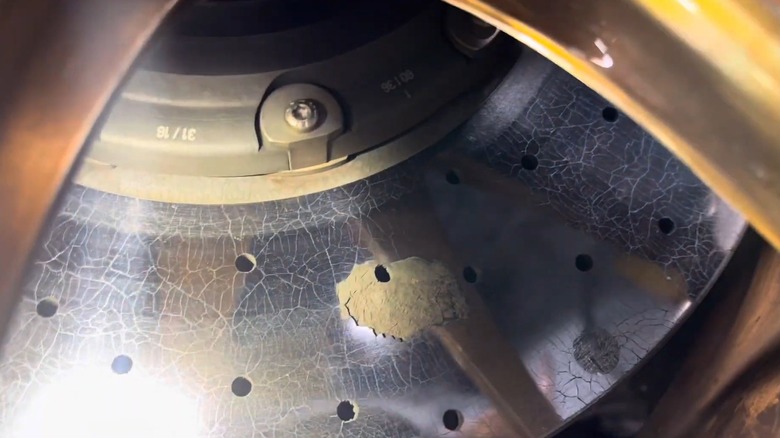
Another issue with carbon ceramic brakes is that they are fragile compared to other options. While a carbon ceramic can withstand extreme temperatures of 1,800 degrees Fahrenheit or more, it's also brittle, making the brakes likely to suffer cracks or chips if they aren't handled carefully. Of course, if these components are considered delicate inside a garage, you can imagine the potential problems if they get struck by road debris. An especially jarring blow even has the potential to shatter these expensive parts, which is something to consider before going all-in on carbon ceramic brakes.