

A Tesla Charger Fire Burned Down A Florida Home, Nearly Trapping The Family Inside
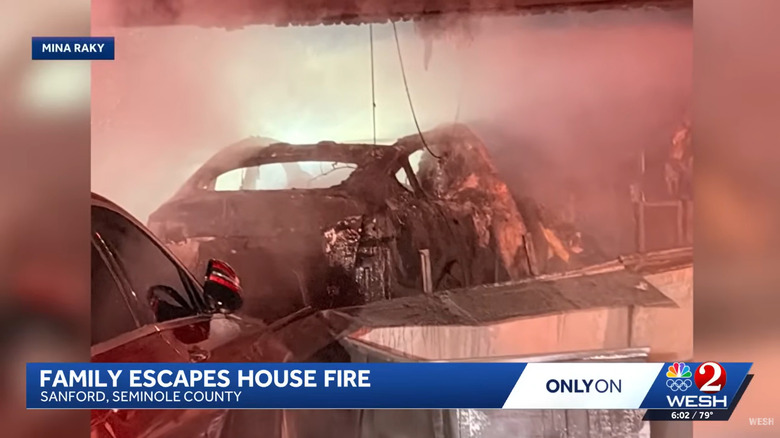
One family in Florida learned an explosive chemistry lesson the hard way when their Tesla charger sparked a blaze that gutted their home and turned their EV into an unrecognizable hunk. Around 5:00 a.m. on the morning of Tuesday, December 2, a charging Tesla Model Y caught fire in the garage of a Sanford, Florida family, forcing all six family members to evacuate. Thankfully there were no casualties, even though a police officer had to go into the burning house to save the family dog, Leo.
According to WESH 2 News, the homeowner, Mina Raky, said he heard popping and cracking coming from the garage so he went in to investigate and saw black smoke billowing up from underneath the actively charging Tesla Model Y. The Sanford Fire Department said, "the origin of the fire was found to be at or around the Tesla charging station in the garage."
Potential causes of EV fires and how to stay safe
EV fires can occur due to a variety of factors including thermal management issues, exposure to floodwaters, and damage to the battery. Since this particular incident occurred while the Raky family's Tesla Model Y was charging in their garage, it was likely due to thermal management issues within the battery pack, but the fire department isn't ruling out concerns with the Tesla charger itself.
The chemistry of modern Lithium ion EV batteries can become extremely volatile when a single battery cell starts to encounter thermal issues. The Tesla Model Y Long Range has a Lithium ion battery pack that's capable of holding around 75 kWh of electricity, but it is made up of several thousands of individual cells that effectively become fuel for a chain reaction once a thermal runaway event is triggered. EV fires can take tens of thousands of gallons of water to extinguish, since the thermal runaway reaction is known to auto ignite, even after the blaze appears to be stopped.
The best defense against harm from EV fires when charging at home are smoke detectors. Odds are you don't hang out in your garage while your car is charging, so it's important to have a way to alert you and anyone else in your home at the first signs of danger. Otherwise, it's important to only use manufacturer-recommended chargers and components when charging your car, and it's important to have any damage thoroughly inspected to ensure battery integrity and health.