

Head Of Nissan America Says The Company Needs A 'North Star'
Happy Wednesday! It's December 10, 2025, and this is The Morning Shift — your daily roundup of the top automotive headlines from around the world, in one place. This is where you'll find the most important stories that are shaping the way Americans drive and get around.
In this morning's edition, we're looking at what Nissan's American head says the company needs, as well as Lucid's take on the global EV market. We'll also look at the people who think AI will help them sell cars, and the dealers that are suing Ford over warranty work pay.
1st Gear: Nisan America chairman says company needs more models, more hybrids, and more 'vision'
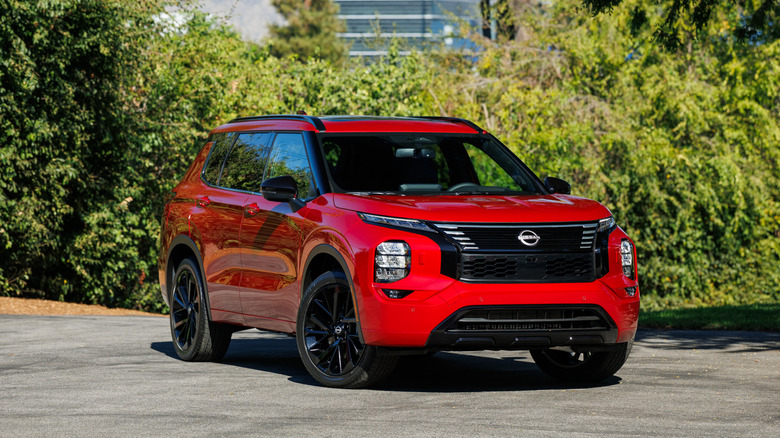
Nissan's new global CEO may be trying to cut costs anywhere he can, but he's not the only person fighting an uphill battle within the company. The American chairman of Nissan, Christian Meunier, is fighting just as hard for market share on our shores. From the Wall Street Journal:
When Christian Meunier took over Nissan's Americas business at the start of the year, he said the company was lost.
"There was no North Star. There was no vision. There was no direction," Meunier said in an interview
...
The automaker has struggled to find direction since the arrest of its longtime chief executive, Carlos Ghosn, in 2018. Its plight—as Japan's No. 3 carmaker—became so dire that the Japanese government last year encouraged a rushed merger with its stronger rival Honda, but the tie-up fell apart.
Meunier's task is turning around the company in its biggest market, the U.S. Sales have fallen about 40% over the past decade, and its share of the market has dwindled to 6.4%, from a peak of 8.4% in 2017, according to Cox Automotive. Nissan dealers often struggle with higher inventory levels than their competitors and frequently have to discount products to get them off the lot and earn volume bonuses from the automaker.
So Nissan needs more "vision," but the company's latest car is a rebadged Mitsubishi — perhaps the only automaker with more of a discount reputation in the States than Nissan itself. Not a great look to kick off a new era.
2nd Gear: Even Lucid is seeing EV demand drop
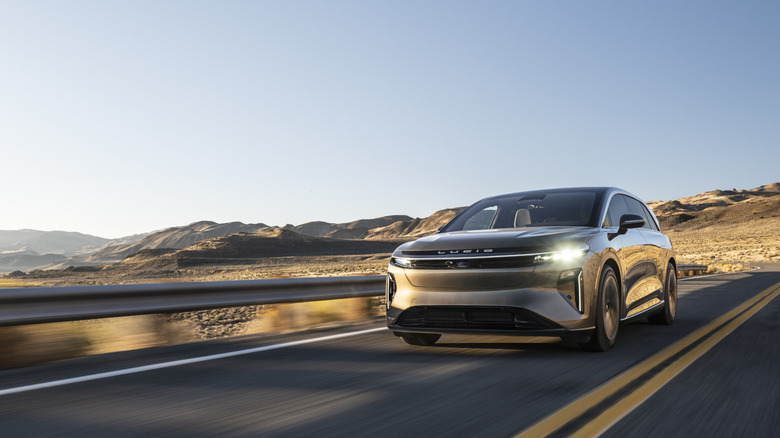
Electric vehicles are the future of private transportation, unless we all want to get really good at riding camels through arid landscapes. Consumers, though, haven't quite gotten on board — even Lucid is noticing the dropoff in interest around the world. From Bloomberg:
Lucid Group Inc. is seeing clear deceleration in demand for electric vehicles in both the US and Europe, the manufacturer's top executive said.
The discontinuation of federal tax credits in the US pulled EV purchases forward into the third quarter, Marc Winterhoff, Lucid's interim chief executive officer, told Bloomberg Television on Wednesday. The first batch of Gravity sport utility vehicles — Lucid's second model, after the Air sedan — will arrive in Europe late this year, with deliveries starting in the first quarter of 2026.
"We are still working through our backlog, so we are a little bit insulated," Winterhoff said. "But definitely, there is a slowdown, there's no question about it."
If Lucid is seeing a downturn in sales, it's truly a commentary on EVs — the kinds of customers who buy six-figure cars likely aren't feeling the same sorts of economic anxiety as the folks desperately turning to Kalshi in hopes of winning this month's rent. This isn't the recession, this is EV disinterest.
3rd Gear: Your next car purchase might involve AI, unfortunately

AI is infesting pretty much every aspect of our lives, and that'll soon hit your local dealer floor — if it hasn't already. Dealerships have long wanted to hop on the AI train, and now many are starting to. They're still figuring out what AI will actually do for them, if anything, but that hasn't stopped them from putting their money down. From Automotive News:
A CDK Global survey of 251 U.S. dealerships from Sept. 15-28 found 63 percent of respondents were very likely or somewhat likely to invest in AI in the months ahead. And AI awareness is on the rise, with 51 percent either extremely or very familiar with artificial intelligence, up from 40 percent in 2024 and 41 percent in 2023.
"There are a lot of dealers out there looking for it," said Leigh Ann Conver, CDK's senior director of product marketing for data and intelligence
Automotive News interviewed (dealership AI advisor Yuriy) Demidko, technology experts and other dealership professionals who offered recommendations on how to effectively buy and implement AI.
The real answer to "how dealerships should buy AI" is that they shouldn't, but good luck telling a dealer that. Putting aside the whole "largely useless tech that's built an economic bubble on the verge of popping and tanking the entire global economy" thing, do we really expect dealerships to be able to handle such tech? Look at the average dealer website and tell me with a straight face they know what they're doing with computers.
4th Gear: Dealers sue Ford for cheaping out on EV battery replacements under warranty
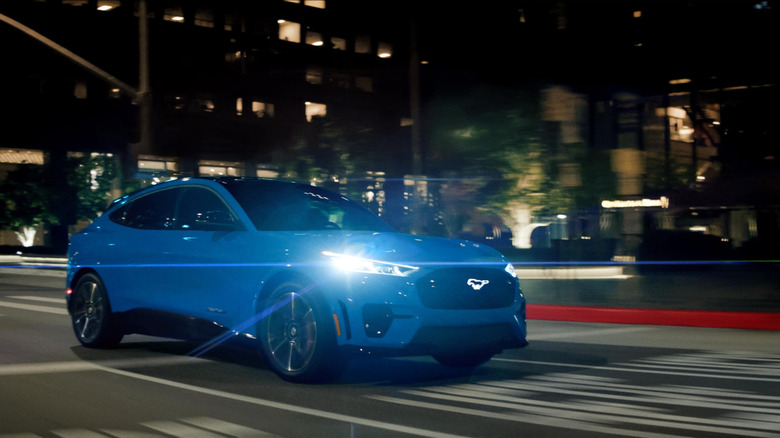
Dealerships are starting to handle EV battery replacements under warranty, and it seems they're not happy with how much they're being paid. Two dealers from New York are now suing Ford for nearly a million dollars, collectively, for what they claim are underpayments for warranty work. From Automotive News:
Two New York dealerships accuse Ford Motor Co. of underpaying them hundreds of thousands of dollars for electric vehicle battery replacements. The issue could mushroom into a wider reimbursement controversy as more lawsuits are filed, the dealerships' lawyer said.
The complaint, filed by Jericho Turnpike Auto Sales and Patchogue 112 Motors, claims Ford underpaid a Jericho franchised dealership nearly $300,000 and Patchogue by more than $615,000 for multiple EV battery replacements
...
At issue is New York's legal definition of a franchised dealership's responsibility for fulfilling warranty agreements or service contracts. The lawsuit accuses Ford of ignoring legal requirements in a state statute that requires manufacturers to reasonably cover repairs and manufacturer service contracts not "less than the price and rate charged by the franchised motor vehicle dealer for like services to non-warranty and/or non-service contract customers."
Ford's obligation is defined by the lawsuit as the cost of parts plus a 40 percent markup. On top of that, the lawsuit said, dealers can apply for a retail markup typically used for nonwarranty repairs from 70 to 200 percent.
Jericho's Ford-Lincoln dealership replaced 15 batteries since early 2024, but the automaker only reimbursed the dealership $600 per battery for 13 of them, according to the lawsuit. Jericho should have received $22,600 per battery, which created a $286,200 shortfall, the lawsuit alleges. Jericho received $13,000 for replacing two other batteries, but Ford allegedly didn't pay compensation in that case.
Similarly, Patchogue's Stevens 112 Ford replaced 28 batteries since early 2024. Ford allegedly paid it a "handling" fee of $600 per battery. The lawsuit said the correct reimbursement from Ford should have been $22,600 per battery, or $632,000. Out of that, the lawsuit calculates damages to Stephens 112 Ford of roughly $615,200
Of course, warranty battery replacements don't necessarily mean some horrible failure with the EVs. There are plenty of normal reasons a battery could fail, or that one could have an issue that's simply not worth diagnosing and repairing onsite at the dealer — sometimes swapping the whole part is easier. These sound like some absurd sums for the dealers to demand for this kind of work, but what would a dealer be if not a money vacuum?
Reverse: RIP Otis
"(Sittin' On) The Dock Of The Bay" is one of the all-time great songs.
On The Radio: HEALTH - 'ANTIDOTE'
Only HEALTH would film a music video in VRchat. Check out the full-body tracking!