

Stop Using WD-40 On Your Wiper Blades. Use This Instead.
The internet abounds with videos offering free car care advice, and much of it is worth precisely what it costs. While some of your favorite internet car videos are entertaining or helpful, others are fake, making it hard to decide what content to believe.
In addition to extremely inaccurate internet vehicle care advice, there are a bunch of wild myths surrounding cars. Sometimes, these things get started by people trying to justify an action or sell something to the public, while other people are just trying to save a little money by making a part last longer using a common product. Using WD-40 on windshield wiper blades in an attempt to clean, protect, and restore them likely falls into the latter category.
The logic behind the practice, which is often encouraged online, is understandable. As a water displacement lubricant, using WD-40 seems like an acceptable product to clean and protect the rubber compounds that make up many windshield wiper blades. However, in reality, you're probably better off using a synthetic-based lubricant.
Is WD-40 the best product to use on windshield wiper blades?

No, the formula used in WD-40 was invented to stop missiles from rusting, and it isn't ideal for use on rubber windshield wiper blades because it contains petroleum distillates. In most applications where rubber is involved, the use of petroleum-based lubricants or cleaners is discouraged since they can cause the rubber to swell or dry out. Soap and water can be useful for cleaning rubber windshield wiper blades, but when used alone, the results are often inconsistent.
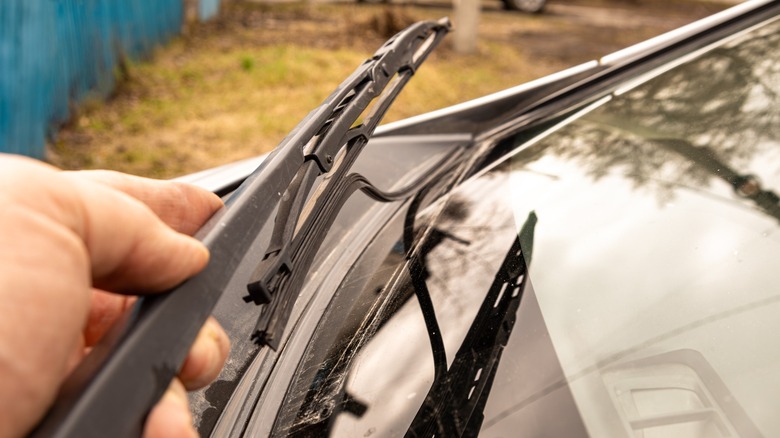
A better option to clean and protect your wiper blades is a silicone-based lubricant, such as WD-40 Specialist Silicone. If your wiper blades are showing signs of deterioration, like cracking or missing pieces, it's best to replace them. If they're excessively dirty, starting the process by cleaning them with soap and water isn't a bad idea. Once you verify that the wiper blades are clean, dry, and in good condition, maintain them by spraying the silicone spray onto a clean soft rag and wiping the blades' rubber parts. Make sure to use a good amount of spray to allow transfer of the liquid from the rag onto the wiper blade, and keep your wiper arm raised while cleaning the rubber sections.
While your wiper arms are raised, it's a good time to thoroughly clean your windshield. Using freshly cleaned wiper blades on a dirty windshield defeats the purpose of maintaining them. Again, you can start with soap and water to remove heavy grime, but the best results require using a suitable ammonia-free glass cleaning solution.