

Why Some Traffic Lights Have Horizontal Bars Instead Of Circles
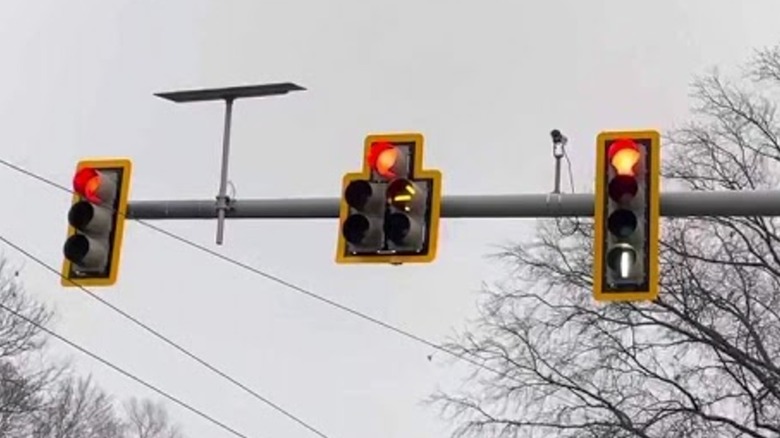
Traffic lights are a ubiquitous part of life behind the wheel, and they have existed for longer than the automobile. The lights are consistent across the country, and there's even a United Nations treaty setting the standard globally. A red light means stop. A yellow light means proceed with caution or prepare to stop. A green light means go. But in some parts of the country, a new light has appeared: the white vertical line.
The lighted line can appear in a variety of locations on the traffic light pole. In some situations, it can appear beneath the green light on a vertical traffic light pod. In others, it could appear on its own separate pod with an additional horizontal white line light. It might appear on the right side of traffic, or on the left side.
These new lights exist to help city buses that pick up passengers at what's called a near-side stop — a bus stop that's close to an intersection. Called the queue-jump light, it exists so buses can enter the intersection before the rest of traffic, making important merges or turns without the hassle of navigating a traffic-filled street.
This is how they work
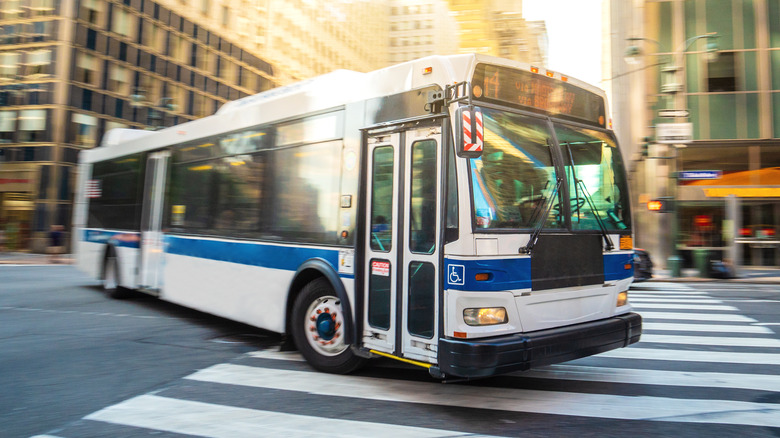
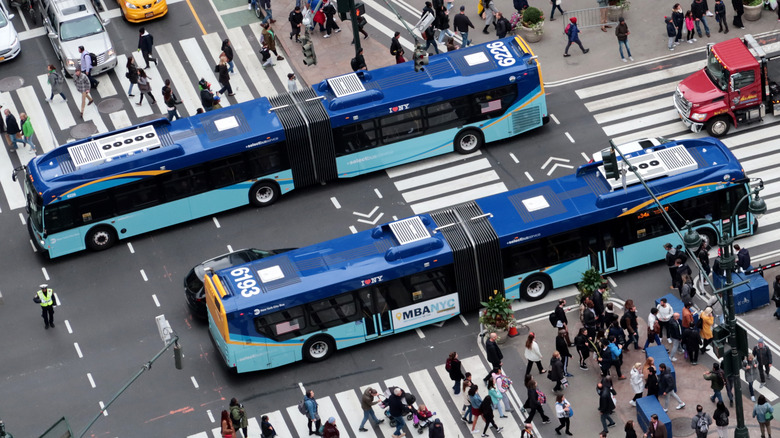
For bus stops that are close to an intersection, it can be difficult for a bus to merge back with traffic when the light turns green. In some cases, a bus must cross multiple lanes of traffic to get from the curb to where it can make a left-hand turn just up the street. A city bus can be a big, cumbersome piece of transportation, and when the street is busy with traffic it can be a challenge.
Once cross-traffic gets a red light to stop, the queue jump light will illuminate for approximately five seconds. The main traffic light is still red, so traffic can't move forward. But a bus can pull ahead and cross the intersection safely. If a bus has to make a turn up ahead, it won't have to fight with traffic. It can proceed ahead and navigate to the left without any interference from the cars and trucks waiting at the light.
After that brief period of exclusive time for the buses, the light turns green and regular traffic can resume as it would normally. The Washington Metropolitan Area Transit Authority has a video showing queue lights in action.
A bus driver might not exclusively wait for the queue light to leave a bus stop. If traffic is clear enough and the driver can merge into the normal traffic lane, the bus might do so. The queue light is there to provide extra help to the bus driver above and beyond the normal light signaling.
Coming to an intersection near you
Luckily for normal drivers, these new signals are something that can be ignored. They don't change the way regular drivers navigate the intersection. If the light is red, remain stopped and don't enter the intersection. It might be startling the first time a drives by while the light is red and traffic isn't moving, but it's nothing you need to worry about.
These new lights are rolling out all over New York State, and they're in place around the Denver area. There are almost 40 queue jump signals in Washington, D.C. and nearby Virginia. While the new lights might be confusing to drivers, just like pedestrian traffic signals can be, if there's an area that has heavy traffic that makes a bus driver's job more challenging or adds to the congestion of traffic, expect to see a signal like this in the future. At least they aren't the upside-down traffic lights in Syracuse, New York.