

Catalytic Converter Theft Is Still An Expensive Problem But Congress Wants To Do Something About It
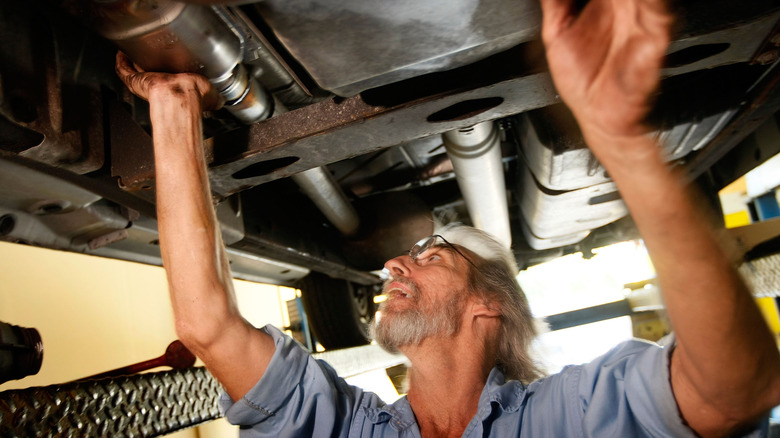
Catalytic converters aren't being stolen at the same staggering rates as the peak year of 2022, but they're still being sawed out from under vehicles by thieves who want the precious metals that the parts contain. For example, State Farm reported 45,000 claims in 2022, a figure that fell to 21,000 in 2023 and was on track to decline significantly in 2024. The drop is due to state legislatures stepping in to make it more difficult to sell the stolen converters, and now Congress has introduced bills to create a national law.
Here's Automotive News, reporting on the National Automobile Dealers Association (NADA) backing of the legislation:
"Catalytic converter theft is a significant national issue for law enforcement, businesses, and vehicle owners. Federal action is needed to combat this dangerous criminal activity," NADA CEO Mike Stanton said in a statement. "These thefts not only impact hardworking Americans but also put lives at risk."
The Preventing Auto Recycling Theft, or PART, Act is designed to reduce catalytic converter thefts by requiring new vehicles to have the VIN stamped onto the converter. That way, law enforcement officers can connect the stolen parts to vehicles.
VINs for the win

VINs — vehicle identification numbers — really are the trick, as both New York and California found when the states required that the data be either engraved by dealers or recorded by junkyards. It was also recommended that owners etch their vehicles' VINs into the converters, or request that police departments do it for them. Protective cages were also a proposed defense against thieves; my aging Honda Element has been outfitted with one of these since its catalytic converter was filched when it was street parked in Brooklyn several years ago.
Nowadays, even if your converter is less likely to be stolen (a lot less likely in New York City, with thefts plunging to fewer than 1,500 in 2024 from more than 8,500 in 2022, according to Gothamist), it remains a lucrative target, thanks to the platinum, palladium, and rhodium it can contain. NADA's press release endorsing the House and Senate bills, which the organization says have bipartisan support, explained that "stolen catalytic converters can garner anywhere from $20 to $350 on the black market, with the replacement cost to vehicle owners averaging over $2,500."
Latest Congressional crack at a law
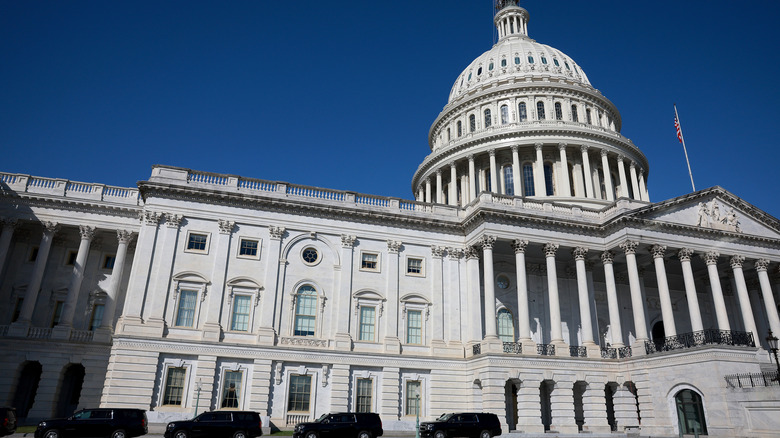
As Automotive News reported, the PART Act failed to escape the committee process when it was previously rolled out in 2022 (Senate) and 2023 (House). This latest crack at a law was introduced in the Senate earlier this year, and the House followed suit. Funding to uniquely identify converters would come via a $7-million grant program, eliminating the cost to owners.
Ultimately, if the legislation passes and is signed into law, it will serve as a good example of states playing their role as laboratories for federal action. The ones that have addressed the problem have achieved some success, so it's really a case now of solidifying a national solution and trying to prevent another wave of thefts causing victims' cars to make the awful sound that anyone who has had their converter stolen recognizes (Toyota trucks have been especially popular). Not to mention discouraging new thefts, once criminals discover that they can no longer move their stolen parts.