

The Forgotten Bicycle Chapter Of Harley-Davidson
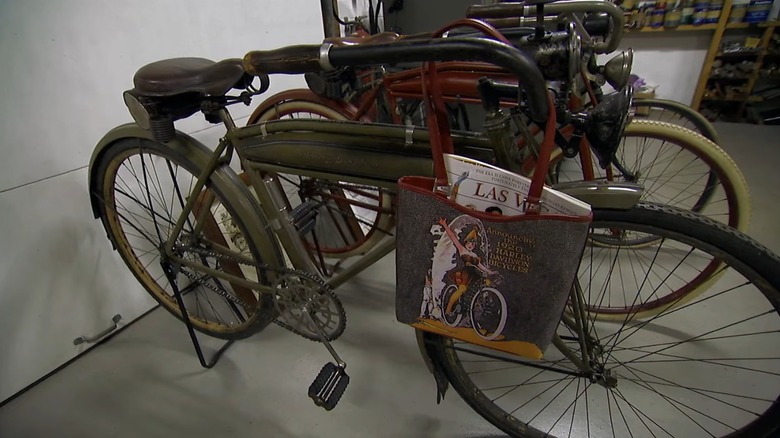
Did you know that Harley-Davidson used to sell bicycles? We're not talking about the company's original motorcycles, which were basically bicycle frames with motors slapped on them. No, these were honest-to-goodness motorless bicycles that were mostly, though not entirely, marketed to kids.
Harley-Davidson decided it needed to expand its customer base in the 1910s, and that a good way to do that would be to hook kids on the brand. Bicycle sales were booming, and bikes were no longer seen as just a form of transportation. They were also used by children for fun. Getting kids used to riding a Harley bicycle would make them more likely to graduate to a Harley motorcycle when they got old enough.
So in 1917, Harley-Davidson turned to a sewing machine company, believe it or not, to supply the parts for its new bicycles. But this was not just any sewing machine manufacturer; it was Davis Sewing Machine Co., which at one time had been the largest manufacturer of bicycles in the country. In fact, Davis also made bicycles for Harley competitor Indian and a host of other companies. Davis even made its own line of motorcycles under the Dayton brand.
Davis manufactured the bicycle parts, then shipped them to Harley-Davidson. Harley assembled the parts into bicycles and distributed them mainly through its dealerships. In small towns with no Harley dealers, bicycle shops sold them. This partnership lasted until 1921, when Harley got out of the bicycle business.
'Too bad every boy can't have a Harley-Davidson bicycle'
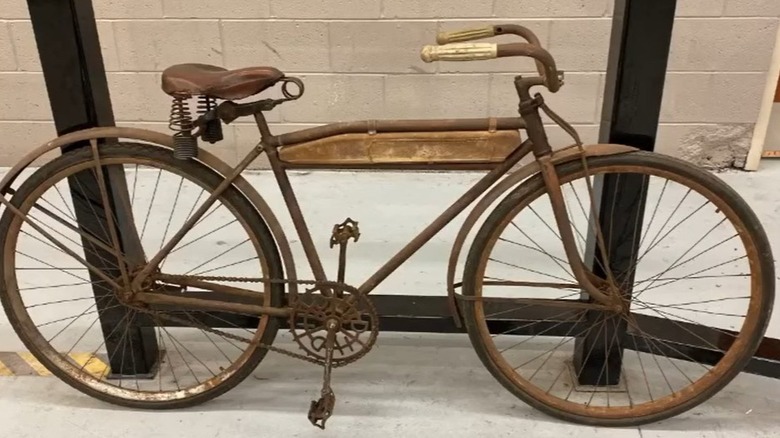
Harley-Davidson bicycles had names like "Diamond Frame," "The Racer," and "Motorcyke." That last one was built to look like a motorcycle, even including a canister that resembled a gas tank but was actually a compartment for headlamp batteries. One difference between Harley's bicycles and Davis' Dayton bikes was that Harley's had the company's initials, H and D, cast into the main sprocket. Another difference was that Harley bikes were painted olive drab, like military fatigues and vehicles, instead of red. This was meant to associate the bike with patriotism and America's World War I war effort.
Much of the advertising for these bikes targeted kids, a strategy Harley has brought into modern day. One 1919 ad seen at the Online Bicycle Museum features a boy standing in his yard watching covetously as two other boys ride by on their Harley-Davidson bikes. "Gee, wish I had one," he says. And the ad continues, "Too bad every boy can't have a Harley-Davidson bicycle."
At $40 to $50 a pop, not every boy could have had one in 1919. That price may be a steal today, but $50 then equates to over $900 in today's money, accounting for inflation. That made the bikes unaffordable for young people. No wonder the ad also says, "Take Dad with you to see the new models." But there would soon be a major economic recession, and $50 would become a hefty price even for Dad to pay.
The divorce between Harley-Davidson and Davis gets messy
World War I ended in 1918, and Harley-Davidson refocused on its core business, building motorcycles. Harley announced an end to its line of bicycles in 1921, but you would think it had forgotten to tell Davis Sewing Machine Company. Davis continued manufacturing bikes and selling them with Harley-Davidson badges for over a year. Davis must have known the partnership was over; if not, it would have gotten the hint from the multiple cease-and-desist letters Harley sent. But Davis didn't stop making the bikes until 1923, when Harley-Davidson co-founder Arthur Davidson showed up at the company and put an end to it.
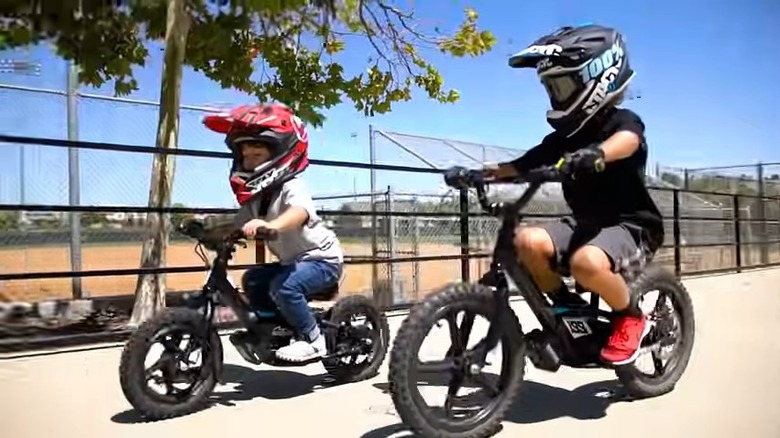
Still, that wasn't the last time Harley-Davidson dabbled in the bicycle business. A century later, in 2019, Harley acquired StaCyc, a company that manufactured e-bikes, mostly for kids. When announcing the purchase, Harley-Davidson stated, "The StaCyc electric two-wheelers will provide an entry point for the youngest riders to enjoy the thrill of riding." (Sound familiar?) Harley later combined StaCyc with LiveWire, its electric motorcycle business. Then Harley announced in 2021 that LiveWire would be spun off into its own company, though Harley still owns a majority share.
In 2018, the Harley-Davidson's Product Development Center started working on an adult e-bike, "Serial 1". Serial 1 became its own brand in 2020, then was bought by LEV Manufacturing in 2023. Will Harley get back into the bicycle business some day? Maybe in 100 years, if the pattern holds. But Harley-Davidson always comes back to its core business: making motorcycles.