

Why Dirt Bike Helmets Look Different From Motorcycle Helmets
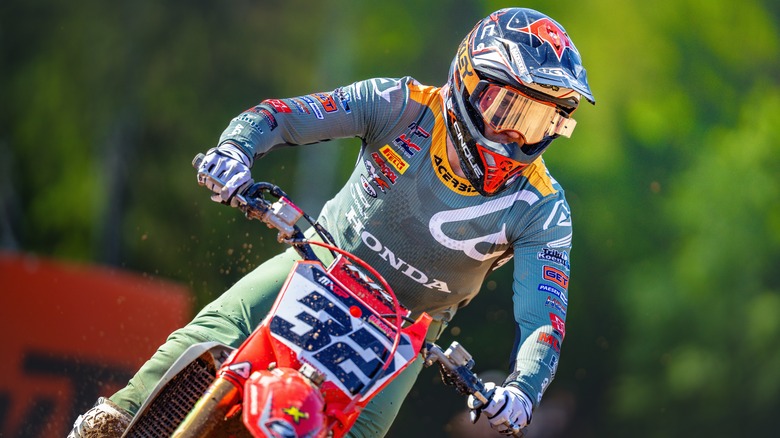
You may have watched a motocross race or seen your pals riding dirt bikes and wondered why their helmets look so different from the ones you normally see on the streets. In fact, they look weird, with that beak-like contraption on the front and that elongated chin guard that reminds you of Stormtrooper helmets from "Star Wars."
There are several reasons why a dirt helmet looks different. Before we get into that, though, let's understand the concept of a helmet. While riders debate wearing a helmet versus not wearing one, the bottom line is that helmets are lifesavers and do much more than save your mug from dirt, debris, and the weather. They protect your head in a crash by absorbing impact and acting as a barrier (or several) between you and the asphalt. There are specific helmets for different riding styles like street, race, dirt riding or motocross, and adventure.
A dirt bike helmet is designed to meet different demands of off-road riding or motocross. For one, it's lighter than your usual street helmet. That's because riding in the dirt will have you moving around a lot more on the motorcycle and turning your neck for maneuvers like checking terrain around you, balancing your bike, and leaning into corners. Dirt riding is physically demanding, and a lightweight helmet reduces fatigue and ensures that you don't end up with a stiff neck. To keep weight down without compromising on safety, dirt bike helmets feature polycarbonate, fiberglass or carbon fiber construction.
Different helmets for different purposes

A dirt helmet's elongated chin bar and the large gap above it are designed for maximum ventilation and also to allow more air in for you to breathe better. You see, you're breathing hard during intense riding sessions and need more air. The demanding sport means your body is going to heat up and needs to ventilate fast. That includes your head as well.
To dissipate that heat, a dirt bike helmet does not have a built-in face shield. Trapping heat and sweat, a face shield can fog up easily from your breath during intense riding sessions. That's why these helmets have a large opening to accommodate riding goggles. These goggles form a tight seal around your eyes and, besides offering superior ventilation, have anti-fog coating and tear-off lens tabs that can easily be removed if they get dirty while riding. Also these goggles stay in place if there's a crash. We cannot overstate the importance of a good motorcycle helmet.
A distinctive part of a dirt bike helmet is the visor (or "peak"). This can easily be confused with a street bike's visor but is more like a baseball cap's visor and acts like one by blocking the sun's glare while riding. More importantly, it protects your face from tree branches on trails as well as mud, rocks and debris thrown up by the tires of the rider in front of you (also known as "roost").
Can you use a dirt bike helmet on the street?
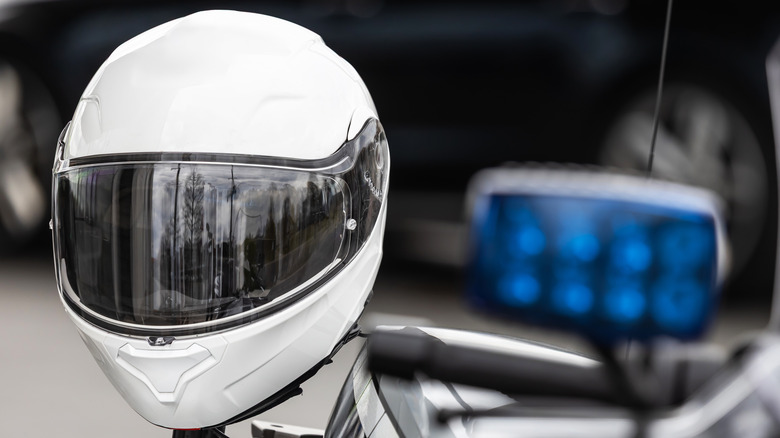
A dirt bike helmet also is built to handle different kinds of impact. On a dirt trail, you can end up crashing on the dirt, rocks or even trees, whereas on the street you'll mostly end up on the pavement. To handle impact, dirt bike helmets have breakaway visors and multi-directional impact protection systems, known as Mips. Mips is designed to minimize brain injuries when you end up falling at awkward angles. Most dirt bike helmets are compatible with neck braces, which help riders avoid neck injuries and are used for hardcore dirt or enduro riding or motocross races.
There are many reasons why you shouldn't use a street helmet for dirt riding and a dirt bike helmet for street riding. A street helmet is designed to slide along the asphalt in a crash, but a dirt bike's elongated chin section and visor can catch protrusions on the road and cause injury. A street helmet will trap heat and restrict airflow on a dirt track while a dirt bike helmet will let in wind noise and offer minimal weather protection on the street. Also, the visor peak can catch air while riding at higher speed and try to yank your head backward.
If you want one helmet for both dirt and street riding, the best compromise is a dual-sport helmet. Unlike this straightforward solution, though, a more complex question is whether dirt or adventure gear is right for your ride.